Read The
Current Issue



Moose on the Loose
Where to see everyone’s favorite ungulate.
// By Emily Cohen
If you know where to look, winter is your best bet for spotting moose in Jackson Hole. Their hulking, dark bodies stand out against the snowy landscape. Browsers, moose spend their days selectively munching on twigs, bark, and buds. In winter, they do this at lower elevations, where the snowpack is shallower. The largest member of the deer family, moose are powerful swimmers and can run up to 35 miles an hour. They tend to favor riparian areas—stream and river bottoms—where willows grow and snow doesn’t pile up.
No matter where you go to spot moose, remember to give them space—at least 25 yards. They may look lumbering and docile, but they will charge if startled. If you run into a moose on the trail, it’s safest to give it the right of way.
Gros Ventre Road and Kelly Flats
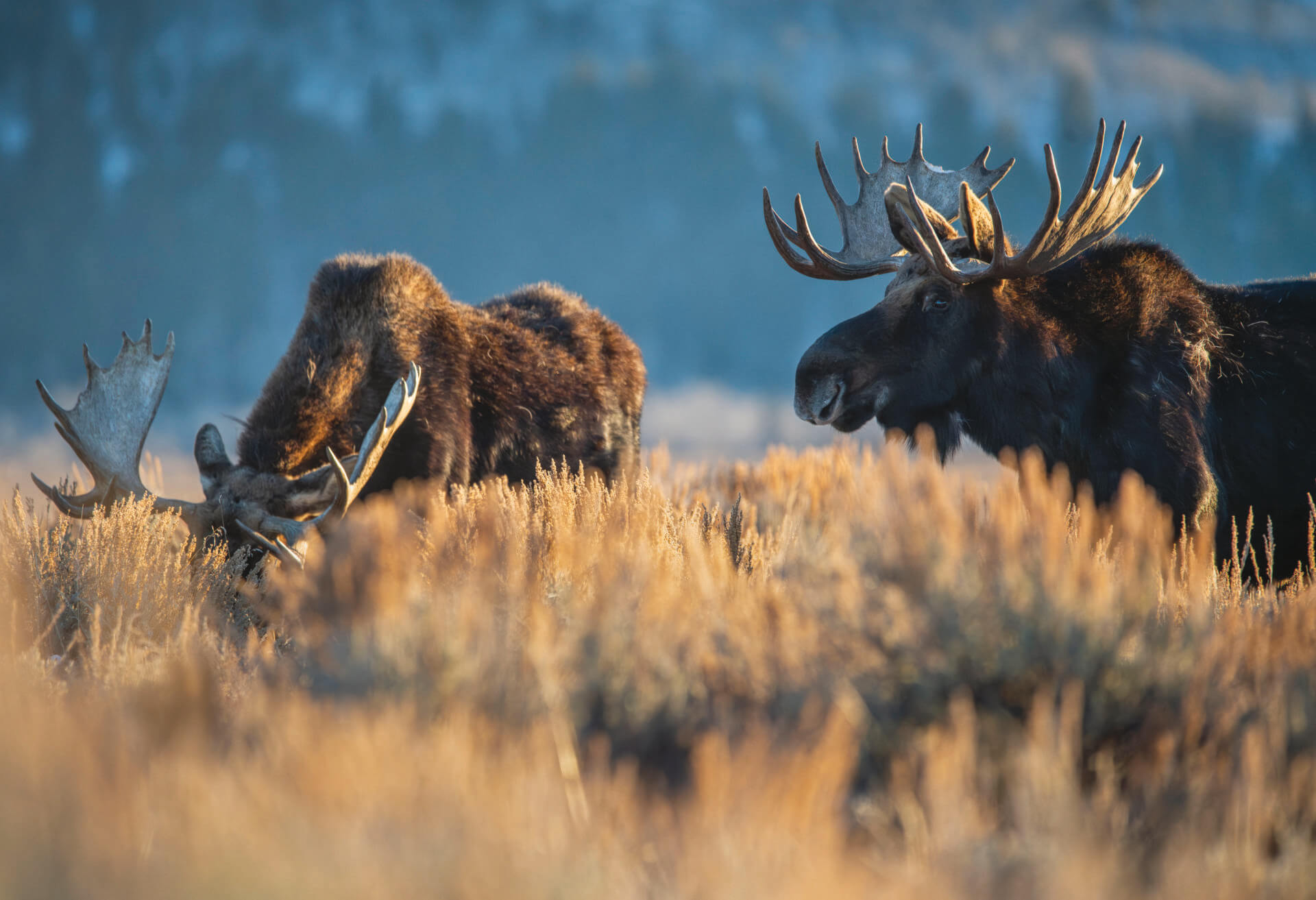
THE SCENE: Snow-covered sagebrush meadows meet cottonwoods and willows along the Gros Ventre River in the southeastern part of Grand Teton National Park. You’ll often see moose browsing willows near the riverbank or crossing open flats.
GEAR NEEDED: Minimal. Here you’ll see moose from your car; binoculars or a spotting scope are nice so you can see the moose in more detail.
GET THERE: Drive north from Jackson on U.S. Highway 89. At the roundabout (6 miles north of town), turn right toward Kelly. With the Gros Ventre River to your right, immediately from the roundabout and continuing to the tiny community of Kelly, moose can be anywhere. Continue north past Kelly, where moose sometimes hang out in the open flats.
EXTRA CREDIT: While in the area, check out Mormon Row, home to the often-photographed 100-plus-year-old T.A. Moulton Barn and more than 20 other historic buildings that date from the time of some of Jackson Hole’s earliest settlers.
Rafter J Subdivision
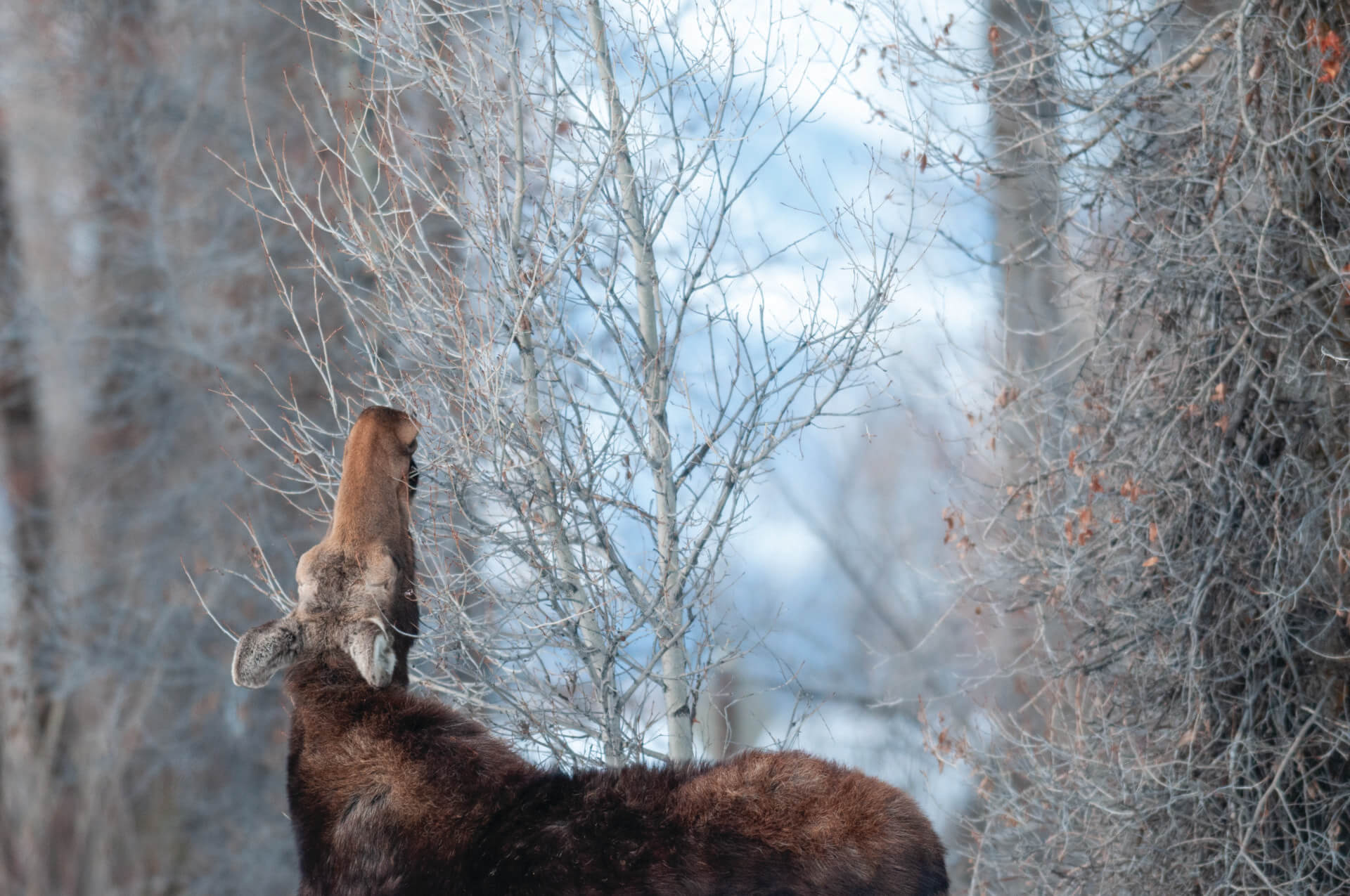
THE SCENE: A quiet neighborhood where moose hang out in landscaped yards and wander between ponds and riparian areas.
GEAR NEEDED:Bundle up in warm layers, wear sturdy walking shoes or boots, and consider using traction devices (see examples on page 38) on your footwear. You’ll be looking for moose by walking on plowed pathways that can sometimes be icy.
GET THERE: About 5 miles south of Jackson on U.S. Highway 89, turn right onto Big Trail Rd. Park at the Rafter J office, which is just off W. Big Trail Rd.
EXTRA CREDIT: Grab lunch or dinner at The Bird, Rafter J’s neighborhood restaurant, which serves huge burgers (on toasted English muffins) and has even bigger views of the Snake River Mountains.
Cache Creek
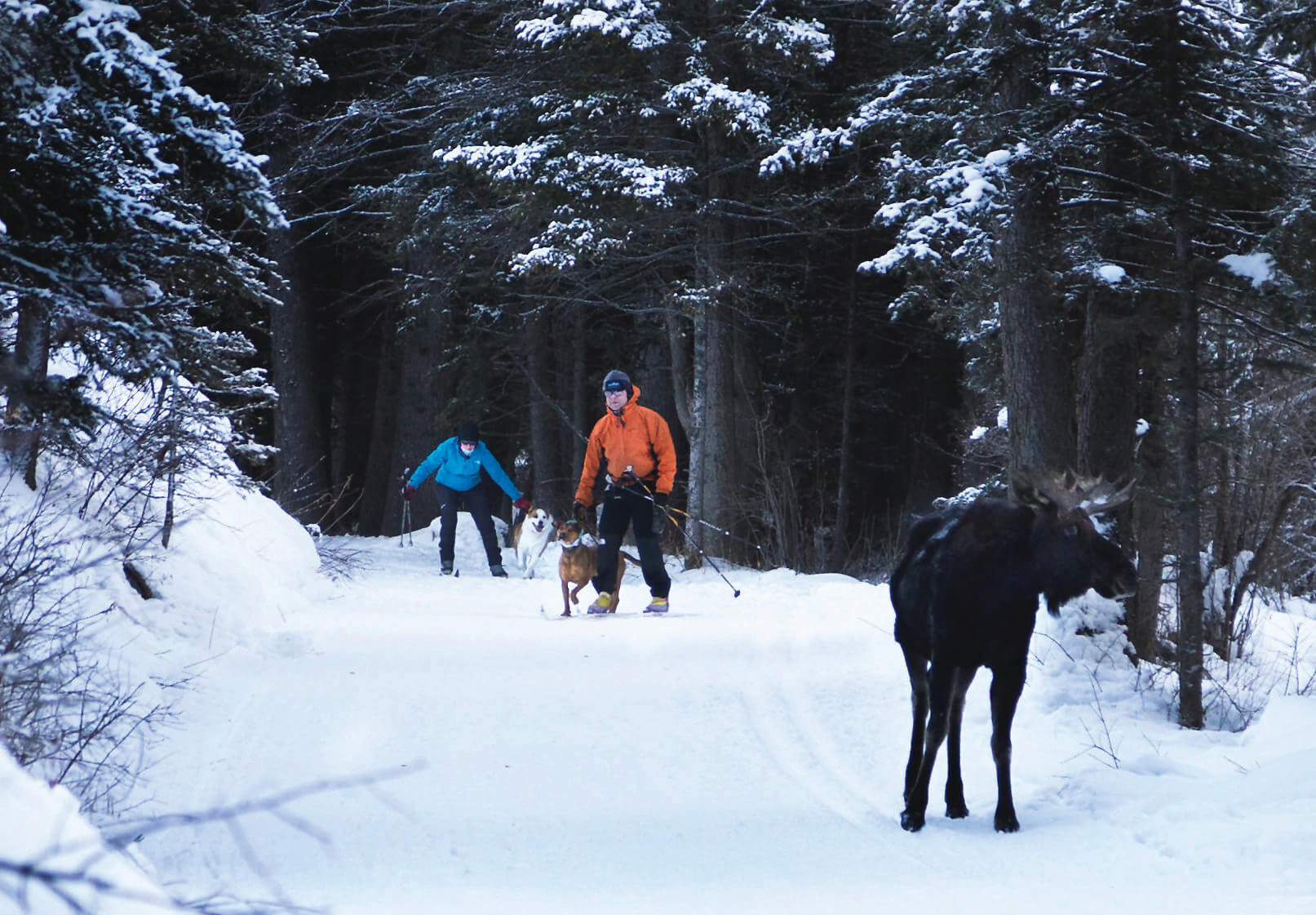
THE SCENE: Only about 1 mile from the Town Square and in the Bridger-Teton National Forest, Cache Creek, a canyon with a creek and a decommissioned Forest Service road, is popular with locals looking for a quick outdoor fix (for themselves or their dog). The first 2 miles are the busiest.
GEAR NEEDED:Almost anything goes here—cross-country skis (the former road is groomed for classic and skate skiing), snowshoes, and even fat bikes. Friends of Pathways grooms singletrack trails specifically for the latter. Or you could bring nothing; the old road is so heavily used it gets packed down enough to walk on in winter boots.
GET THERE: From downtown Jackson, take Broadway Ave. east; turn right on Redmond Dr., then left on Cache Creek Dr. The trailhead is at the end of this road, about 1.5 miles from the intersection with Redmond.
EXTRA CREDIT: Back on Broadway Ave., drive to its very eastern end, where the Elk Refuge road starts. Bighorn sheep can often be spotted about 2 miles up this road. Look for a rocky outcrop on the left side of the road and then keep your eyes peeled for movement.
Moose-Wilson Road
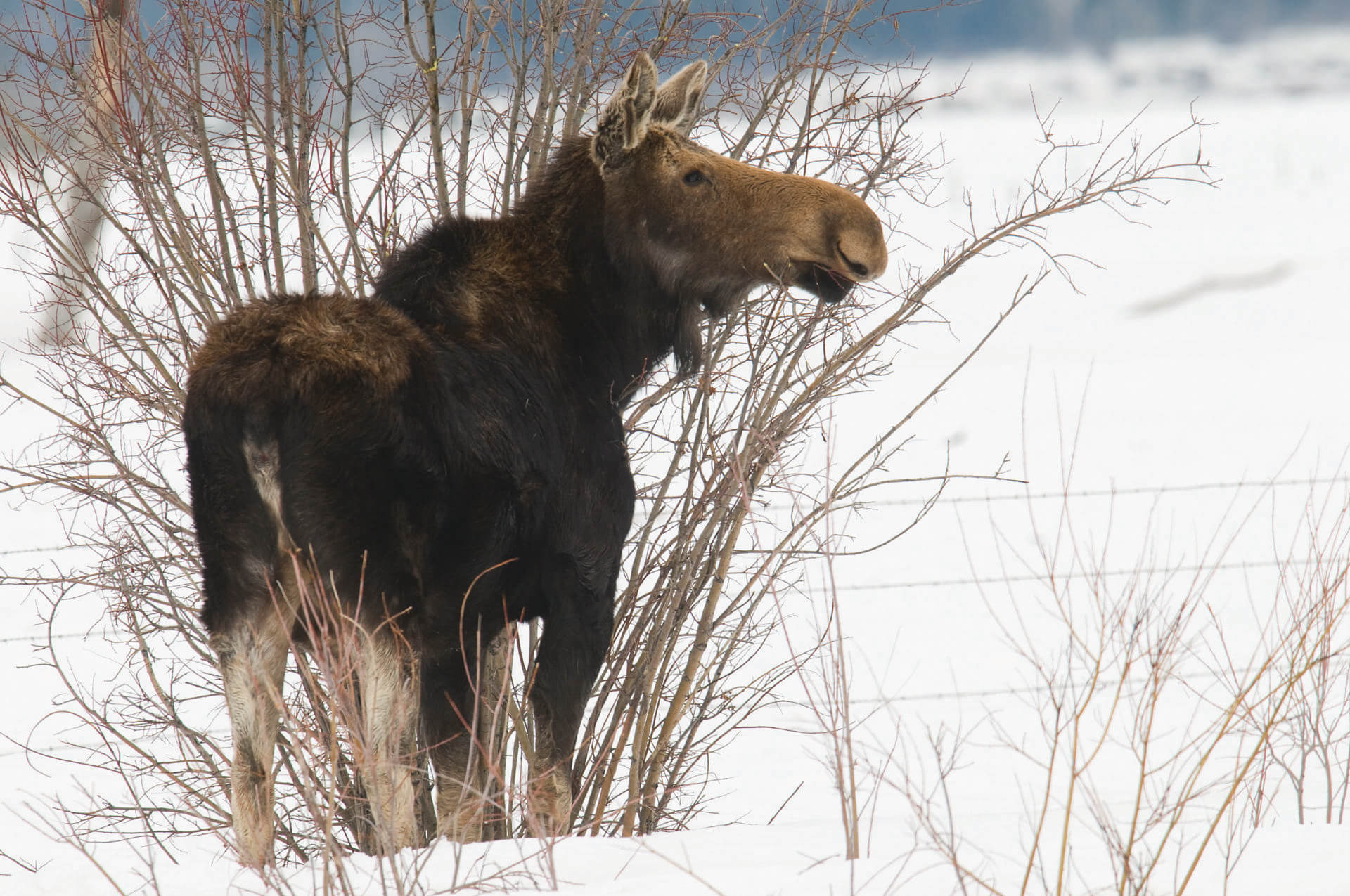
THE SCENE: In summer, this road in Grand Teton National Park can be a harrowing drive—it’s narrow, winding, and full of wildlife. In winter, the middle section is closed to cars and is an ideal place to snowshoe or cross-country ski.
GEAR NEEDED:If you start at the Teton Village end, you’ll have to pay an entrance fee into GTNP (the other end starts just before the Moose entrance station). Wherever you start, you’ll want snowshoes or cross-country skis to travel up the road beyond where the plowing stops.
GET THERE: From Teton Village, drive 1 mile north and into GTNP and continue until the road is closed (at the Granite Canyon Trailhead). From Moose, just before the GTNP entrance station, turn left onto Moose-Wilson Rd. About 3 miles south, at the Death Canyon Junction, the road is closed to cars. At both ends, park where the plowing ends.
EXTRA CREDIT: About 3 miles from the Death Canyon Junction, explore the historic White Grass Ranch, which was the valley’s third dude ranch when it opened in 1919. Shuttered in 1985, it was added to the National Register of Historic Places in 1990.
Darby Canyon
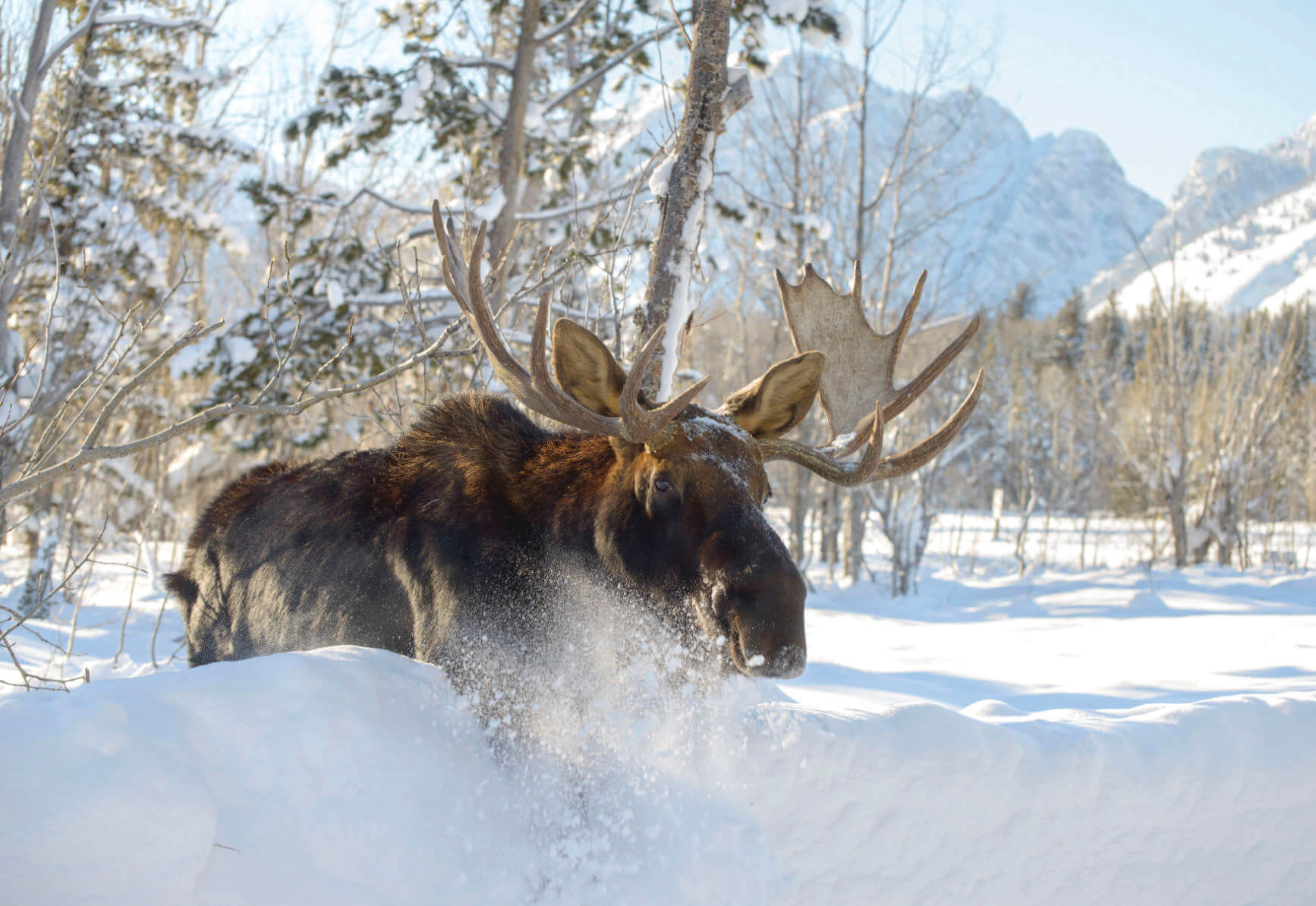
THE SCENE: An out-and-back trail on the west side of the Tetons in Idaho’s Caribou-Targhee National Forest, Darby is perhaps the most tranquil of the options presented. And even if you don’t see any moose, the quiet canyon, snow-covered trees, and burbling creek make for a magical winter outing that can be as long as 7 miles.
GEAR NEEDED:Cross-country skis, snowshoes, or a fat bike. The winter trail, which, in the summer is a road to a hiking trailhead, is usually groomed once a week.
GET THERE: From Victor, Idaho, head north on ID Highway 33 for 5 miles, then turn east on E. 3000 S. and follow signs to Darby Canyon. Park where the plowing stops.
EXTRA CREDIT: Yes, it’s winter, but, since you’re on this side of the Tetons, you should stop at Victor Emporium for a huckleberry milkshake. JH