Read The
Current Issue


Environmental Engine
Half of the Equality State is federal land, and its wild, open, publicly accessible spaces are underpinning a concerted effort to promote outdoor recreation in Wyoming, get visitors to branch out from the well-known Greater Yellowstone Ecosystem, and diversify the state’s economy.
// by Mike Koshmrl
The way Albert Sommers sees it, the onset of outdoor recreation-based tourism to the doorstep of the mighty Wind River Range, located 50-plus miles southeast of Jackson, traces back nearly two full centuries, to a period when the settlement of the West was in its infancy.
“It has been happening since William Drummond Stewart purchased a trip from the Sublette brothers to come to the Green River Rendezvous,” says Sommers, a lifelong cattle rancher and former state representative who rose to become the speaker of the Wyoming House of Representatives. “That’s when recreation started in Sublette County—like 1836, somewhere in there. They brought in the rich people from the East and Europe to hunt and do all kinds of things. It’s been going on for a long time. It’s just that now numbers are increasing.”
Today, the Winds, which include many of Wyoming’s highest peaks, are a source of pride and passion for the roughly 9,000 residents of Sublette County who live in their shadow. And they’re a source of awe for visitors. Those locals and tourists have a multitude of outdoor splendors at their disposal in a place that’s 80 percent public land. The southern corner of the Greater Yellowstone Ecosystem contains the best and largest tracts of sagebrush left on earth. The area’s main waterway, the 730-mile-long Green River, is a spectacular, stunning fishery that forms the headwaters of the Colorado River’s watershed. And on the opposite side of the valley from the Winds is the Wyoming Range, another massive expanse of public land that’s especially known for its world-class hunting.
In 2023, outdoor recreation brought about $2.2 billion to Wyoming—4.1% of the state’s GDP—and provided 15,798 jobs.Only three states get a higher percentage of their GDP from outdoor recreation: Hawaii, Vermont, and Montana.
The masses have caught on steadily over the decades. Sublette County has started to capitalize economically on its impressive outdoor profile. Between 2014 and 2024, annual visitor spending in the community jumped 32 percent, from $35.5 million to $46.9 million, according to a Wyoming Office of Tourism Report titled “The Economic Impact of Travel.” By the tail end of the timespan, the industry generated 440 jobs and $2.7 million in direct tax revenue—increases, respectively, of 22 percent and 59 percent. While tourism remains a relatively small part of the economy, which has been driven by oil and gas drilling, Sommers doesn’t discount its growing contribution. “It’s a key piece of the diversification of the economy of Sublette County,” he says.
Sublette County is a microcosm of Wyoming. The northwest corner has long been a magnet for tourists seeking outdoor views and experiences; Yellowstone National Park was created by Congress in 1872, some 18 years before statehood. And Grand Teton National Park followed in 1929 (and was enlarged in 1950), forming destinations that have drawn millions of road-tripping Americans and visitors from overseas for generations. Those crowds keep steadily growing; Yellowstone crested one million visitors in 1948, two million in 1965, three million in 1992, and four million in 2015. However, other regions of the state have more recently caught on and are in earlier stages of deliberately promoting their peaks, rivers, and vast expanses as playgrounds for recreation. Tourism is an industry that’s gaining steam and significance, thanks in part to travel and tourism boards for each of Wyoming’s 23 counties and statewide promotion efforts. “In 2023, outdoor recreation brought in about $2.2 billion to the state of Wyoming and provided 15,798 jobs,” says Dan McCoy, who directs the University of Wyoming’s Jay Kemmerer Wyoming Outdoor Recreation, Tourism, and Hospitality Institute. “Our share of the state’s GDP is 4.1 percent. That doesn’t sound like a lot, but I think it’s in the top four in the country in terms of the importance of outdoor recreation to our economy.”
Topping the list is Hawaii, where 6.3 percent of the state’s economy can be traced to outdoor recreation. Wyoming neighbors Montana (4.6 percent) and Utah (3.4 percent) also rank near the top. Eastern seaboard states are where outdoor rec is least significant—it’s just 1.6 percent of the GDP in Connecticut and Delaware. In Wyoming, tourism and outdoor recreation have major overlap. With the nation’s lowest population, the Equality State mostly lacks the big city art and culture that draw people in from across state lines. Cheyenne, its capital and most populated city, ranks as the 360th largest metropolitan area in the United States. Wyoming’s world-class draws were already there when the people showed up: mountains, rivers, and open spaces.
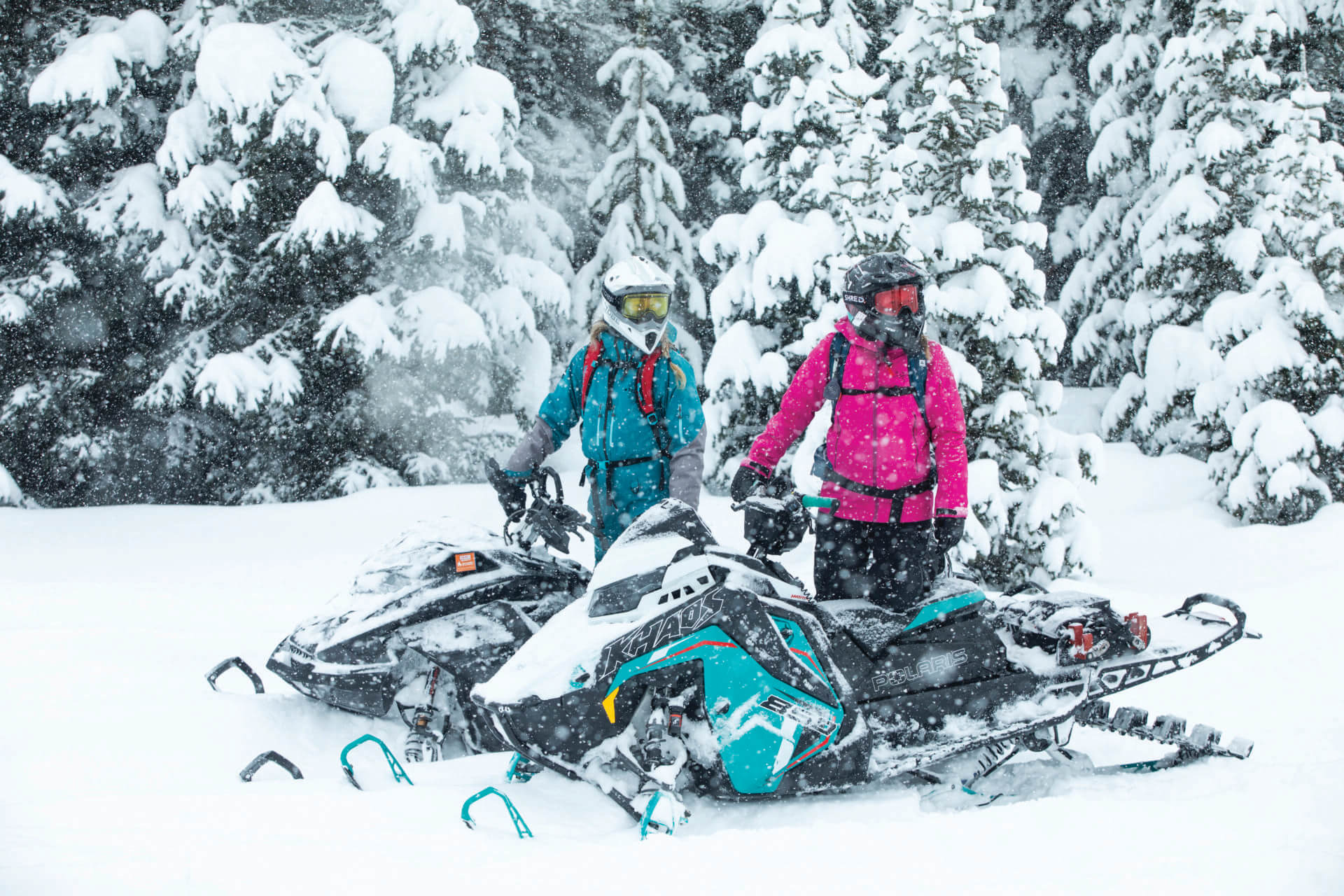
“We don’t have Disneyland or amusement parks,” McCoy says. “When we think about tourism in a place like Wyoming, it’s very closely aligned with the outdoor recreation industry.”
—Dan McCoy, director, University of Wyoming Kemmerer Institute
“We don’t have Disneyland or amusement parks,” McCoy says. “When we think about tourism in a place like Wyoming, it’s very closely aligned with the outdoor recreation industry.” The U.S. Bureau of Economic Analysis report McCoy cites shows that there’s a great diversity in the types of recreation putting dollars into Wyoming’s coffers and checking accounts. Topping the list as of 2023—the most recent report—is hunting and shooting, which generated more than $105 million statewide. Boating and fishing brought in $79 million, snow sports $48 million, and climbing, hiking, and tent camping stimulated some $25 million in economic activity. Even cycling contributed $4 million.
According to Wyoming Office of Tourism data, the broader travel industry (not just outdoor recreation-related) has soared as a segment of the state’s economy in the past quarter century. Overall traveler spending has more than tripled since the turn of the century and now nears $5 billion annually. It’s helping to keep the lights on in Wyoming communities: travel-related purchases generated some $277 million in tax receipts collected by the state, counties, and towns. Meanwhile, the overall economy—led by the mining and energy sectors—has largely stagnated since the real gross domestic product hit its peak at $41.6 billion in 2008. Even after four straight years of growth since the COVID-19 pandemic, 2024’s real GDP still hadn’t climbed all the way back to the previous high and was last listed at $40.5 billion. Travel and tourism is now Wyoming’s second largest industry, according to Hailey Mach, a public relations manager for the Wyoming Office of Tourism. “People are coming to experience that true authentic Western culture. That’s a huge trend right now—going to the rodeos, going horseback riding,” Mach says. “On top of that, Wyoming is well known for its outdoor recreation. We have our national parks, skiing in Jackson.”

There’s been a concerted effort to capitalize on the millions of vehicles that point toward Yellowstone, the Tetons, and destinations like Devil’s Tower, encouraging stops in other reaches of Wyoming. “There are equally fantastic places throughout the state,” says Mark Tesoro, who manages Wyoming’s Outdoor Recreation Office. “We can really give visitors an opportunity to come and visit—and in effect, help bolster the economy of these smaller towns.”
The Evanston resident and newspaper publisher who leads the new state office, founded in 2018, used the southwest Wyoming town of Kemmerer as an example. The seat of Lincoln County is located at the southern tip of the Wyoming Range, and it butts up against Fossil Butte National Monument, a National Park Service property. “It’s the largest fossil fish quarry in the world,” Tesoro says. “It’s really an underutilized national monument, as far as traffic goes. There’s a great opportunity to bring more people there.” He’s not exaggerating. The monument’s website shows that it attracts only about 20,000 visitors annually. That’s a number that Grand Teton National Park would typically surpass by mid-afternoon on a busy summer day.
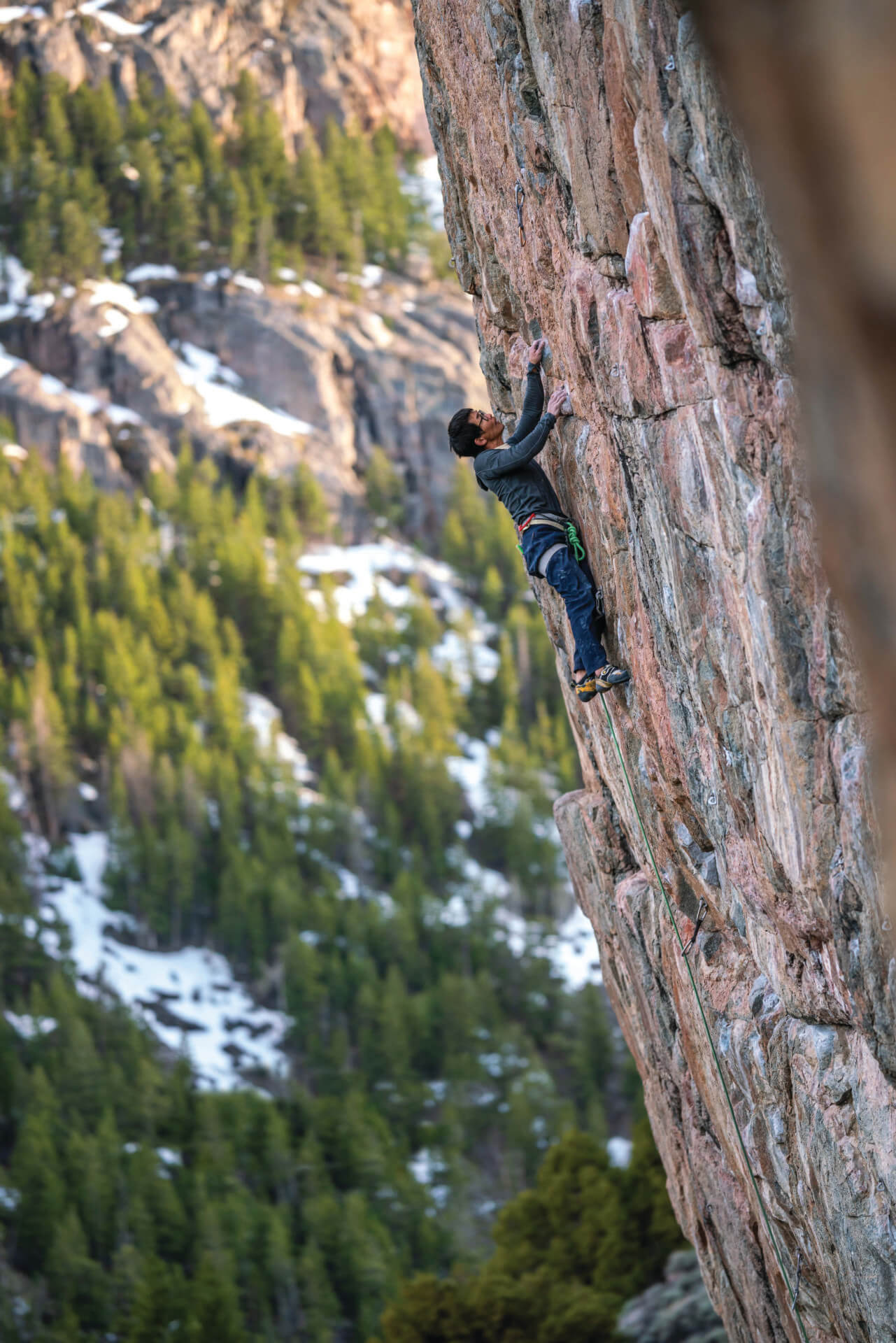
Wyoming hopes to help bolster the economies of smaller towns by showcasing outdoor recreation opportunities across the state—not just
the already-popular national parks.
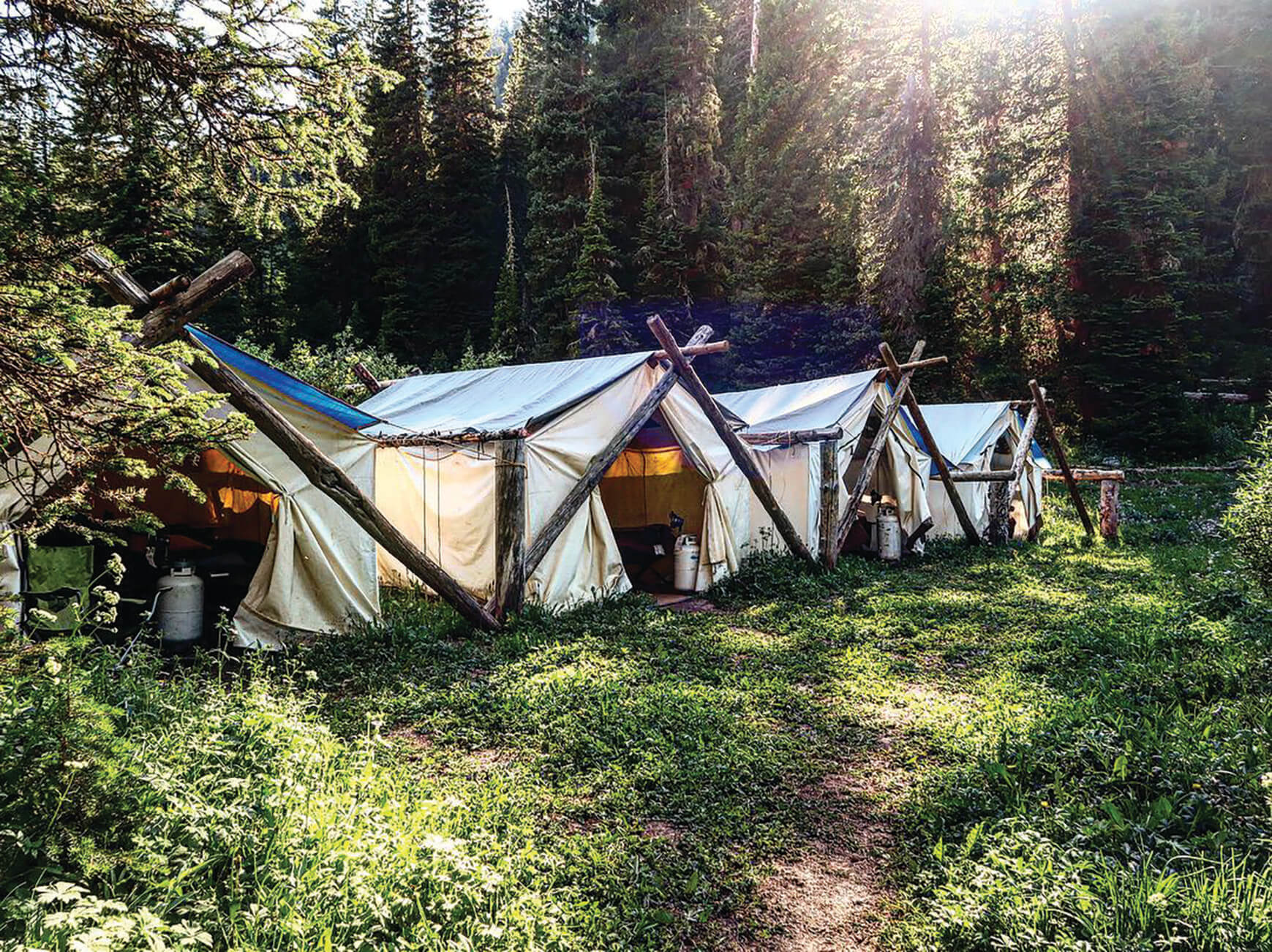
Wyoming’s state parks also deserve some more love, Tesoro says. Those parks, spread throughout the state, range from Laramie County’s mountain biking hotspot Curt Gowdy State Park to Thermopolis’s Hot Springs State Park to Sinks Canyon State Park, a draw for climbers and disappearing-river watchers outside of Lander. Altogether, the 13 state parks bring in just shy of five million visitors annually—about the same as Yellowstone alone. There are countless other lesser-known destinations sprinkled throughout the state that are located on federal land classified as national forest (Wyoming includes parts of eight) or on expanses administered by the Bureau of Land Management that Tesoro thinks are well worth the trip. “The Bridger Valley area, Sweetwater County, around Flaming Gorge, the Fontenelle area, the Red Desert—all of those areas could use [and deserve] some more traffic,” Tesoro says. “The traffic means people are passing through communities, spending money, and hopefully staying in hotels.”
Helping stimulate that statewide effort to expose visitors to lesser-known-but-amazing areas is a new trade group, the Wyoming Outdoor Recreation Business Alliance, which just incorporated as a nonprofit in January 2025. It’s uniting a wide array of public-land-dependent businesses, from outfitters and guides to manufacturers, retailers, and nonprofits. (Founding members include a few Jackson Hole-based businesses, including Eco Tour Adventures and Jackson Hole Wildlife Safaris.) The advocacy group has several functions—helping grow Wyoming’s outdoor recreation industries sustainably is among them—but part of its mission is providing a voice for wild places when they’re threatened. “We’ve already done a lot of that, connecting our business owners to our Congressional delegation as well as our state legislators,” says Addi Jenkins, the Wyoming Outdoor Recreation Business Alliance’s executive director. “Decisions that are made, whether in Cheyenne or in DC, affect people here at home, and it affects the bottom lines of our businesses.”
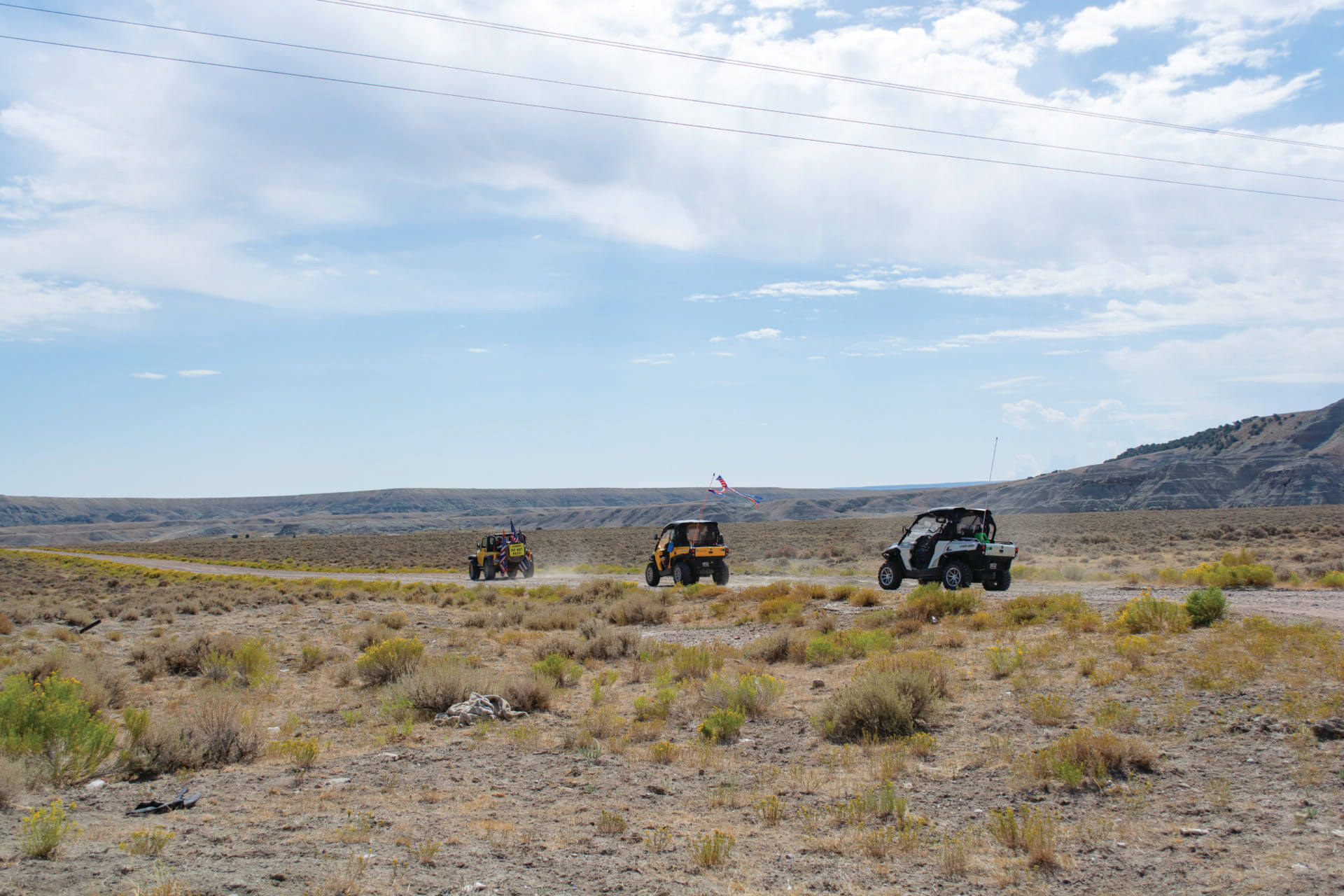
Tesoro and his team also have some new tools and funding streams at their disposal to help build lesser-known landscapes’ profiles. Wyoming’s Outdoor Recreation Office convenes a network of regional outdoor rec “collaboratives” that convene stakeholders for industries like mountain bikers, hikers, anglers, climbers, and equestrians four times a year. And there is also a new Wyoming Outdoor Recreation and Tourism Trust Fund, signed into law by Gov. Mark Gordon in 2023 and then later funded to the tune of $12 million. Going forward, it’s scheduled to receive an additional $6 million in state lodging tax dollars every biennial budget cycle, providing essentially an endowment for outdoor recreation.
While grantees haven’t been selected (the first disbursements of recreational grants will go out in July 2026), the funded projects are likely to include trails and other infrastructure that will be distributed around the state. The fund is poised to provide investments that could help non-Teton County reaches of Wyoming close the gap as recreation destinations. “I think we are honestly still decades behind some of our neighboring states,” Tesoro says. “But we have a huge opportunity to move the needle in Wyoming.”
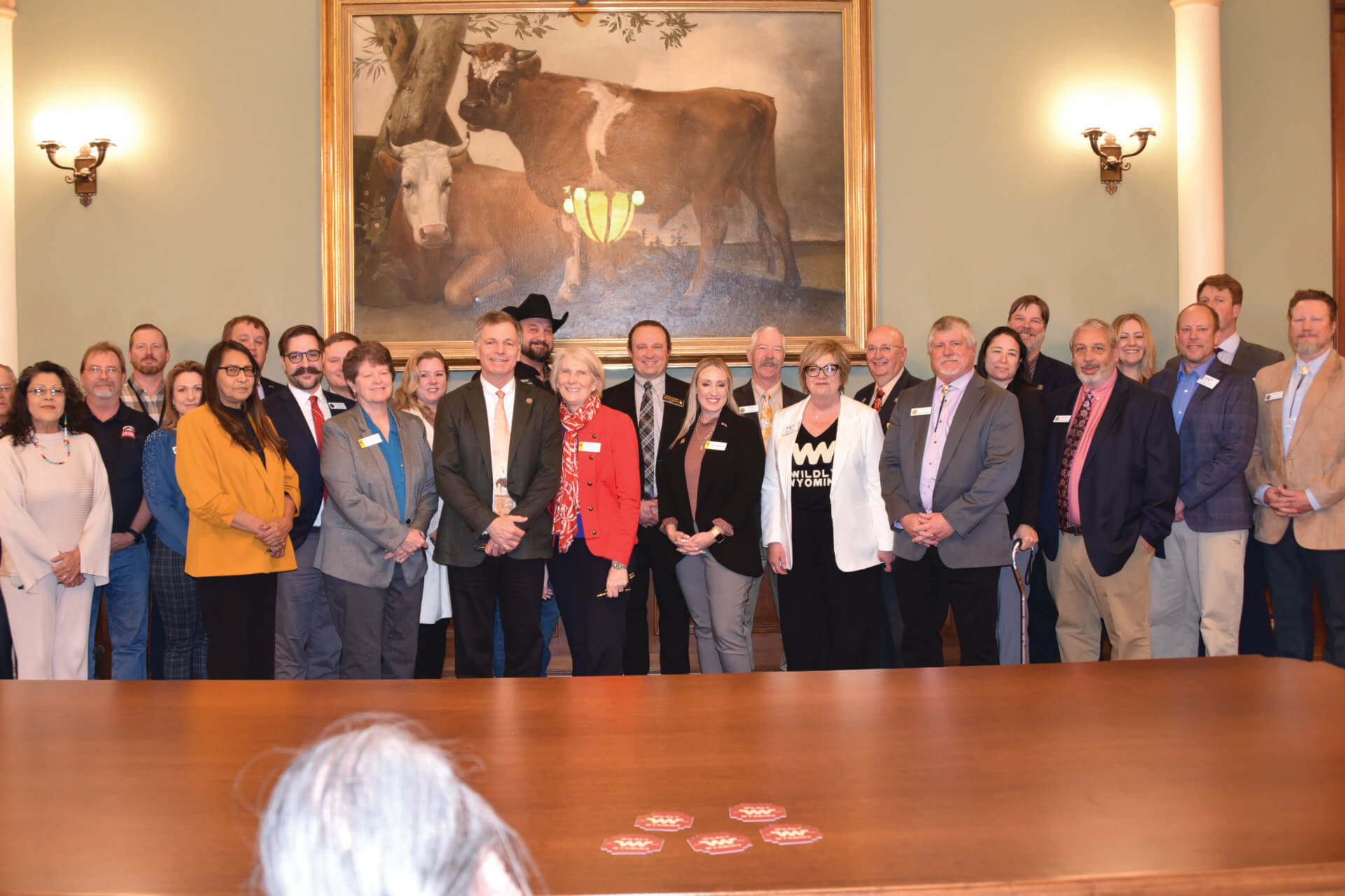
Eventually, the investments could help some Wyoming communities turn a corner and build reputations as great places to recreate. Those places, which tend to be public land dominated, are often the most desirable places to live, says McCoy at the University of Wyoming. “There’s kind of this tipping point where if you build recreational amenities, then people come and visit there and they see how wonderful those places are,” he says. “Then they want to stay in those places and try to build and grow businesses based on the fact that it’s a great place to live. A great example is Lander.”
ecreation
Of course, there’s also the risk of becoming too desirable. Mountain resort communities throughout the West, including Jackson Hole, have been poster children of unaffordability for the working class, and the cost of living has only become more problematic in the COVID pandemic’s wake. “It becomes more difficult for local residents to stay and to work and to afford those communities,” McCoy says. “That’s called the amenity trap.”
At least for now, few communities outside of Wyoming’s far northwest corner have to worry about becoming too renowned as recreation destinations. But in the Sublette County seat of Pinedale—just a 77-mile drive from Jackson and the recipient of many priced-out former residents—it is an active discussion. “When you get destination recreation in Sublette County, that leads to more people wanting to buy a second home in Sublette County,” says Sommers, the former speaker of the House. “And you can love a place to death. As you know, it certainly ruins your fishing hole.” There are also upsides to still being on the ground floor of having an outdoor recreation-based economy—specifically, the opportunity to grow with good planning and intention. “There’s this fear of Wyoming becoming overrun, becoming another Bozeman, another Boulder,” says Jenkins. “But we have the opportunity to do it really smartly right now, because we’re still in those infancy stages.” JH