Read The
Current Issue


Diamond Anniversary
Take a look back at Jackson Hole Mountain Resort’s inaugural season 60 years ago.
// By Katherine Wonson
Cruising through the RFID scanner to hop on a detachable high-speed quad ride that ends before you can finish eating a Tram Bar, it’s easy to forget that there was a time when mechanized travel up Rendezvous Peak seemed as unlikely as landing on the moon.
With 60 years of hindsight, the creation of Jackson Hole Mountain Resort seems like a foregone conclusion, but history shows it was anything but. JHMR’s origin story is a string of impossibilities and improbabilities that should have resulted in meltdown, failure, and bankruptcy, not in a 60th anniversary celebration for one of the world’s best-known ski resorts.
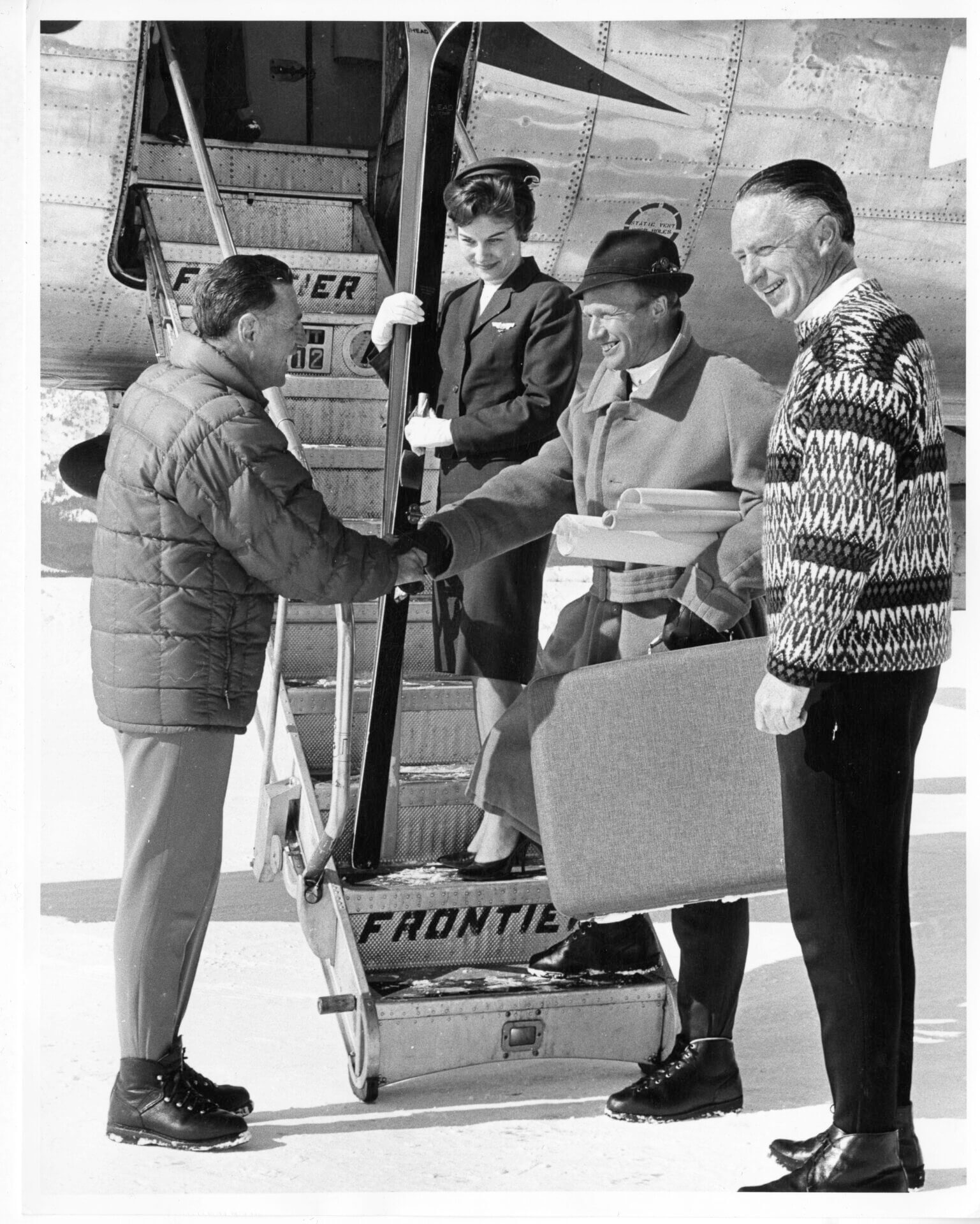
At noon on opening day, Tuesday, December 28, 1965, the Jackson Hole Ski Corp’s founders Paul McCollister and Alex Morley welcomed skiers to ride the mountain’s three lifts—and they were anything but the image of success. The ski area had opened three weeks behind schedule, resulting in the cancellation of over 1,000 lodging reservations—a massive impact on the valley’s burgeoning winter-hospitality industry.
The delayed start was just the beginning of the Ski Corp’s opening-day problems. Jackson’s new resort drew national attention because its aerial tram would be the longest and highest vertical ski lift in America. Jackson Hole Ski Corp’s value proposition was built on a promise to “match or surpass Europe in the quest for big mountains and short lift lines.” Hard to do without an aerial tram. The tram didn’t open until July 30, 1966.
There are not too many people who have created something from virtually nothing. This is my baby. It has turned out to be my life.”
—JHMR co-founder Paul McCollister
As major construction projects go, a six-month delay in launching the tram seems relatively minor. Just consider the enormity of the undertaking: develop a world-class ski resort from scratch in a remote corner of Wyoming in less than two years. On opening day, McCollister and Morley may have actually been celebrating the fact that they had opened at all that season.
As often happens in go-for-broke origin stories, Alex Morley and another founding partner, Gordon Graham, left Ski Corps within the first five years. McCollister then spent the next few decades trying to prove that their ambitious idea was not just prophetic, but profitable. When the Kemmerer family purchased the resort in 1992, they made the investment required to fully realize the founders’ vision. And now, with the rag-tag days far enough in the rearview mirror to appreciate from a safe distance, Jackson Hole Mountain Resort is committed to “building on the mountain’s storied tradition,” according to current owner Mike Corbat—a tradition that began with its fair share of trials and tribulations.
Over the last decade, the tech industry has become nostalgic for its so-called “garage stories”—origin stories filled with all-nighters; streaks of incredibly good and bad luck; visionary, unyielding founders; and, of course, the requisite underwhelming, makeshift garage workspaces. These stories have a purpose: to highlight the determination and creativity that shaped the company we know today. Hewlett-Packard has even memorialized its garage story by preserving its now-historic garage and turning it into a museum.
Today, if you fancy a museum moment with Jackson Hole Mountain Resort’s garage story, you can visit the Tram Dock Restaurant and run your hand along one of the 1966 tram cars manufactured by Traunsteinwerkstatten in Austria, painted cardinal red, in honor of Stanford, McCollister’s alma mater. The restaurant’s interior has been decorated with vintage Jackson Hole Ski Corp memorabilia, paying homage to the “impossible dreams” that fueled the resort’s founding.
Ideal and Overwhelming
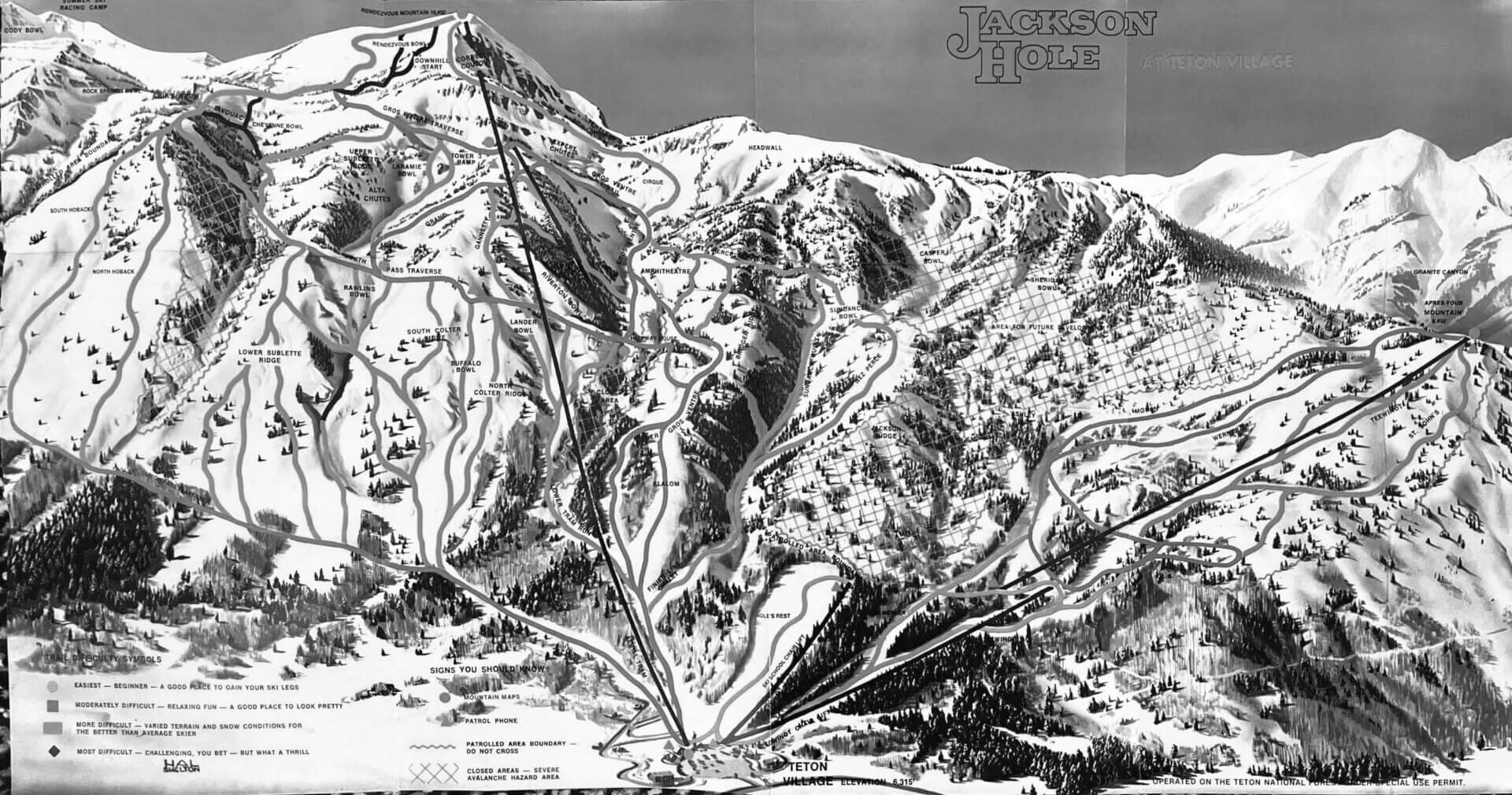
McCollister, an advertising salesman from California, and Morley, a developer from Cheyenne, were neighbors in the Antelope Flats area in Grand Teton National Park. Both were avid skiers and had joined forces to explore the idea of developing a ski area up Cache Creek. They agreed that a more suitable location was needed, and they skied Rendezvous Mountain together in 1962.
In 1963, after ski area expert Willy Schaeffler confirmed McCollister and Morley’s intuitions, calling the terrain “ideal and overwhelming,” McCollister and Morley formed the Jackson Hole Ski Corporation and, with the help of their first investors, purchased the ranch.
Tram Troubles
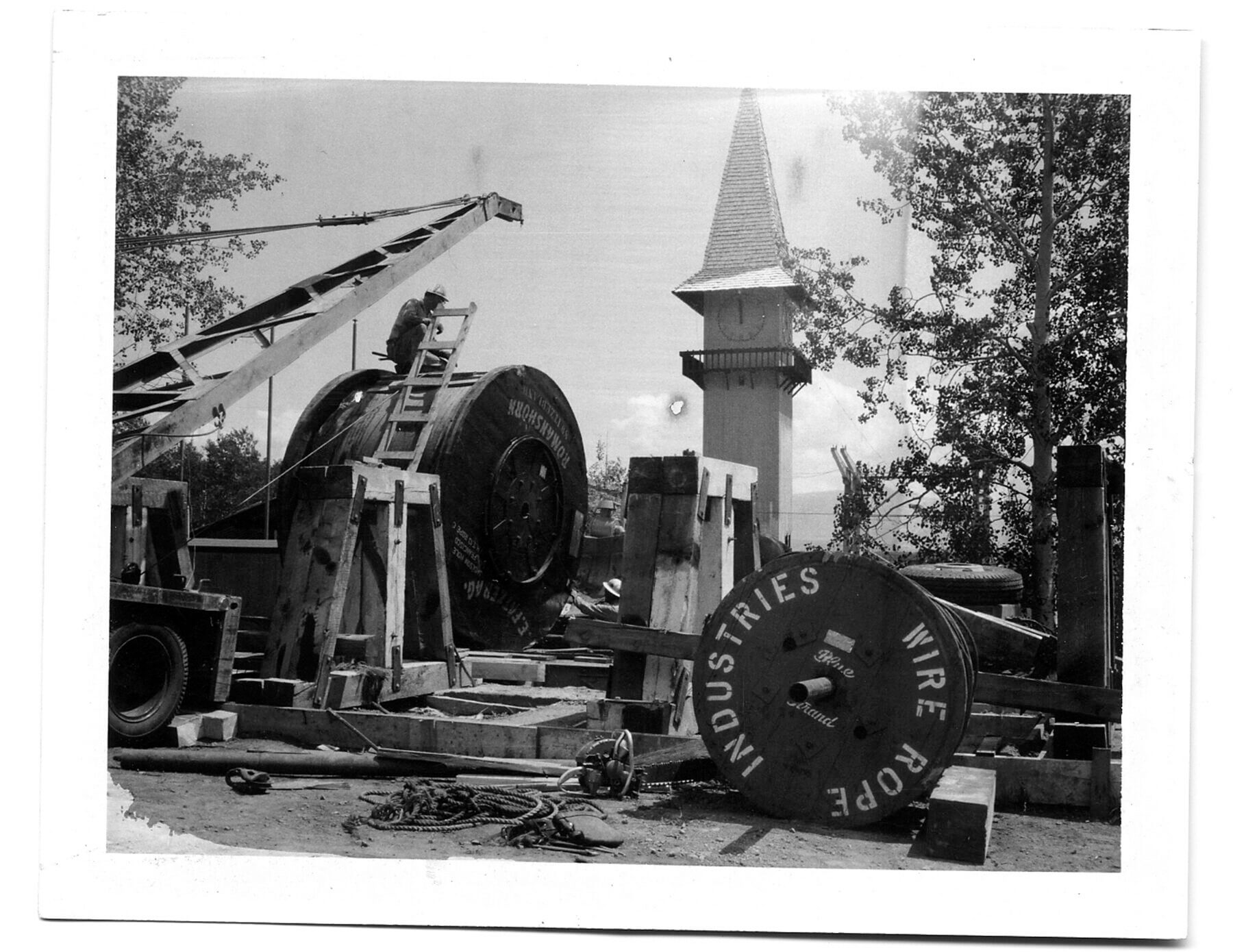
When construction of the tram began in the summer of 1965, it was slated for completion in several months. In a stroke of bad luck, the winch drum used to pull the cables ruptured, and the completion was delayed until late January. In December, McCollister, the consummate salesman, reassured incoming skiers that “exceptional skiing is still to be enjoyed by all types of skiers on the exciting and varied terrain served by our double chairlifts. These lifts alone provide more skiing than many major areas in the country.” Luckily, McCollister’s consolation sales pitch worked, and the guests came despite the missing tram.
Tram-construction delays continued through the summer of 1966. The tram finally opened on July 31, 1966, only to be closed for two days of repairs 10 days later. Despite its inauspicious beginnings, by all accounts the tram was, as journalist Jim Klobucher hoped, “built to truly Alpine dimensions, it offered a promise of skiing on a gauge unrivaled in America, on snow comparable with the finest in the Western Hemisphere, and in a setting of scenic grace and power.”
Opening Day
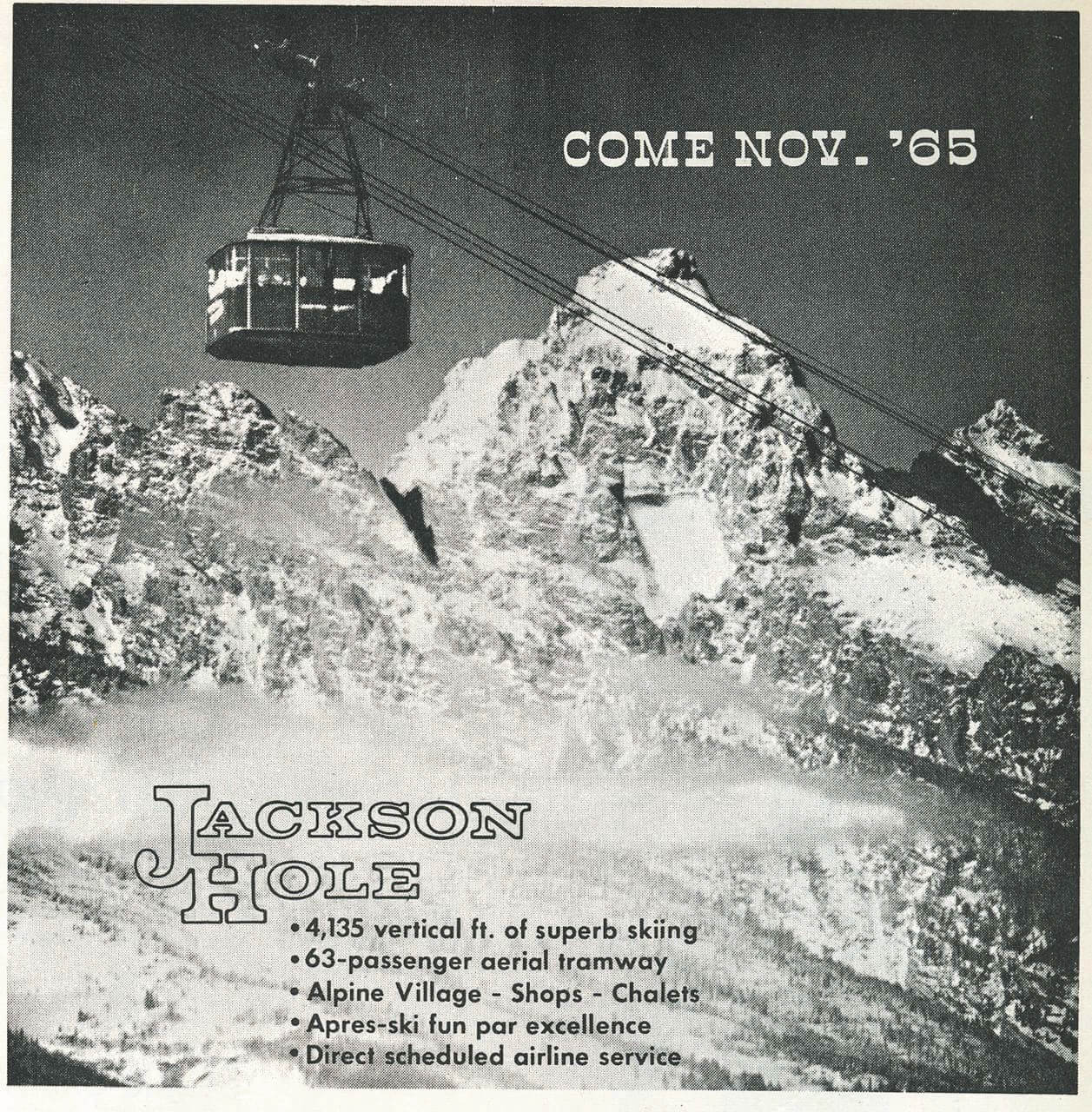
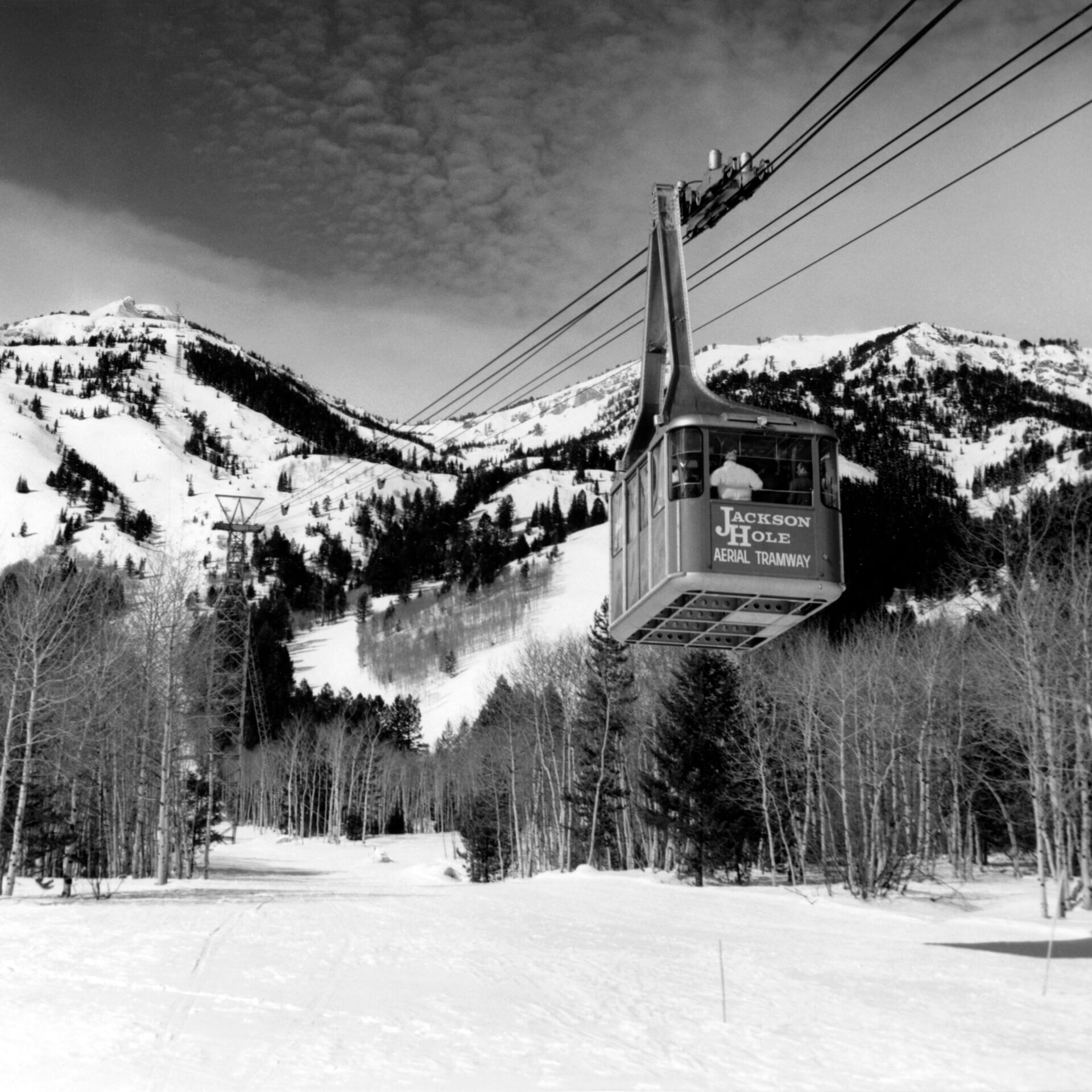
The December 5 opening was postponed to the 18th to accommodate construction delays. It was then delayed another 10 days due to a lack of snow. A local writer mused on the misfortune: “The weather plays strange tricks sometimes. For instance, when McCollister, Morley, and associates had their beautiful golf course ready to open—on Opening Day we had about six inches of snow! Now, when they set December 18 as the date their new ski lifts will start to operate, what happened? A shortage of snow … Well, anything can happen in Jackson Hole, and generally does.”
Jackson had suffered an unusually dry December, but thankfully, starting on December 23, a storm cycle delivered 22 inches of snow, providing a Christmas miracle for the Jackson Hole Ski Corp and its avid skiers anxiously waiting to try the new area.
Jackson’s luck continued to improve as news of a disastrous Christmas rainstorm in Aspen led to an uptick in reservations in Jackson. Within a month of opening, the mountain boasted a record 706 skiers in a single day. But there still wasn’t a tram.
Teton Village
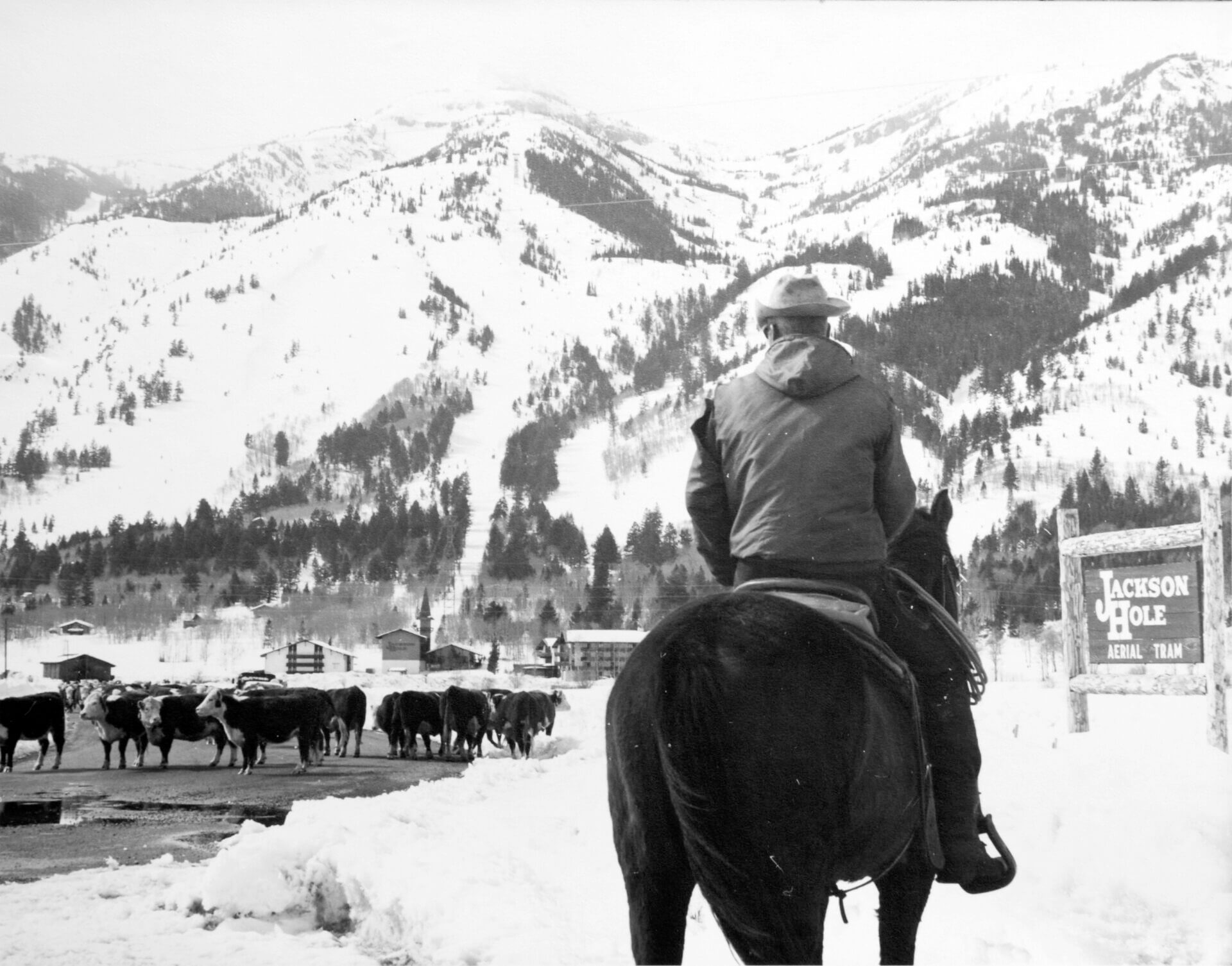
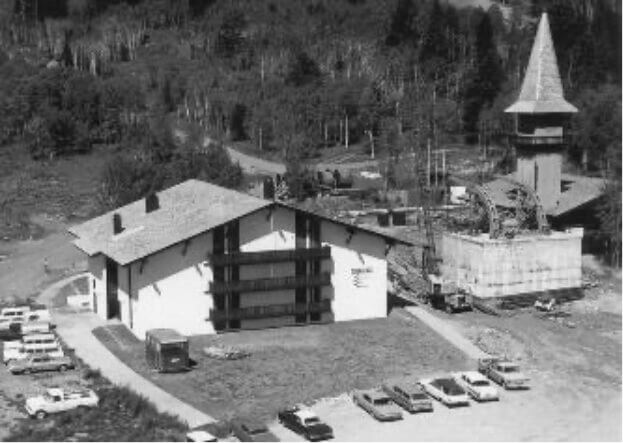
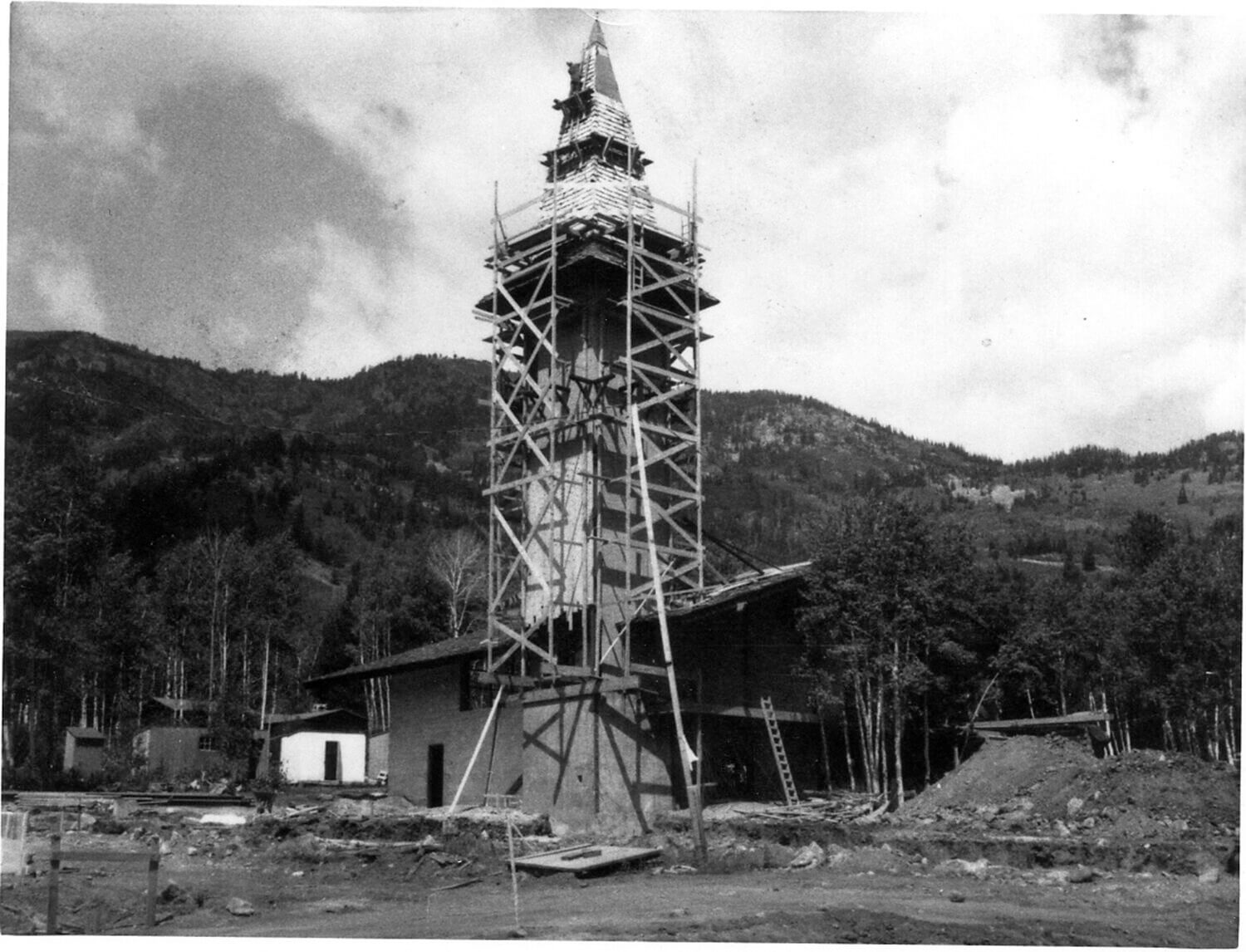
For opening season, Teton Village was not the “complete village” that the marketing department promised, and the town of Jackson offered little in terms of wintertime hospitality. At the time the ski area opened, only two hotels welcomed guests in Teton Village: Seven Levels Inn (shown below, left) and Alpenhof Lodge. The remainder of Teton Village was an expanse of snow fields—remnants of Crystal Springs Ranch, a summer camp for girls, that the Ski Corp purchased two years earlier. The tram tower stood where the Crystal Springs Barn had been. Before it became the Crystal Springs Ranch girls’ camp, the area was collectively known as “Poverty Flats,” due to the difficulty homesteaders had in supporting their families by farming its cobbly soils. JH