Read The
Current Issue


Q&A: Gary Duquette
// By Jim Mahaffie
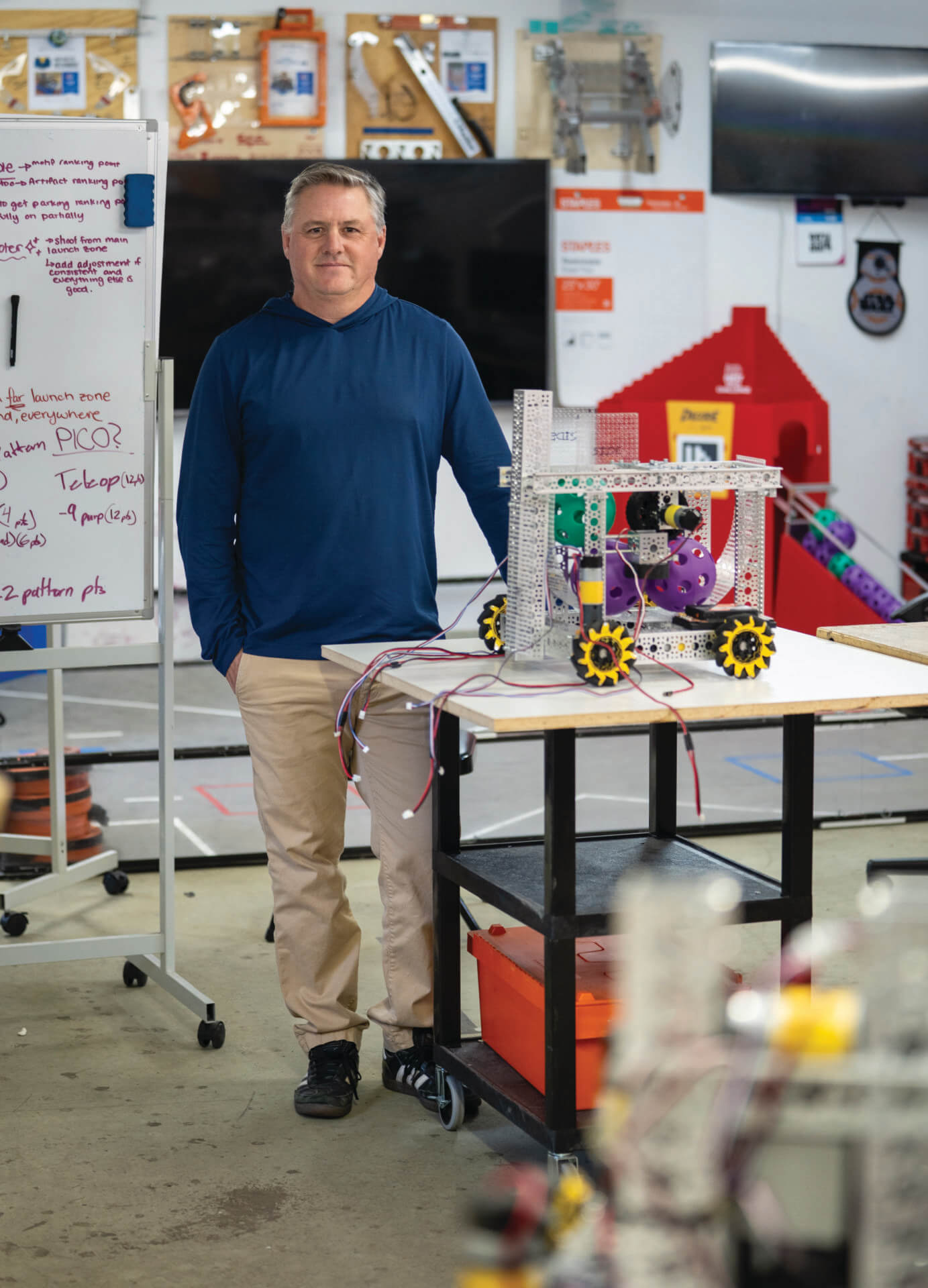
How do you get hundreds of mountain town kids fired up about something that doesn’t involve skiing, snowboarding, fishing, or climbing? Gary Duquette has that magic. Duquette runs the Jackson Hole RoboBroncs, which has grown from a single high school robotics club (in 2009) to more than 50 robotics teams across 12 Teton County schools. This year, more than 300 kids in elementary, middle, and high school are RoboBroncs.
Students build robots and compete in local, regional, and national competitions. Official challenges include tasks like lifting objects, navigating obstacles, and collaborating in alliance, but students tackle real-world problems, too, like designing robots to save sage grouse in Grand Teton National Park, blending engineering with conservation science (see the Q&A). “These experiences show them that robotics isn’t just for games—it’s for meaningful impact,” says Duquette, who retired from full-time teaching of science, technology, engineering, and math (STEM) skills in 2023 but continues to coach RoboBroncs.
Gary’s passion in bringing engineering and STEM opportunities to communities that might not otherwise have access to them is why he stands out in our community.”
—Bennett Lieberman, JH High School principal
Duquette also founded Wonder Institute, which has created community maker workshop spaces around Jackson. WI is a nonprofit supporting creative leadership, collaboration, and community. Local creatives can affordably rent space and equipment at the Teton County Library or the well-equipped woodshop and Silver Studio on Deer Drive. Makers include Olivia Hackett of Olivtrees wood art and jewelry. Kat Jacaruso and Zina Horman run Rip N Stitch, teaching sewing skills to students and making functional, sustainable goods. Caleb Nakia Rogers is a furniture maker who teaches Japanese joinery woodshop. And Kelvin Wu uses WI space to make custom skis, which are sold under his brand, Maiden Skis.
Bennett Lieberman, principal of Jackson Hole High School, is a friend, admirer, and very grateful fellow educator. “Gary has had to work with many community partners to give students opportunities to be exposed to a variety of STEM fields. He’s brought home many awards through the FIRST Robotics competitions, but more importantly, his work with the Wind River High School and their community is what stands out to me.”
We got Gary to sit down and chat.
Q: How did you end up in Jackson Hole?
GD: I’m the classic ski bum story. I got my BS in math and some of my teaching credits from the University of Massachusetts, Dartmouth, in 1992. I was cooking at a restaurant in Newport, Rhode Island. My Dad fixed up an old Ford Tempo and pushed me out of the house and west. I knew about Jackson for skiing, and I wanted to cook at the original Billy’s Burgers. I ended up first working in construction and as a breakfast cook at Bubba’s. Then I got a job teaching math at the high school.
Q: What changed? Why did you finally get a “real job?”
GD: I was kind of a lazy kid, but construction changed my life. It taught me that I had to be accountable. I worked with older guys who had accomplished something. One had climbed Everest. Another sailed across the oceans four times. They were some crazy-cool people, and they got in my face and got me to show some effort. I learned that success begets success.
Q: Can you pass that lesson onto kids?
GD: Because of my background, I can see kids differently than most teachers. I can tell my story, and I know how they feel. Lots of kids gravitate toward the hopeful message of finding yourself and what you want to do later in life.
Q: What first inspired RoboBroncs?
GD: A student who had recently moved here had robotics in his school in Atlanta. Kathy Milburn (former principal, Wilson Elementary) was then in charge of math and STEM programming in the district. She found the money to start a robotics program here. A bunch of students in our high school engineering classes jumped in and built a robot. The school district offers lots of sports, but besides Speech & Debate, the RoboBroncs is one of the few things kids can do in our schools that’s not sports-related. It was pretty cool because we all had to learn together as peers, because nobody knew what we were doing. Wes Womack from Square One (now at Epsilon Technology) jumped in as our mentor, he was also key to our success.
Q: You’re also helping kids work with NASA?
GD: NASA runs the HUNCH program, (High School Students United with NASA to Create Hardware), and I work with Wyoming Indian High School [students]. They have completed projects like developing metal stakes for a moon mission and a sleeping bag for the lunar module. I’m currently working with students on NASA’s “soft goods” team to sew canvas organizational kits for astronauts. We’re training new students by having them produce bags for the Wonder Institute. It’s hands-on work that connects Native students directly to NASA engineers—an incredibly powerful experience.
Q: What does robotics offer kids?
GD: Besides STEM education, I think it offers a chance for hard work and soft skills, too. Robotics is all about failing, and kids learn the ability to fail, solve problems, and pick themselves up. That teaches drive, and if you’re driven, I believe you can do anything. My four kids went through our robotics programs. They’re all hard workers and good people. Robotics is different from anything else you can do. Above all, it’s about teamwork and working with your team through the exploration process.
Q: For how amazing RoboBroncs, WI, and HUNCH are, they don’t make the local news much.
GD: (laughs) People say I’m the worst marketer they’ve ever met.
Q: Working on anything really cool right now?
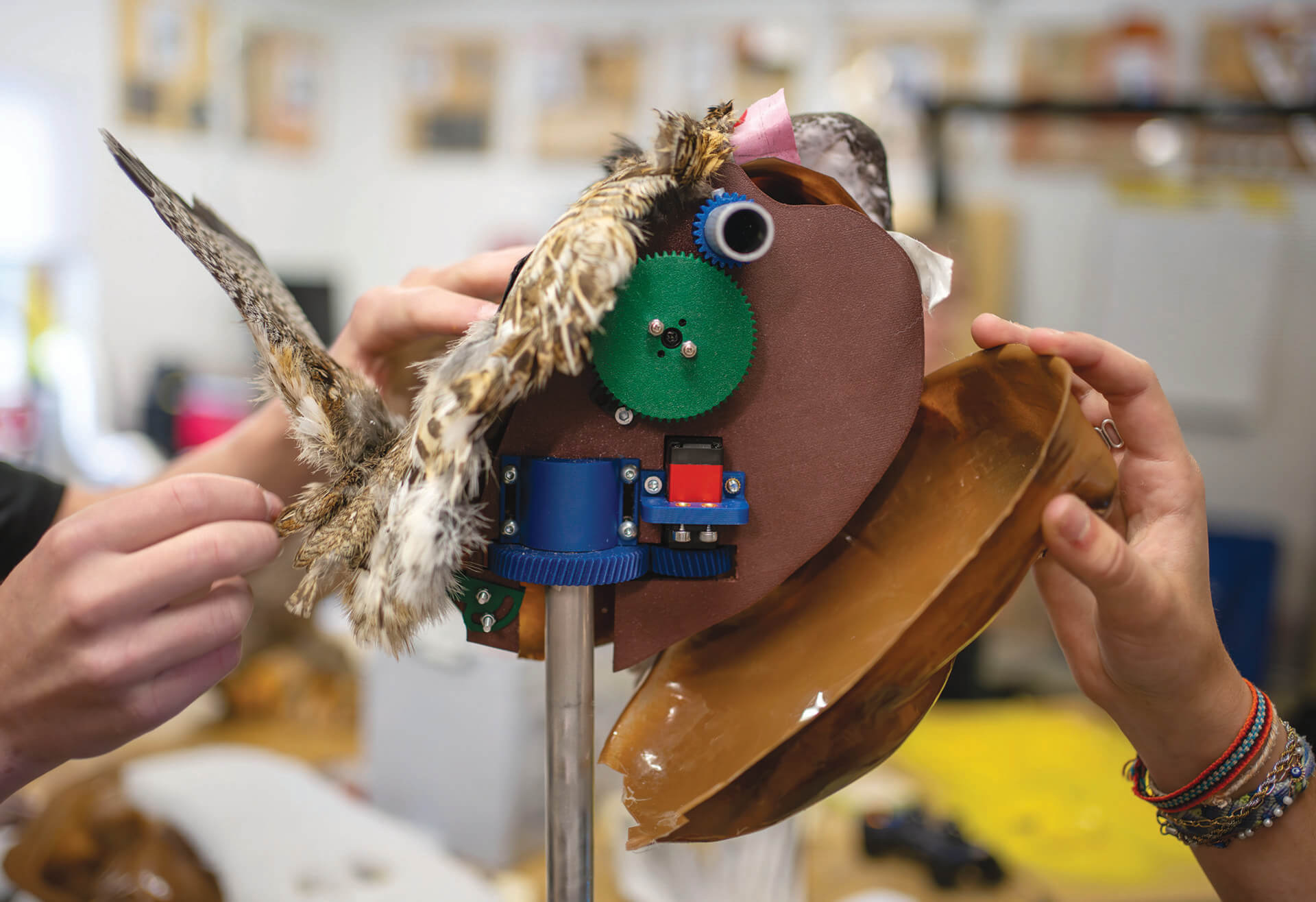
GD: Always! One cool project is that we’re building robotic sage grouse for the Teton Raptor Center. The goal is to lure grouse away from the dangerous Jackson airport runway area with a mock mating dance, and we’re building six robots that will do that. Nothing’s really worked so far, so they wanted to try robots. The kids love it.
Q: What’s your vision for the Wonder Institute?
GD: I’d like to see a place here in Jackson like the BARN (Bainbridge Artisan Resource Network) in Bainbridge Island, Washington. It’s a huge building specifically for makers and artisans, with 10 different studio spaces for glass, culinary arts, metals, technology, woodworking, writers, and more.
Q: You moved here to be a ski bum; do you still ski?
GD: I try to get out as much as possible—at [Jackson Hole Mountain Resort], on the Pass, and now my kids are getting me out of my bubble to ski backcountry in [Grand Teton National] Park. I’m an old-school tele skier.
Gary on Getting Kids into Robotics
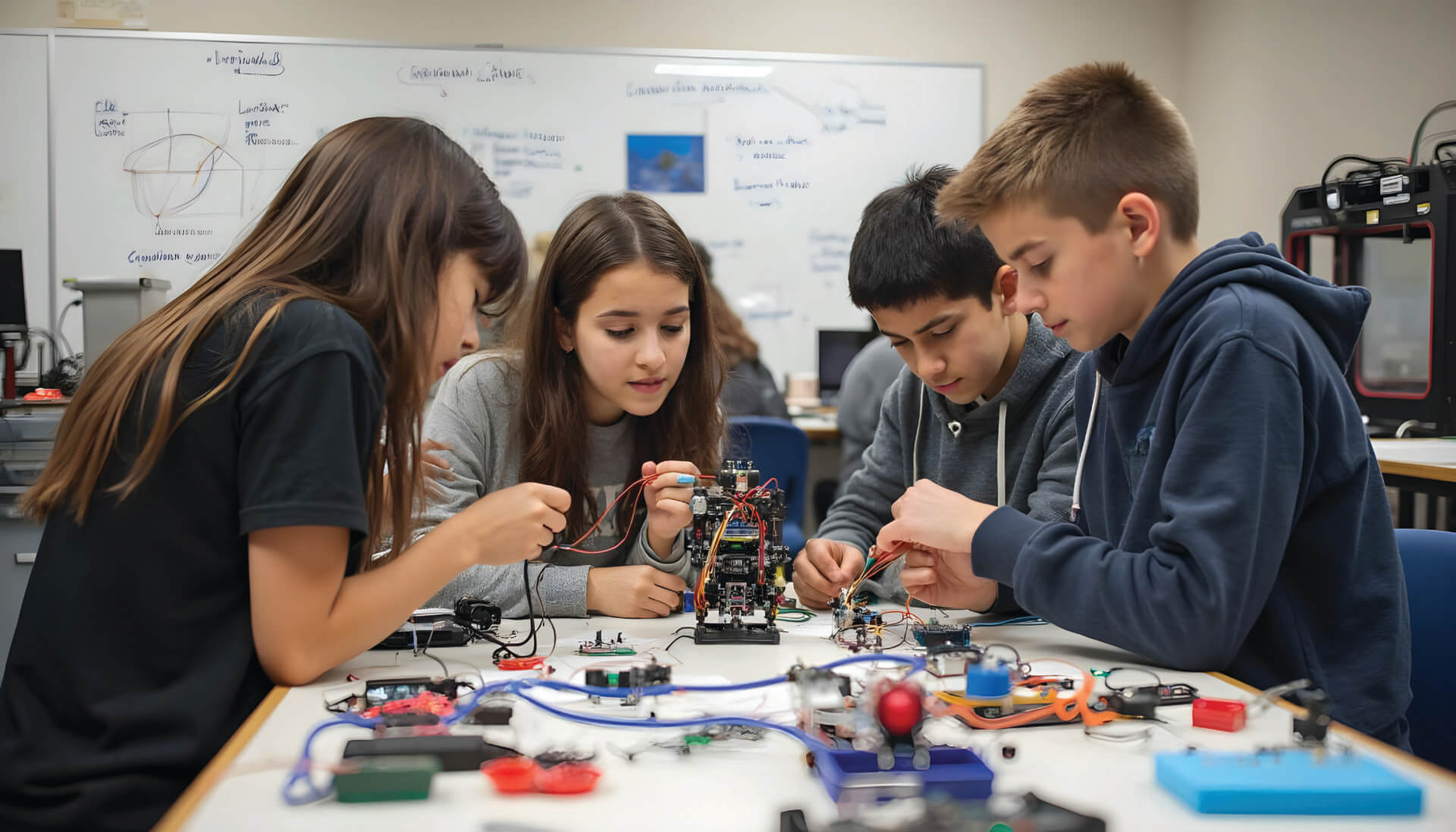
“Younger kids get hooked when building with their hands and seeing things move because of something they created and programmed. You can start really young with Lego robot kits and end with $10,000 robotics in high school. We try to keep it playful and purpose-driven. Iteration is the key for younger students, since they get to run the robots over and over again, making small changes—kind of like a live video game. As far as teaching STEM, it’s all about showing students that these tools and skills let them solve real problems, not just do well in school. Once they feel ownership of a project, they’re all in.” JH