Read The
Current Issue


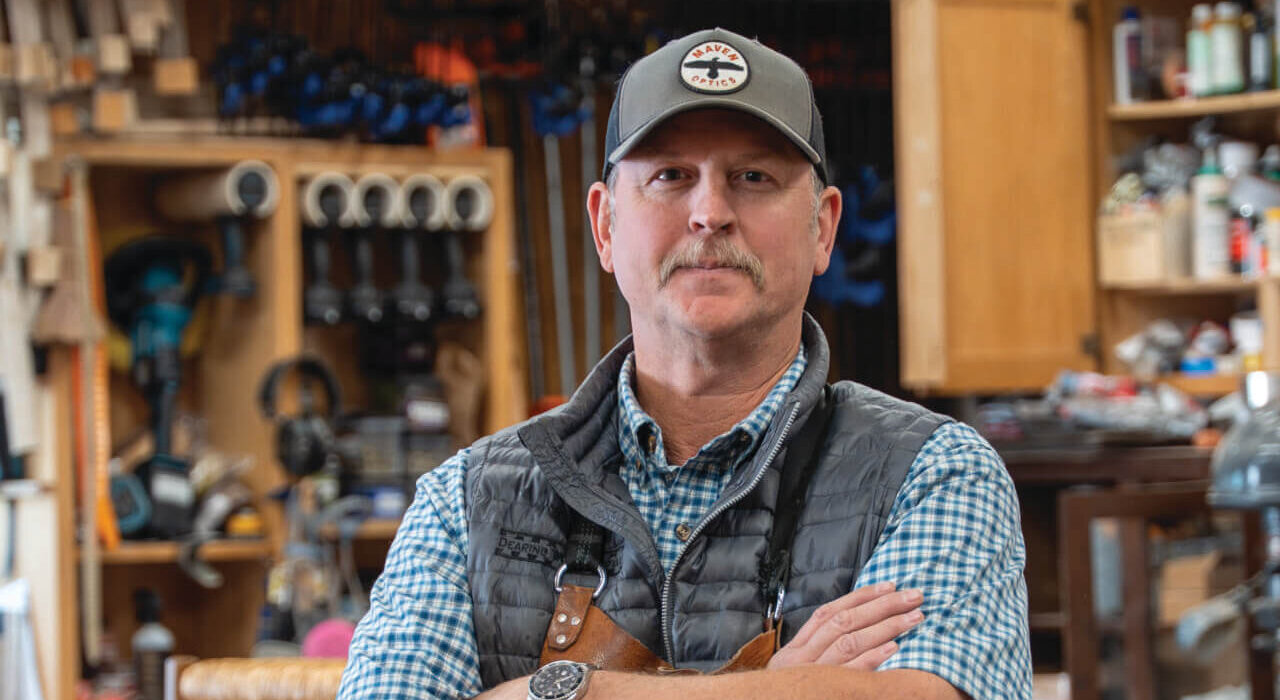
AS TOLD BY: Rob Dearing
Restoring antique furniture takes patience and an appreciation for the past.
// By Samantha Simma
In the corner of a workshop in an industrial park south of downtown Jackson, wood shavings curl onto the floor like feathers, and a faint scent of varnish hangs in the air, mixing with the earthy tang of aged wood. This is where Rob Dearing rebuilds the past—one dovetail joint, spindle, and gossamer-thin veneer at a time.
Dearing came to Jackson in 1993 with a degree in parks, recreation, and tourism management from Clemson University. He imagined a career with the National Park Service. “I thought I’d be in the backcountry,” he says. Instead, he found himself working for Terry Winchell at Fighting Bear Antiques, learning how to bring broken things back to life.
“I like the problem-solving part. Every piece is a mystery—how it was built, how it broke, how to make it whole again.”
—Rob Dearing
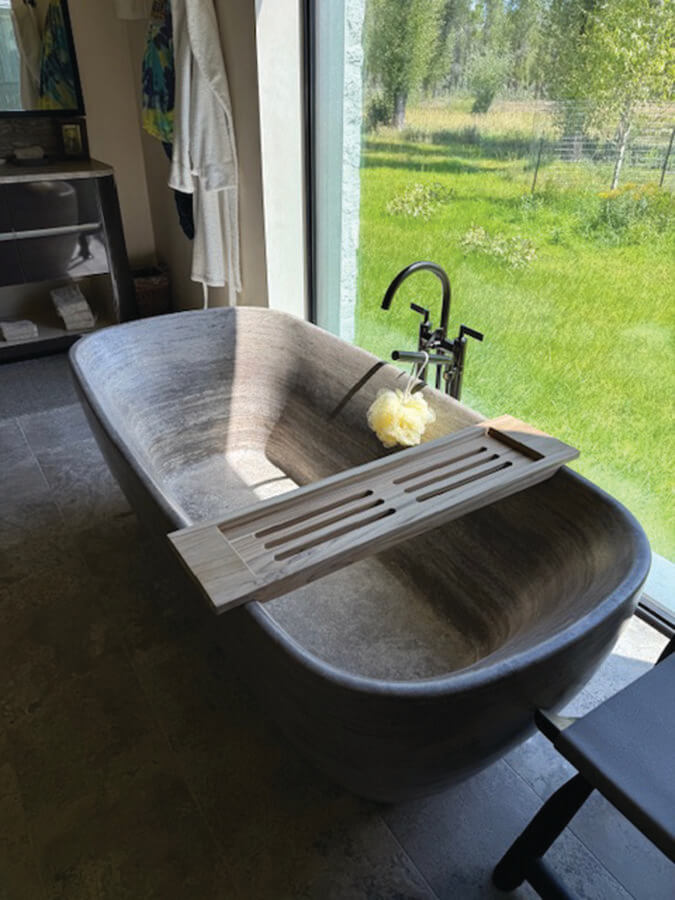
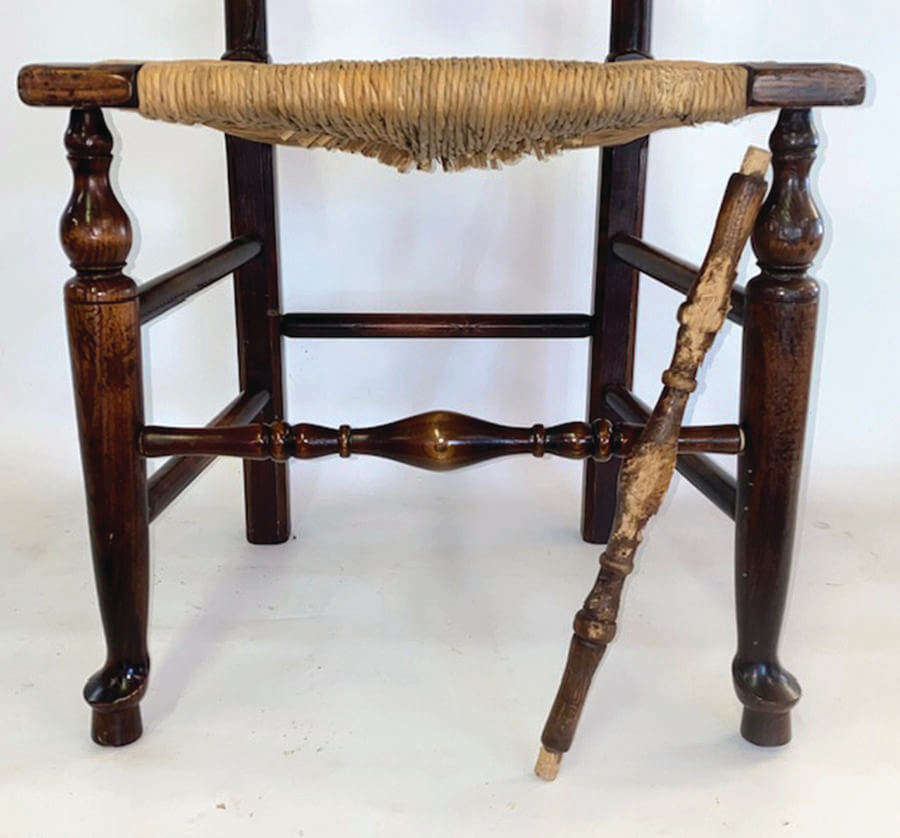
By 2009, he’d started his own furniture-restoration business, working almost entirely by hand. “I’ve got machines, sure,” he says. “But most of the time it’s clamps, glue, chisels, and patience.” His workshop is filled with stacked pieces of salvaged wood, antique furniture in varying states of disrepair, and a growing archive of stories embedded in each restoration.
What began as a side job turned into a career steeped in craftsmanship and care. “I like the problem-solving part,” Dearing says. “Every piece is a mystery—how it was built, how it broke, how to make it whole again.” Sometimes he finds a bullet buried in a beam. Sometimes, playing cards or coins tucked in a drawer’s false back. “You never know what history is hiding inside,” he says.
“There’s something satisfying about doing one thing really well. Restoration isn’t flashy. It’s slow. It’s quiet.”
One winter, cross-country skiing through Grand Teton National Park, Dearing spotted a cluster of old furniture on a covered porch. He recognized the craftsmanship—handmade, and worth preserving. “I took photos and showed them to [members of] the park service,” he says. That chance encounter led to a years-long partnership restoring heritage pieces for the NPS and the Murie Center.
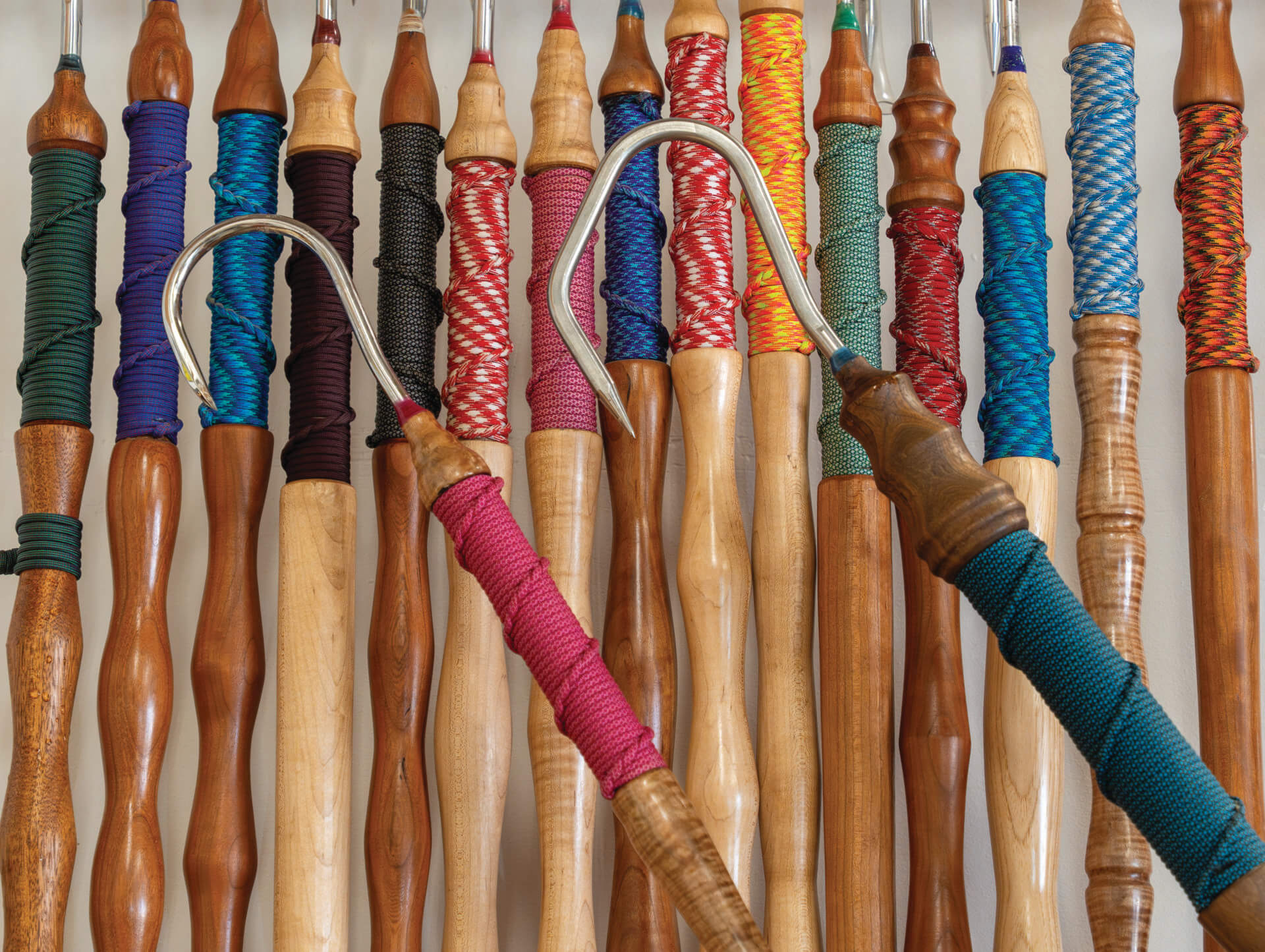
He’s not one to advertise. Clients find him through word of mouth or, more recently, through his Instagram feed, a catalog of meticulous repairs and the occasional fishing gaff. The gaffs—custom tools used to haul halibut into a boat—are a side project born from a trip to Alaska with his late father-in-law, known as Bear. Dearing named the line E. Bear’s Gaffs, a nod to Bear and his grandfather, Edward. He’s made over 100, each one unique and turned by hand.
Here, rob shares more of his own story.
I grew up around antiques. My mom was a dealer. The first thing I remember fixing was the back of a chair—I was maybe six. Just hand-weaving the seat. I didn’t think much of it at the time. When I moved to Jackson, I trained as a bootmaker. That didn’t pan out. I started helping out at Fighting Bear Antiques, and that’s when I realized I already had the right instincts from my childhood. I stayed with it.
Old furniture tells you what it needs. Sometimes it’s obvious—like a broken leg. Sometimes it’s not until you take it apart that you find wormholes, loose joints, old fixes done badly. You take it down to the bones and build it back up. There’s a rule among restorers: from six feet away, you shouldn’t notice the repair. From six inches, you should say, “That’s a damn good fix.” That’s the bar.
I like cherry and mahogany, but I work with whatever I need to match. I’ve got stacks of salvaged wood—drawers full of dowels and knobs and fragments. There’s a whole network of us restorers around the country—we’re part of the Finishers Guild—and we trade pieces, ask for help, share techniques. It’s a small group. Maybe 75 of us. Most of my mentors are in their 70s or gone now. I’ve got one apprentice, Luke. He’s great. Sharp eye. Good hands.
I also make these fishing gaffs. I was up in Alaska with Bear, my father-in-law. We hooked a halibut but couldn’t get it into the boat. I came home and started turning wooden handles in the shop. Bear passed not long after, and I named them after him and my grandfather: E. Bear’s Gaffs. Every one of them is a little different. I match them to people’s boats, play with new cord patterns, different hooks. It’s fun.
Jackson’s not always easy for this kind of work. I can’t just run down the road for materials. But there’s plenty of old furniture, and people here seem to care about keeping it around. That’s half the battle.
The Park Service stuff was a lucky break. I saw a table while skiing through the park, took a picture, showed it to a ranger. We started working together cataloging their pieces, restoring them. Some are locally made, one-of-a-kind. It’s good work. Quiet work. You feel like you’re preserving something that would otherwise be lost.
When I’m not in the shop, I’m with my wife, Molly, and our two kids. We ski, we hike, we get outside as much as we can. I open the shop doors when the weather’s good. The air smells better when it’s moving.
There’s something satisfying about doing one thing really well. Restoration isn’t flashy. It’s slow. It’s quiet. You’ve got to care about the details no one else sees. When someone comes in and says, “I didn’t even notice it was broken,” that’s the best compliment I can get.
Follow @dearingworkshop on Instagram to see recent restorations and available E. Bear’s Gaffs. JH