
Read The
Current Issue
Jackson Hole Buffalo Meat Company
Grill buffalo and elk here or ship it anywhere in the country.
// By Samantha Simma
Founded in 1947 by someone whose name has been lost to history, Jackson Hole Buffalo Meat Company is one of the valley’s longest-running food businesses—and one shaped as much by history as by intention. Before it was a butcher shop, it offered cold storage for local families at a time when refrigeration was rare in the remote Rockies. The business has operated in several locations over its eight decades—originally near today’s sheriff’s office in downtown, later on Gregory Lane, and for the past 25 years, in its current location in Smith’s Plaza.
Current owner Chris O’Blenness, a Jackson native, purchased the company in 2017 after a career in the farm-to-table world that took him from Wyoming to New York. Stepping into this role brought him home. Today, he runs the business alongside his brother, overseeing a model centered on native North American species—primarily bison and elk—and a supply chain defined by scarcity rather than volume. “There are about 500,000 bison in all of North America,” O’Blenness says. “If we processed them at the same rate we process beef cows, there would be no more bison in a few days.”
Jackson Hole Buffalo Meat Co. works with small farms and ranches across the West, helping sustain rural economies and ranching traditions in the process. In addition to sourcing from a limited network of producers, O’Blenness also raises buffalo himself at OK Ranch in Teton Valley, Idaho. All processing is done in-house, with cuts sold without fillers, blends, or added fats, but with some cooking advice: “Across all game meats, the biggest enemy is overcooking,” O’Blenness says. This is a guiding principle reflected in both how the meat is handled and how customers are encouraged to cook it. Open 10 a.m.–6 p.m. Monday–Friday; 1325 S. U.S. Highway 89; 307/733–4159, jhbuffalomeat.com
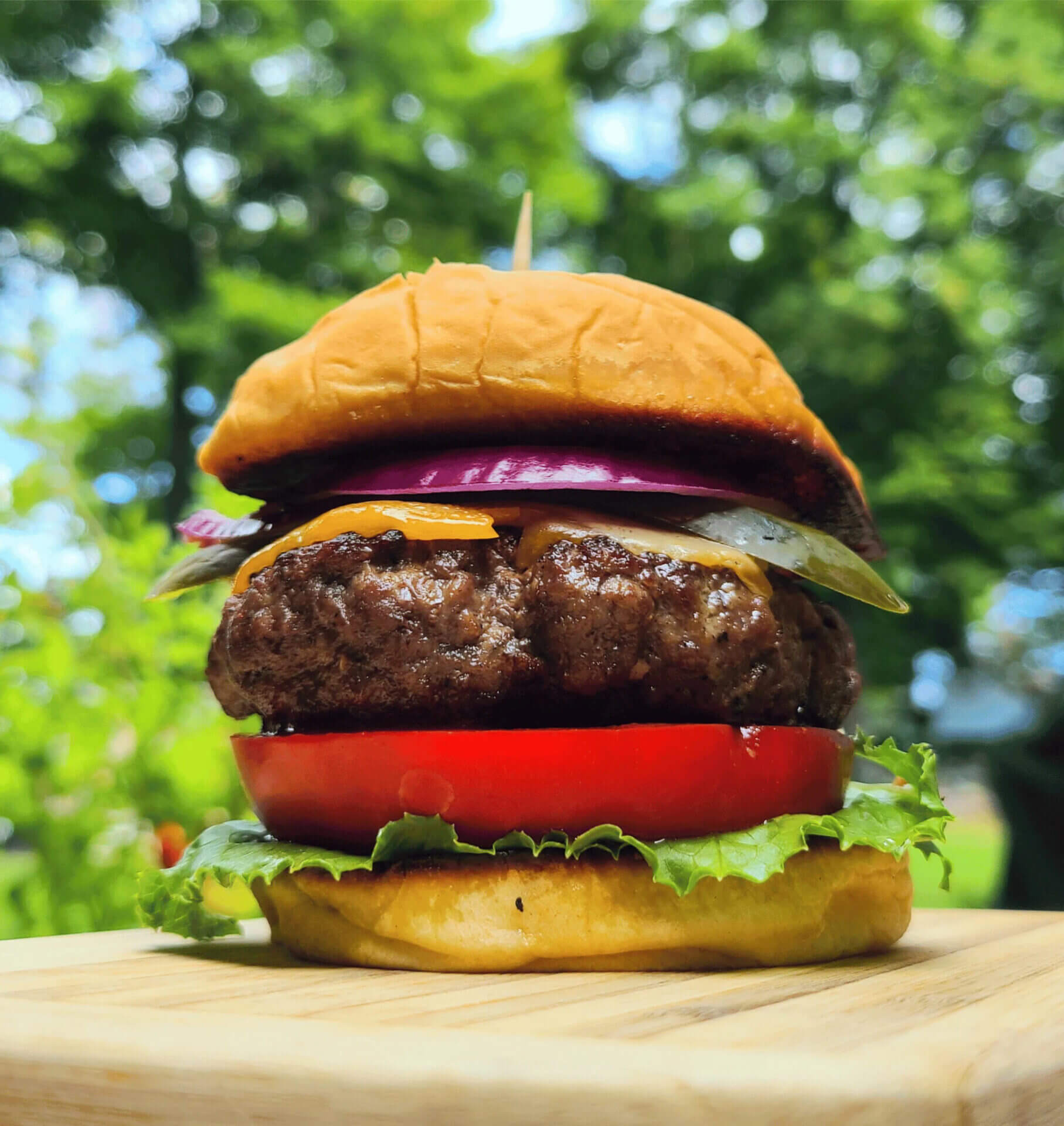
Ground in-house from 100 percent buffalo, Jackson Hole Buffalo Meat Company’s buffalo burger is lean and dense, with no added fat, helping patties hold their shape and release very little grease during cooking. Because the flavor of these is as close to tasting like beef as bison gets, it’s an accessible entry point for those new to game meat. “Buffalo is to beef as elk is to lamb,” O’Blenness explains. Cook to medium-rare to preserve both moisture and texture. The grind also works well for meatballs, but for those who go the burger route, O’Blenness recommends American cheese, a sesame or potato bun (not brioche), and simple toppings so as to not overpower the flavor of the meat. $25/lb.
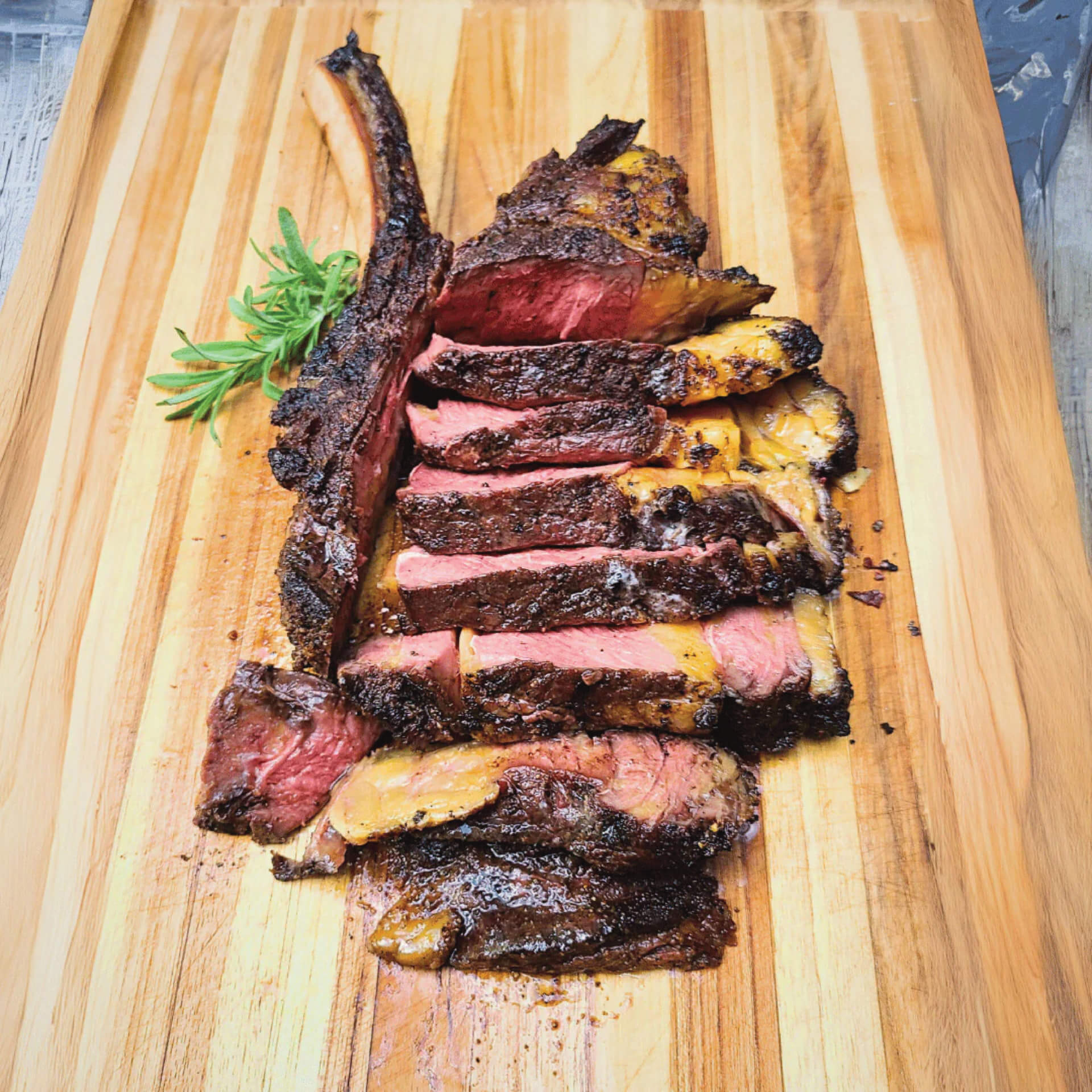
A thick, bone-in ribeye aged for 28 days, the buffalo tomahawk is produced in limited quantities—a single rib rack yields only about five to six steaks, depending on size. Dry aging concentrates flavor and subtly alters the texture, creating added depth without masking the meat’s character. O’Blenness says it is a “meat adventurer’s holy grail,” combining rarity, size, and presentation in a single cut. He keeps seasoning minimal: salt, pepper, garlic salt, and flaky sea salt to finish. A green salad balances its scale. For sauce, try a huckleberry agrodolce, a recipe featured on the company’s website. $110/lb.
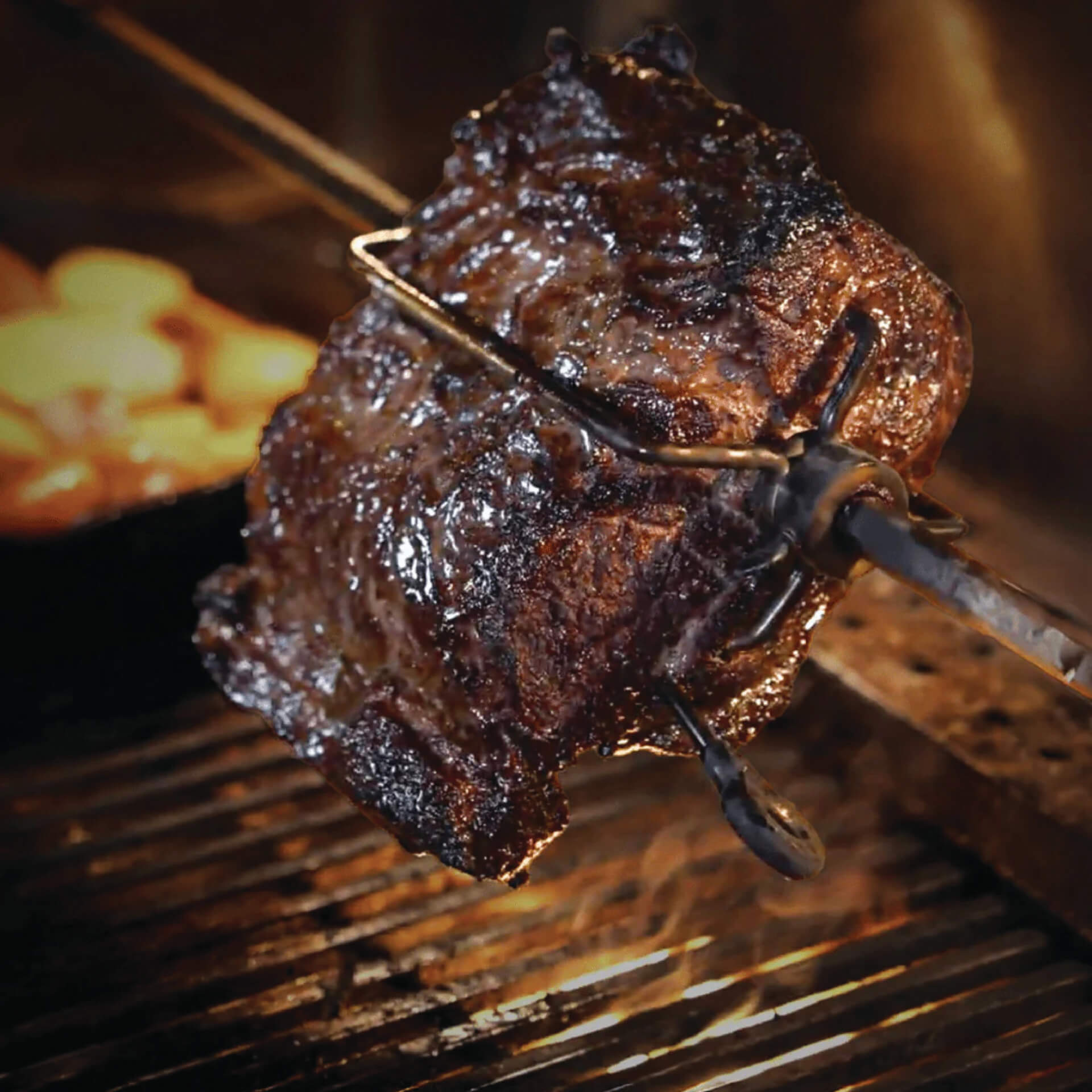
O’Blenness calls buffalo prime rib “a foolproof feast,” emphasizing that home cooks can handle it. A whole roast usually weighs 12 to 14 pounds, and O’Blenness portions it into smaller sections—usually 3 to 4 pounds, 5 to 6 pounds, and 7 to 8 pounds. Some of the prime rib comes from O’Blenness’s own small herd at OK Ranch, a 640-acre spread on the western side of the Tetons. The cut responds well to a reverse-sear method, producing even doneness from edge to center and a firm exterior crust. $75/lb.
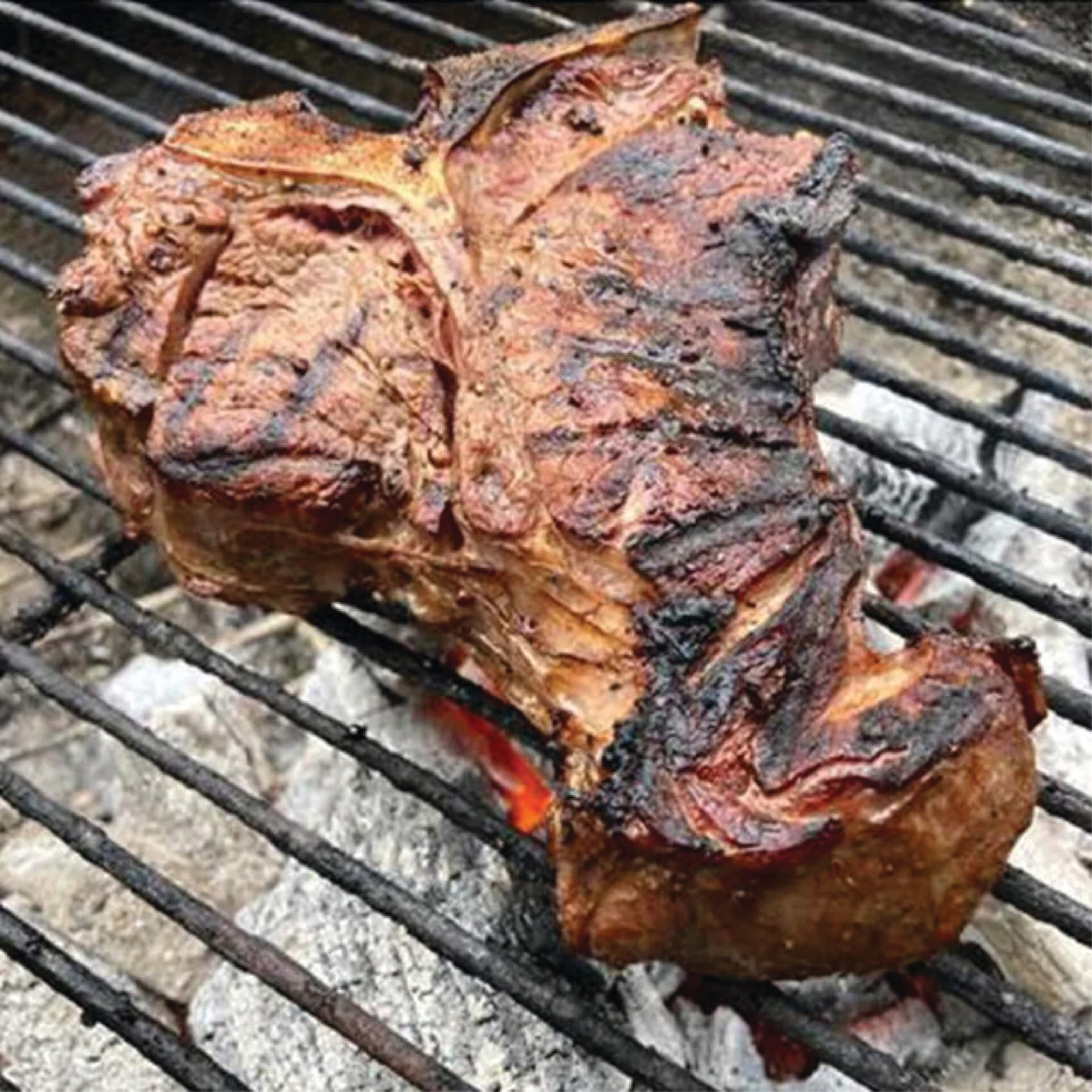
Each elk T-bone includes both strip loin and a portion of tenderloin, offering two textures in a single steak. “It’s the distilled essence of the best parts of an elk,” O’Blenness says. And he says it’s also a good introduction to elk, which is denser in texture and more intensely flavored than buffalo. The elk sold here is actual Rocky Mountain elk. O’Blenness notes that farm-raised red deer and elk hybrids from New Zealand dominate many restaurant menus due to cost and supply (and are called “elk” on menus), while true Rocky Mountain elk is far more limited. He recommends simple seasoning—Mill Iron Ranch’s Chancey’s seasoning salt is sold in the shop—and finishing with a pan sauce rather than heavy marinades. $50/lb.
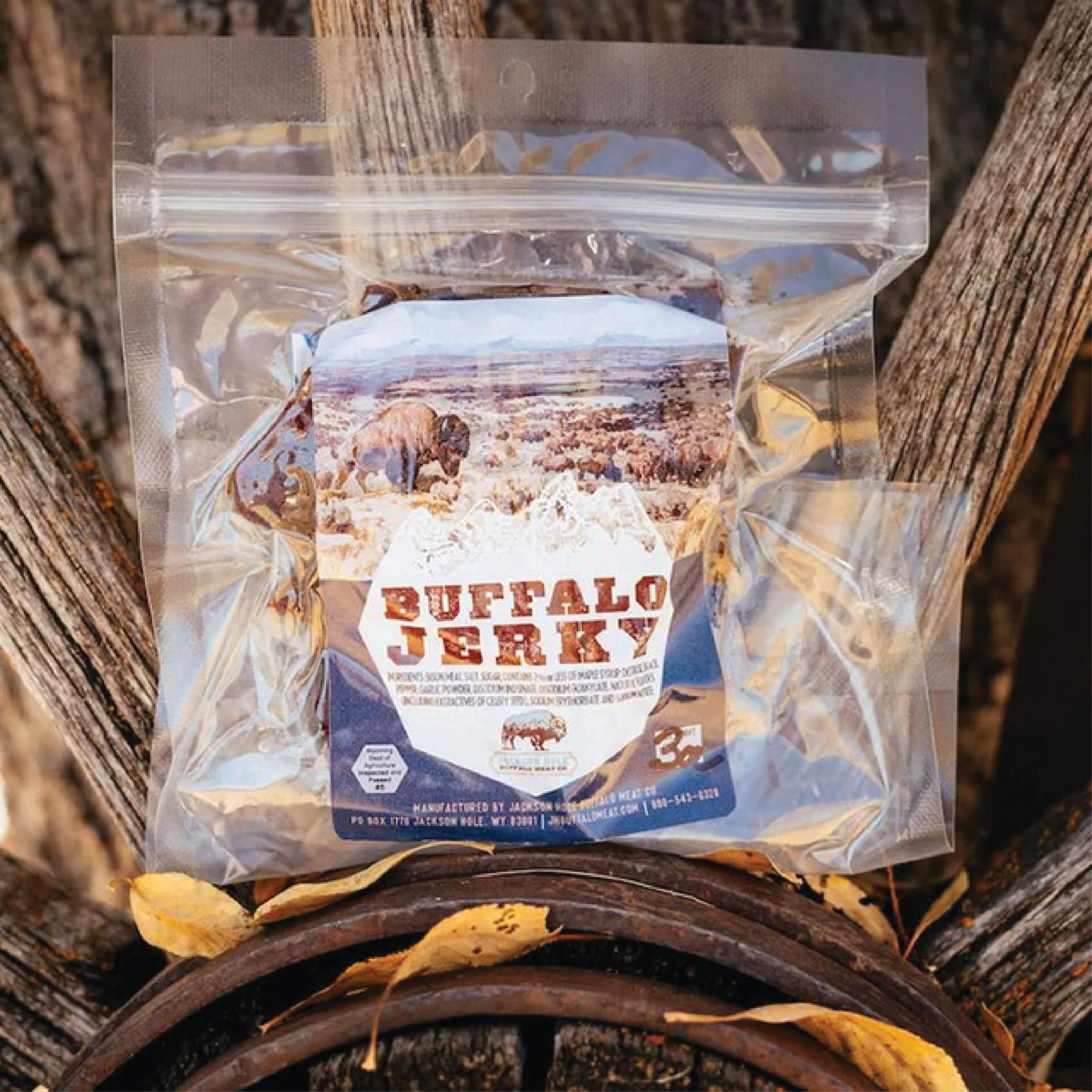
Made from whole-muscle buffalo, the buffalo jerky is hand-sliced, dry-rubbed, and marinated for two days before it is slow-cooked for six hours. Unlike many other commercial jerkies, this one isn’t tumbled or soaked in liquid seasoning. “It’s just spices, salt, and buffalo,” O’Blenness says. The slices are cut relatively thick and finished to retain slight tenderness rather than a brittle snap. Shelf-stable and travel-ready, it reflects the company’s broader approach: minimal manipulation, straightforward ingredients, and processing done entirely in-house. The result is closer to steak than typical jerky—thicker cut, tender at the center, without the mealy texture often created by commercial processing. Price varies by type and package size. JH