
Read The
Current Issue
AS TOLD BY | Ian McGregor
// By Tilli Rossetti
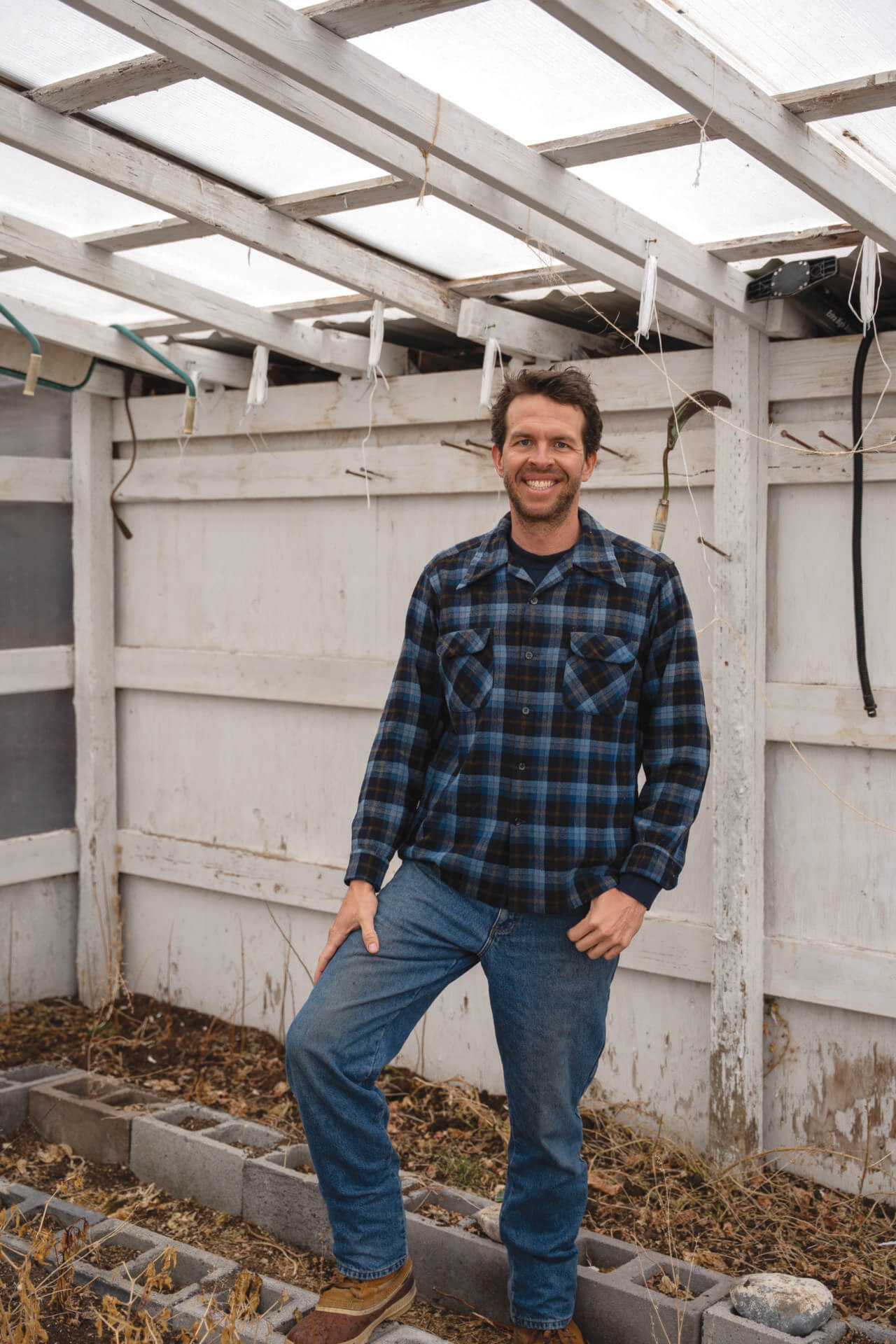
It sounds like the start of an intriguing piece of fiction: there was a kid in Jackson who had the chore of taking care of the family’s two llamas (Gannett and Lightning) and who grew up to encourage giving young kids knives, and founded a hard cider company that saves the lives of bears.
But this is Ian McGregor’s life—with the intervening years spent studying English and creative writing at Skidmore College, learning fermentation in California’s wine country, summers back in Jackson selling pies at the Saturday farmer’s market, working and teaching at a nonprofit farm in New York’s Hudson Valley, and marrying his college sweetheart. Oh, and reading journalist Michael Pollan’s seminal 2006 book The Omnivore’s Dilemma, which explores Americans’ complex relationship with food.
“That [book] set me on a sustainable-food angle for feeding myself,” says McGregor, who had started visiting apple orchards around Skidmore, which is in Saratoga Springs, New York. “I loved apple picking, something which there isn’t much of in Wyoming. I never realized how many different varieties of apples there are.”
After college, McGregor had the idea he wanted to be a winemaker and moved to northern California to learn about viticulture. “It was hard work, but I enjoyed the process of harvesting something from the land and turning it into something people could consume and enjoy,” he says. In California, he also worked at Front Porch Farm, a 110-acre organic and biodynamic farm in the Russian River Valley that grows over 200 varieties of veggies, annual and perennial cut flowers, blackberries, stone fruit, and wine grapes. “There, I learned everything about growing things that I couldn’t learn in the agriculturally inhospitable environment of Jackson,” he says.
McGregor also apprenticed on a farm on the opposite side of the country: Stone Barns in the lower Hudson Valley. Founded in 2004, Stone Barns is a working four-season farm and hub for learning, creativity, and experimentation with an on-site Two-Michelin-Star restaurant, Blue Hill at Stone Farms. In the apprenticeship program, McGregor focused on vegetable production and also teaching kids. Eighty thousand kids from the greater New York City area visit the farm annually. “We were just making kids weed the beets all day, and then they’d come back and be like, ‘I eat kale now!’ I witnessed their transformation, and it lived inside of me,” he says.
Also inside him was a desire to return to Jackson. “I always knew I wanted to raise my family in Wyoming,” he says. McGregor and his wife, Blair Costello, moved to Jackson in 2014. The cider company and giving kids knives, including his own now-six-year-old daughter, Isla, grew out of McGregor’s attempts at figuring out how to make a living here.
Here, ian shares more of his own story.
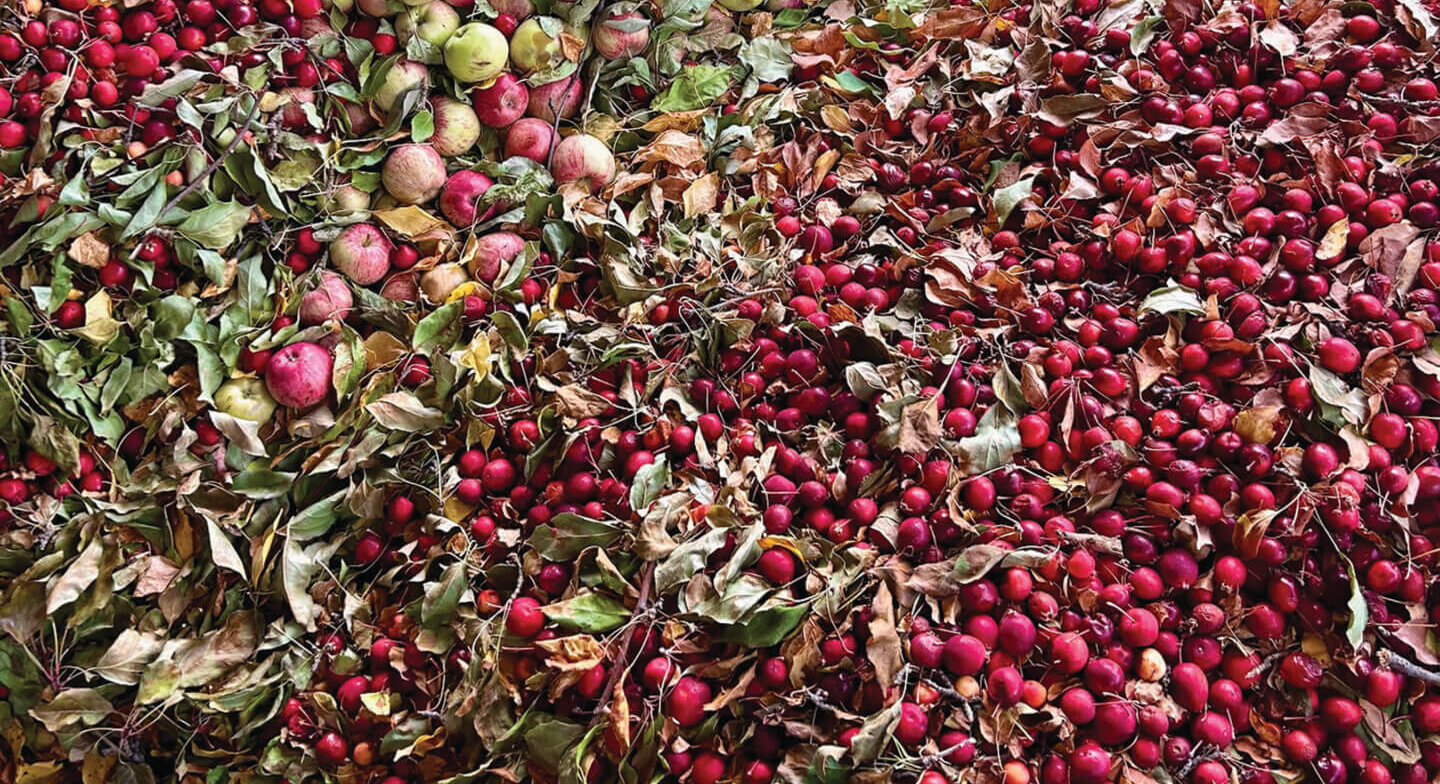
Back in Jackson, I reconnected with a friend, Orion Bellorado. We had done archery and Nordic skiing together in high school. (He was always a much better skier than I was. I was the morale booster—the one who helped people have a good time.) Summers during college, he and I sold pies, quiches, and vegetables at the Jackson Hole Farmer’s Market. He eventually turned that business into Roots Kitchen and Cannery. Back here in 2014, we wanted to figure out where all our experience with selling vegetables and pies could take us. We spotted crabapples everywhere, and we began to find some regular sweet apples, too. Orion already had a fruit press—he and his wife had randomly put one on their wedding registry, and someone actually bought it for them!—and, at a dinner party, we heard about bears coming into neighborhoods, where they could be in conflict with people, dogs, and cars, to eat crabapples and apples. Once bears become accustomed to humans, they are either sedated and relocated or, if there have been multiple incidents, killed.
I thought I was giving up my fermentation dreams when I moved back to Wyoming, but the abundance of crabapples and Orion’s story about wildlife conflicts got me excited to try making cider from local apples. Also, there were no cider makers in the whole state. Farmstead Cider is the first hard cider made in Wyoming since Prohibition.
We got a three-year grant from the Teton Conservation District to pick apples from private property around the valley—to reduce wildlife-and-human conflict—and turn them into cider.
Crabapples are a totally different beast to try to make cider out of, but a lot of my winemaking experience with barrel-aging and different types of fermentation was designed to cope with the various bitterness and acidities of different types of grapes. And so, applying that to cider-making was a good opportunity to say, “Hey, we can tame these crabapples a little bit.” Our ciders are all still very crabby, but we’re proud of that. We released our first cider in 2017.
When the Teton Conservation District grant expired in 2018, Farmstead was doing well enough to support itself. We can harvest about 50,000 pounds of sweet apples and high-tannin crabapples during a season. For some companies, that is a little, but for us, we do everything by hand so it’s a lot. Our goal isn’t for Farmstead to get too big. I want to keep it small and local, so I have time to lean back into other things I’m passionate about in the food world.
I started teaching after-school cooking classes in 2014 for various local nonprofits, like Slow Food in the Tetons. (I was the president of its board for four years.) During Covid, these transitioned to Zoom. Since I love the idea of teaching kids to cook in their own kitchens, they’ve stayed online. In the summer, Orion and I do week-long farming and cooking camps for kids. [Read more about these camps on the prior page.] We hope to start adult cooking classes and camps in the future. The dream is to have a community garden that combines farming with education and cooking, but it’s so hard to find space. Maybe that is something that can come from this article. We need something that is public-facing enough where we could have an indoor kitchen, but then also have space for a garden, or at least the space to store what we grow. It’d be a combination of agriculture, culinary education, education, and having fun.
As a kid, this was never a life I envisioned for myself—I wanted to be a teacher until I realized I didn’t want to work inside—but it’s perfect. Some people let their lives dictate where they go. I just let the pinball bounce where it might, and this is where it ended up. It’s amazing how connected all the different bounces can be.
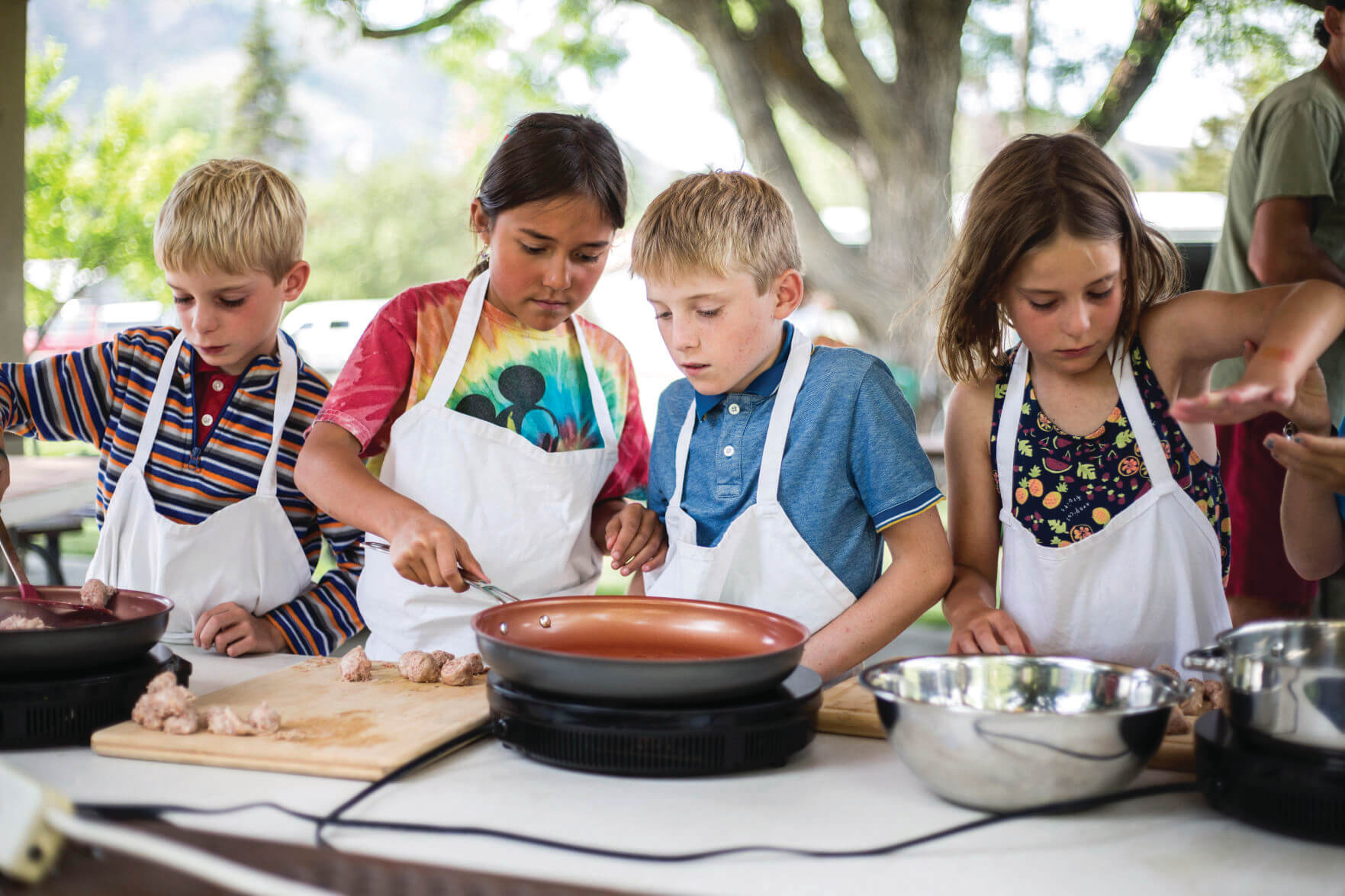
Cooking Classes for Kids
“I think the slogan on our t-shirts for this summer’s camps is going to be ‘Give Kids Knives,’” McGregor says. “The best way to teach your kid to do something is to send them to someone else, and then they come back with new skills and maybe a small burn or cut, and you realize it’s not the end of the world.” This summer, McGregor and friend and Farmstead co-founder Orion Bellorado are offering seven sessions of a week-long in-person Farmstead Wyoming farming and cooking camp for kids ages 7–12. Kids pick vegetables from McGregor’s garden in South Park Ranches and learn to make everything from bread to yogurt, chocolate-beet cupcakes, and pan-fried dumplings. “It’s empowering for kids to be trusted in the kitchen,” McGregor says. “When we hand them a knife, it is often the very first time an adult has handed them something sharp. But 100 percent of the time, the kids have risen to the occasion. They take it seriously because we take them seriously.” Every camp ends with the Friday Feast, where kids make a meal for their families. $620 for a five-day session, which includes snacks and lunch; farmsteadwyo.com
During the school year, McGregor and Bellorado offer Zoom cooking classes for ages 6–13 (and, increasingly, their parents). Classes are 90 minutes on Wednesday nights; cover culinary skills including baking, sautéing, and knife techniques; and end with a kid-cooked dinner or dessert. $125 for five weeks; farmsteadwyo.com
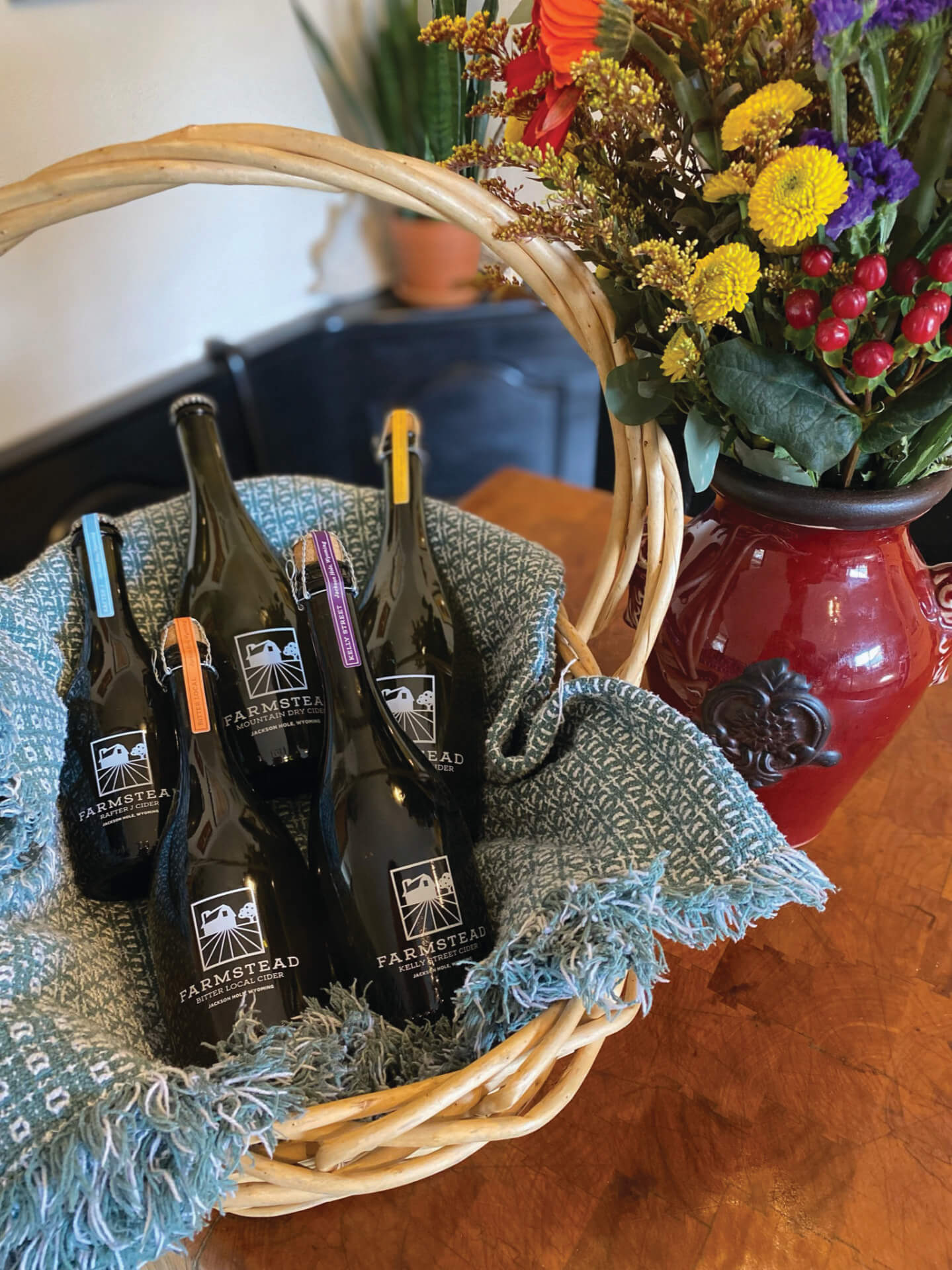
farmstead cider
Farmstead Cider’s Red Canyon Nan Cider won a 2022 Good Food Award in the annual competition that recognizes outstanding craft food producers and farmers nationwide.
Farmstead’s 2019 Kelly Street Cider, which is made entirely from apples harvested on Kelly Steet in East Jackson, won a 2021 Good Food Award. Rafter J Cider uses apples from the eponymous neighborhood south of downtown Jackson. About 75 percent of the apples Farmstead uses come from Teton County. The other 25 percent come from eastern Idaho and Lander, Wyoming.
In Lander, Farmstead harvests apples from the historic Ed Young Orchard, which was planted in Red Canyon in the 1880s and abandoned during Prohibition. The trees that survive today include rare and unnamed apple varieties. It is apples from this orchard that are used in the award-winning Red Canyon Nan. Find Farmstead Cider on tap at Local, Orsetto, Trio, and The Bird, and in bottles at Bin22, Creekside Market, Bodega, and Dornans in Moose. farmsteadwyo.com and @farmsteadcider JH