
Read The
Current Issue
Trail Creek Ranch
This historic parcel of land is a serene, authentic, and conservation-minded monument to the strong women of Jackson Hole.
// By Tilli Rossetti
Ninety years ago, in 1936, Elizabeth “Betty” Woolsey made her debut as the captain of the first women’s Olympic ski team. That very same year, she caught her first glimpse of the Tetons. As the Tetons tend to do to those with a heart fated to the mountains, Jackson Hole drew Woolsey back time and time again for powder skiing and climbing over the course of the next eight years. In 1942, she skied down Teton Pass and happened upon “[her] piece of land.”
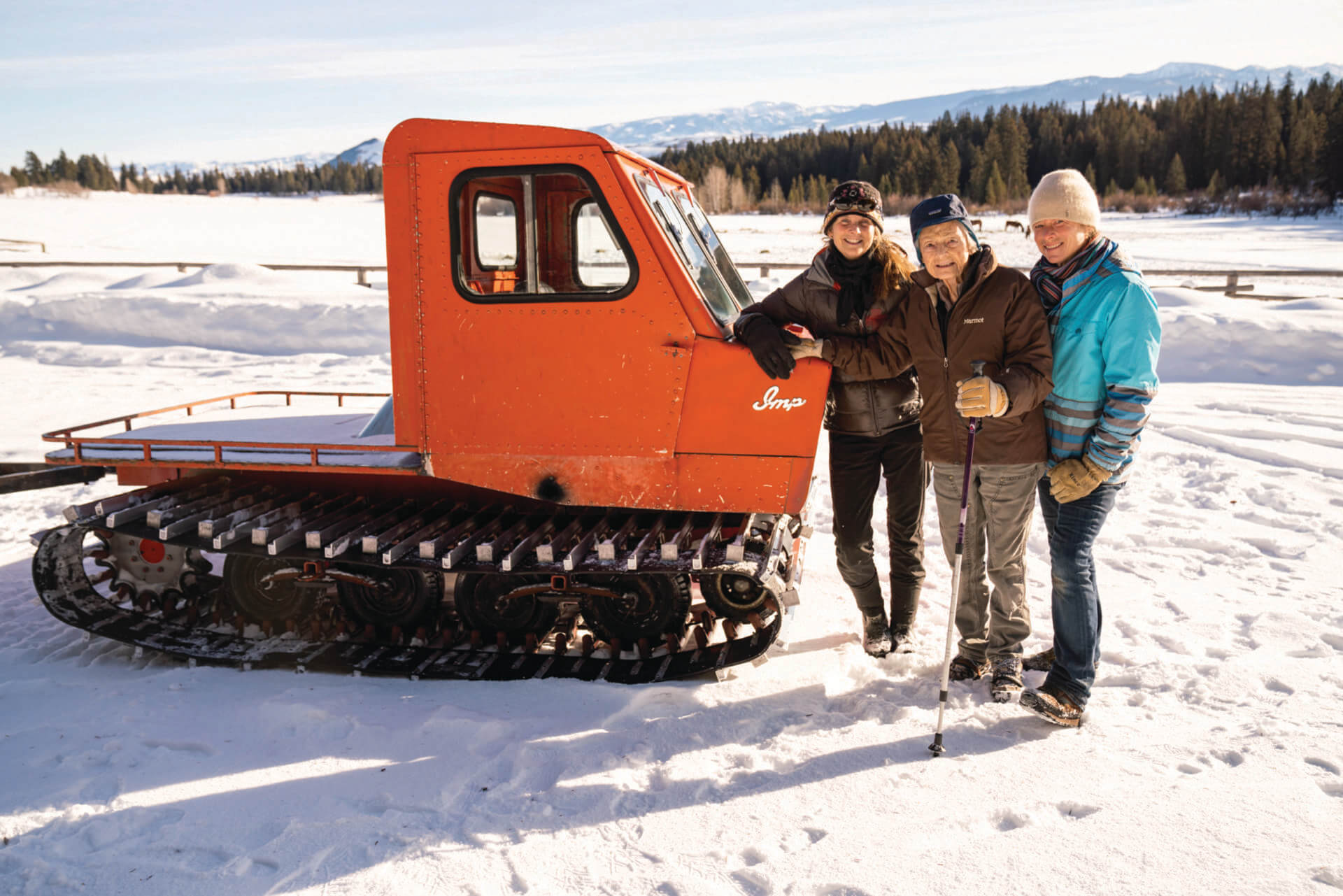
Woolsey purchased the parcel of land—originally the Louis E. Lockwood homestead, which was the gateway accommodation to travelers heading in or out of the valley via Teton Pass— from Nate Davis in 1942, and in the subsequent years, she purchased adjacent land. By 1946, she had amassed 270 acres. She named the property Trail Creek Ranch and began welcoming dudes (in summer) and skiers (in winter). Celebrating its 80th birthday this year, Trail Creek Ranch is no longer run by Woolsey—she died in 1997—but strong, independent women are still in charge. These include Margaret “Muggs” Shultz, who is 96 years-old, has been at the ranch since 1948, and resides in a 1960s-built cabin on the ranch; Alexandra Menolascino, who came out to Wilson from the East Coast in 1989 to work as the ranch’s head waitress; and Jules Buchenroth, a native Canadian who started at Trail Creek Ranch as chef the same year Menolascino started as a server. While Muggs is no longer involved in day-to-day operations of the ranch, she remains “very much in charge,” Menolascino says.
About their jobs today—Menolascino is now head caretaker and Buchenroth head chore girl. Menolascino says, “There are so many different aspects. It’s different every day, and that’s the beauty of it.” Buchenroth adds, “We get to wear a lot of different hats. You build skills—it’s actually pretty amazing what you learn when you’re forced to. We can’t do it all on our own, but we tackle a lot of stuff on our own. And it’s really how the [original] ladies operated, too. They had a lot of friends in the valley who helped. There was a community.”
Woolsey, Muggs, and Sis [Marian “Sis” McKean Wigglesworth was a teammate of Woolsey’s on the U.S. Alpine Ski Team] might have had a helping community, but they ruled the ranch, doing everything from haying to operating the farm machinery, maintaining the cabins, and greeting guests.
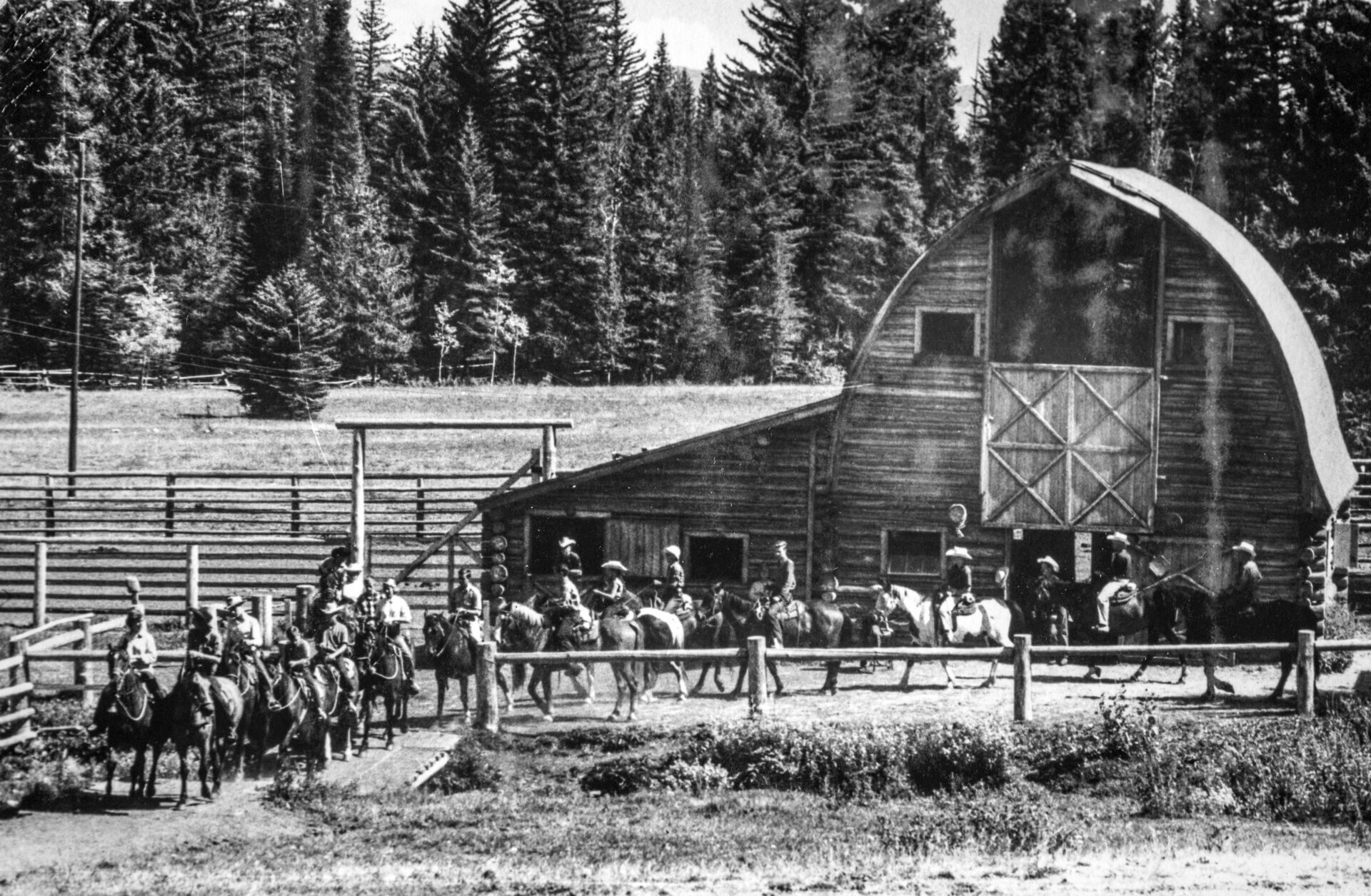
While Trail Creek’s caretakers have changed, today’s guests still stay in the original cabins that Woolsey purchased from around the valley or had built as the ranch expanded. During its heyday in the 1950s and 1960s, Trail Creek hosted up to 30 guests during the summer. They’d stay for up to a month at a time to go on pack trips, fish the Snake River, and soak up summer under the Tetons. During the winter, Woolsey hosted up to 10 guests—most of them ski friends of hers—and guided them on backcountry ski trips on Teton Pass.
“It’s the place where people would stay overnight when they were going over the pass, when they couldn’t go over in an hour,” Buchenroth says. “And that’s just white people. There were generations of families and native people crossing the mountains. It feels like a powerful place, and we want to preserve this magical place.”
Following Woolsey’s vision—she placed the ranch under a conservation easement with the Jackson Hole Land Trust before her death—Trail Creek’s mission today is one of preservation; the 270 acres of land remain the same as they’ve always been. “We work hard being stewards of the land,” Buchenroth says. Menalascino adds, “We try to manage the land in a way that’s good for wildlife.” The conservation easement protects the ranch from development of any kind, and its cabins and barns (built between the 1930s and the 1960s) can only be changed by 10 percent.
Nowadays, the cozy, rustic guest cabins accommodate up to 20 guests a night during the summer (there’s a three-night minimum stay). In winter, three cabins host six to eight guests per night. The main barn was built in the 1930s by the Bircher Brothers, who also built the EDW cabin, which was moved from nearby Fish Creek Road to the ranch during the 1950s to be Woolsey’s home. The oldest cabin, which staff call “Upper Upper,” was part of a roadhouse located on the parcel of land Woolsey purchased from Davis.
Buchenroth says maintaining Trail Creek has been a lifestyle choice. She, Muggs, and Menolascino work to maintain a mission of preservation and stewardship of the ranch’s land, historic structures, wildlife, surrounding nature, and the beauty of Western hospitality. “We want to continue to share the ranch and valley with guests the way Betty did for so many years,” Menolascino says. JH