
Read The
Current Issue
Dark Skies
Jackson Hole has some of the best stargazing in the country. Here’s how to best enjoy our night skies.
// By Tilli Rossetti
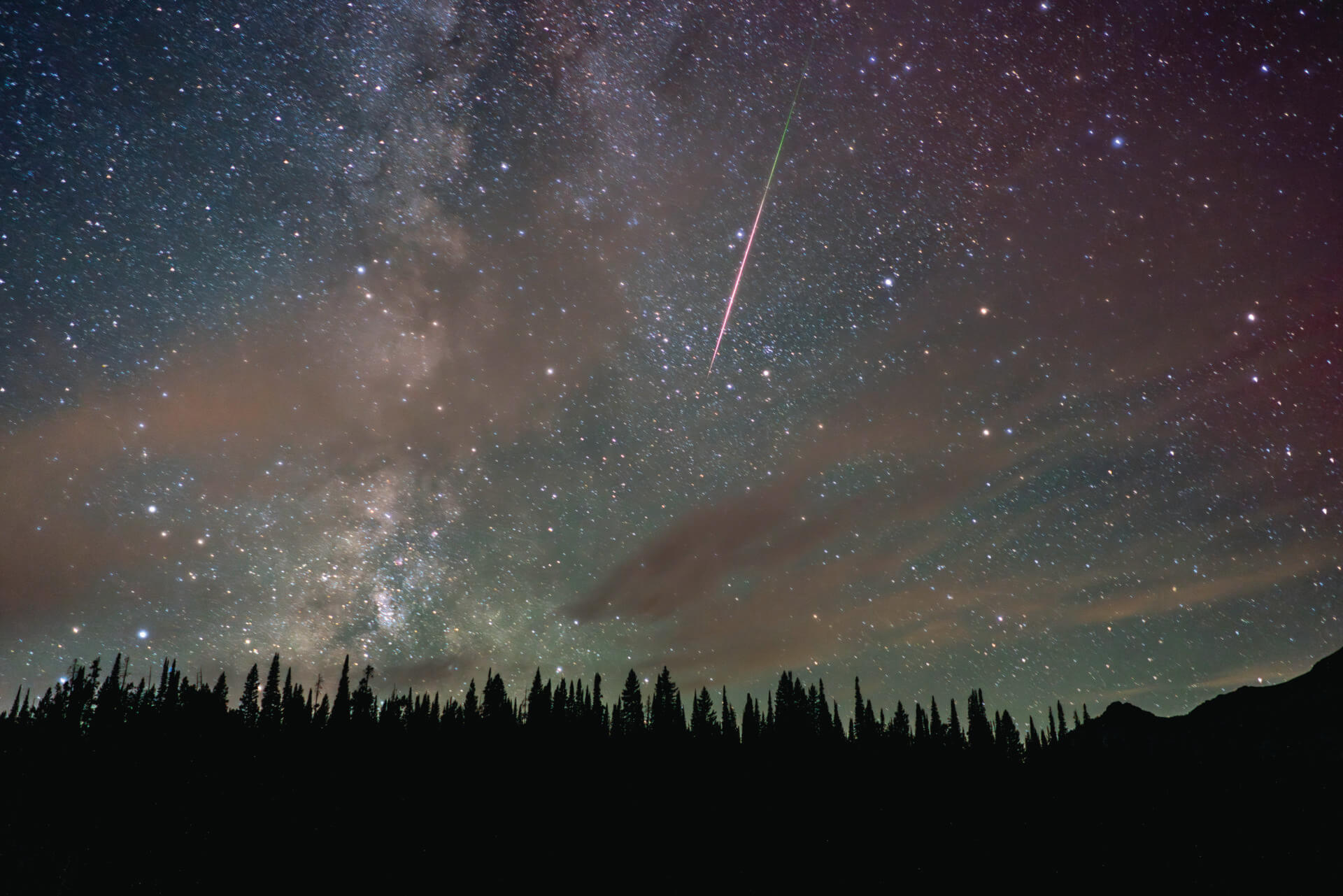
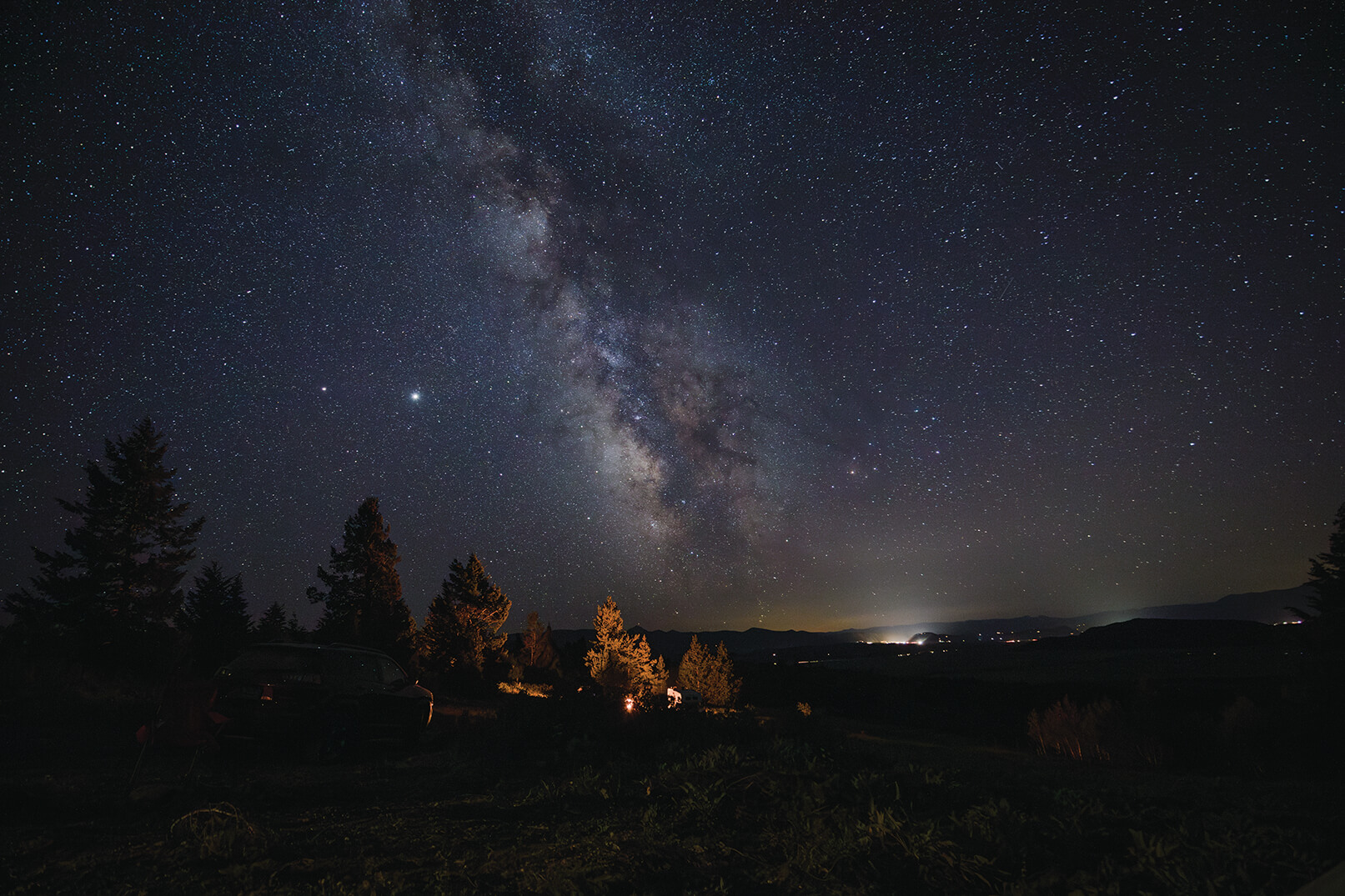
Because of increasing light pollution around the planet, you can’t see the Milky Way from most places. Researchers at Italy’s Light Pollution Science and Technology Institute found that two out of three Europeans and four out of five Americans cannot see the 100-billion-star galaxy to which our solar system belongs from their homes. Where can you see the Milky Way? Jackson Hole, Wyoming.
In April 2025, both Teton County and the Jackson Hole Airport were officially certified as Dark Sky Places by DarkSky International, an Arizona-based nonprofit that aims to reduce light pollution through encouraging the installation of environmentally friendly outdoor lighting. Both entities are the first of their kinds—an entire county and an airport—in the world to receive this designation, which was a decade in the works. In Wyoming, the only other Dark Sky Certified Place is Sinks Canyon State Park, outside of Lander. It received its certification in 2023.
Dr. Samuel Singer, who founded the Jackson-based nonprofit Wyoming Stargazing in 2012, spearheaded (with photographer Mikki Cavaroc) the Teton County certification.“This valley would not exist in the way it does today without the work of conservationists more than a century ago to preserve this land from development,” Singer says. “[These conservationists] couldn’t have possibly imagined that in 100 years, their efforts would be threatened by light pollution. Today we need to protect the skies as much as the land. A Dark Sky designation continues the work they started.”
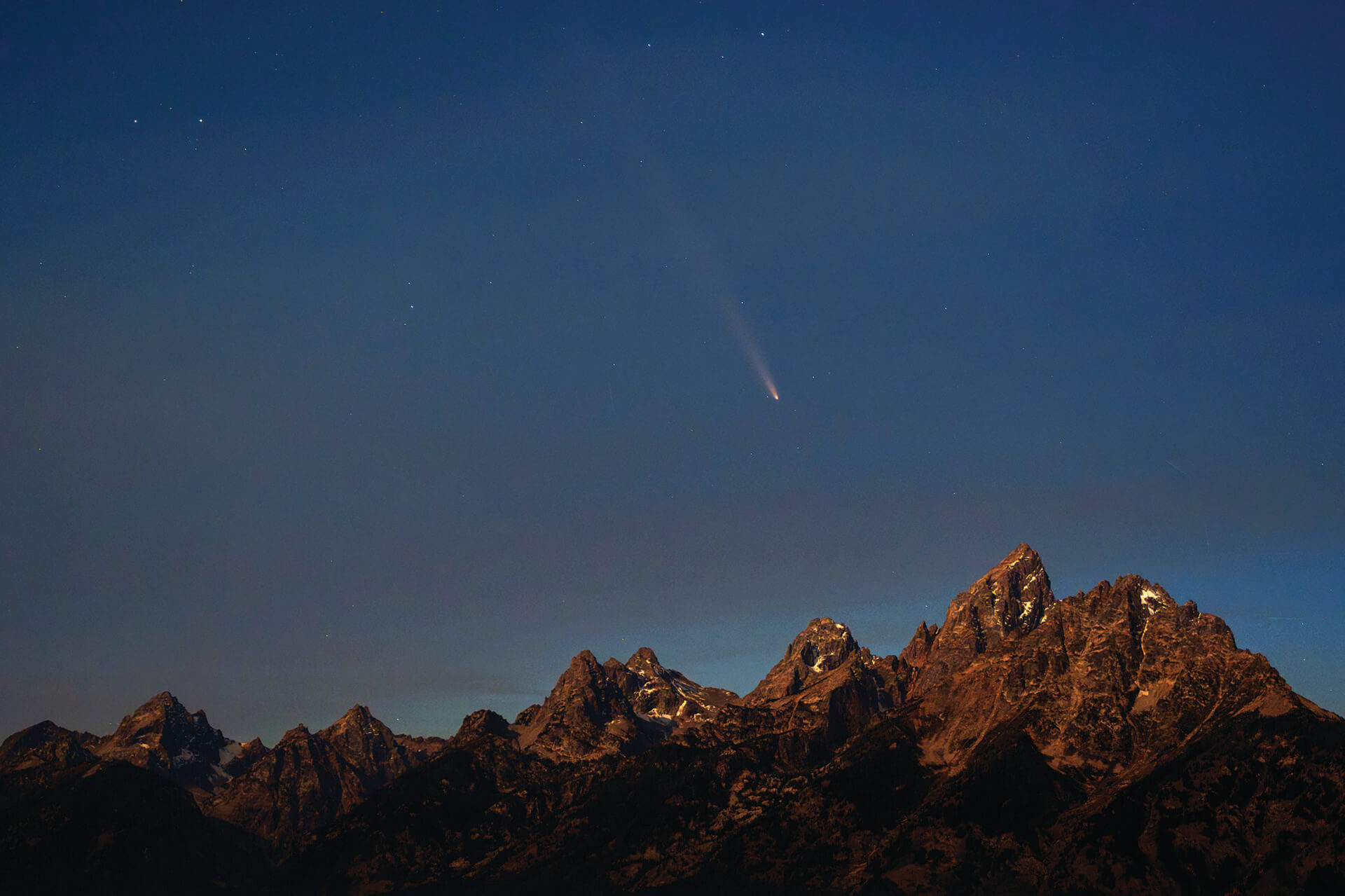
Dark Sky certification isn’t just about looking at the stars. It makes our nighttime environment healthier for humans and wildlife.
Dark Sky certification isn’t just about looking at the stars, though. It makes our nighttime environment healthier for humans and wildlife. Annually, DarkSky releases “State of Science,” a report that summarizes the current scientific consensus on artificial light at night and light pollution. The 2024 report, which was the most recent available at the time of this writing, reveals that scientists studied at least 160 species for effects of light pollution. It was found that light pollution is harmful to individual flora and fauna all the way up to entire populations. The harm can range from making finding food more difficult to reproduction, migration, and communication. Light pollution may even influence how species evolve. “So many studies have found that, with few exceptions, all land-dwelling organisms require natural cycles of light and dark,” Singer says.
As far as humans go, studies show that light pollution disrupts our natural circadian rhythm by suppressing melatonin, the hormone that regulates sleep and supports immune function. Chronic nighttime light exposure is linked to insomnia, shorter and poorer-quality sleep, fatigue, and impaired daytime performance. These sleep disruptions increase risks of obesity, diabetes, cardiovascular disease, depression, and anxiety. Excessive artificial light can also strain eyes and elevate stress, undermining overall well-being. “We need darkness in order to be fully healthy,” Singer says.
But dark skies aren’t only about physical health. “For me, being able to look up and see the universe is a spiritual connection,” Singer says. It is also key to our innate curiosity. “We can’t wonder about the rest of the universe if we can’t see it,” Singer says.
Want to get out and experience Jackson Hole’s certified Dark Skies for yourself?
Wyoming Stargazing
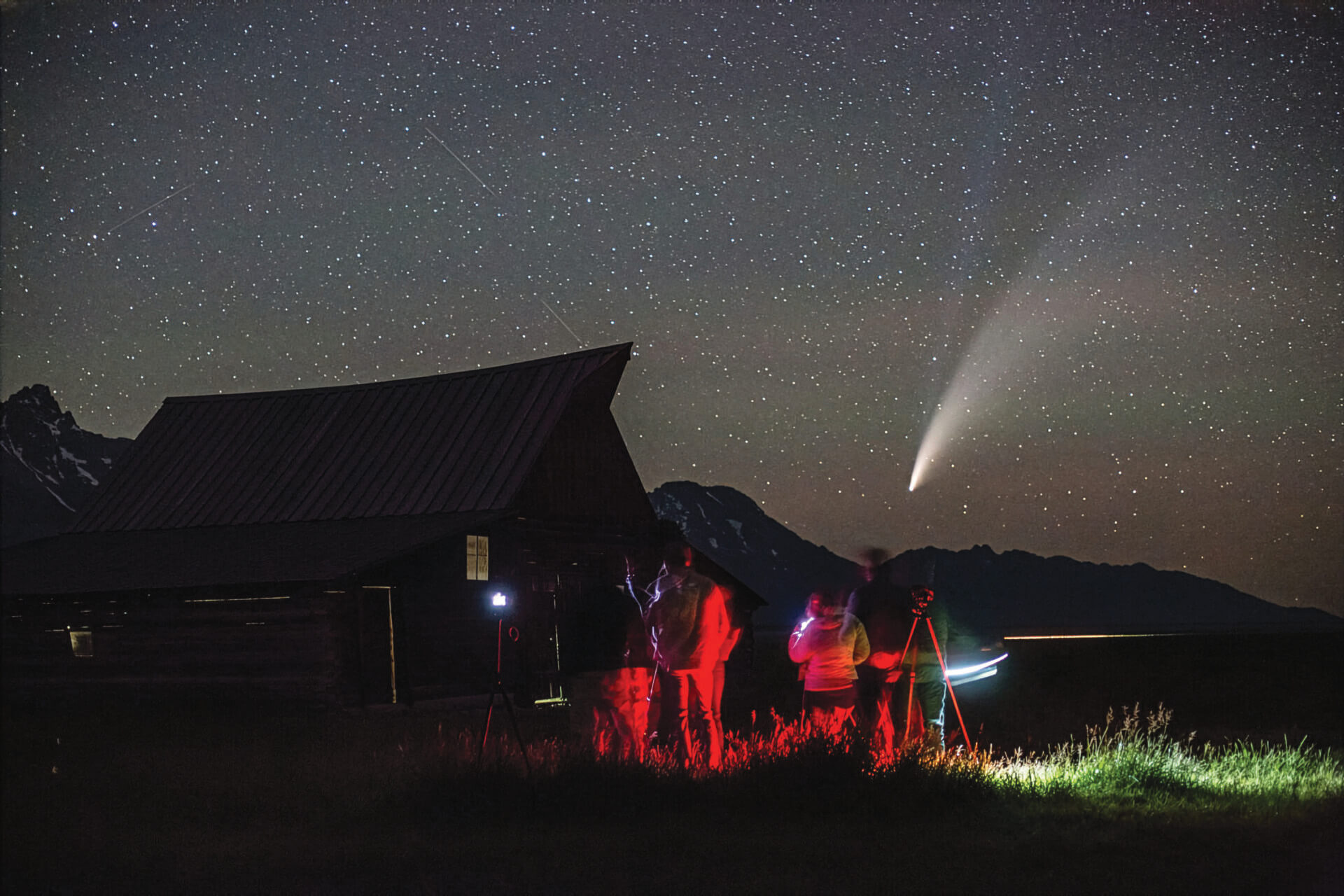
Wyoming Stargazing of Teton Science Schools provides a wide variety of stargazing activities, from public events to private stargazing safaris. “We want people to be excited about looking up!” Singer says. On a Stargazing Safari, which can be private or a group with no more than 13 participants, you’re taken to a prime stargazing location in the flats of Grand Teton National Park. Here, Stargazing staff set up a large telescope and, over the course of a couple of hours, move it around to several different celestial sights. Unique to Wyoming Stargazing is its use of telescopes with mirrors between 20 and 22 inches in diameter. “A long time ago, we made the decision to use really big telescopes so we can see light from distant galaxies,” Singer says. “Other outfits use smaller tracking telescopes with built-in cameras, which take photos in real time, and you then look at the photos. We want the light from distant galaxies to actually fall upon the eyes of our guests, and that is the experience.” Private stargazing is $625 for up to two people and $250/person for a private group of 3–13; group stargazing tours are $175/person; add on a package of digital photos of the night sky you looked at for $165; wyomingstargazing.org
Requiring less planning, time, and money are the group’s free stargazing nights at Rendezvous Park. These are held every clear Thursday night of the year, start an hour after sunset, and offer a similar experience to a Stargazing Safari. “But you just don’t get to see as much,” Singer says. Every first Saturday of the month—if it’s clear—Wyoming Stargazing partners with Camina Conmigo to offer a free stargazing night in Spanish, Avistamiento de Estrellas Gratis, also at Rendezvous Park. Free; 4270 River Springs Dr., Wilson; wyomingstargazing.org
Aspiring astrophotographers can book a completely custom astrophotography lesson, too. These can be at a private residence or at a location within Grand Teton National Park and do not require that you have your own long-exposure camera. Wyoming Stargazing provides a large tracking telescope and even a DSLR camera and tripod. If you have a newer iPhone, though, you can also learn how to use it to take photos of the night sky. $500 for one person; $250/person for 2–13 people; wyomingstargazing.org
Snow King Observatory & Planetarium
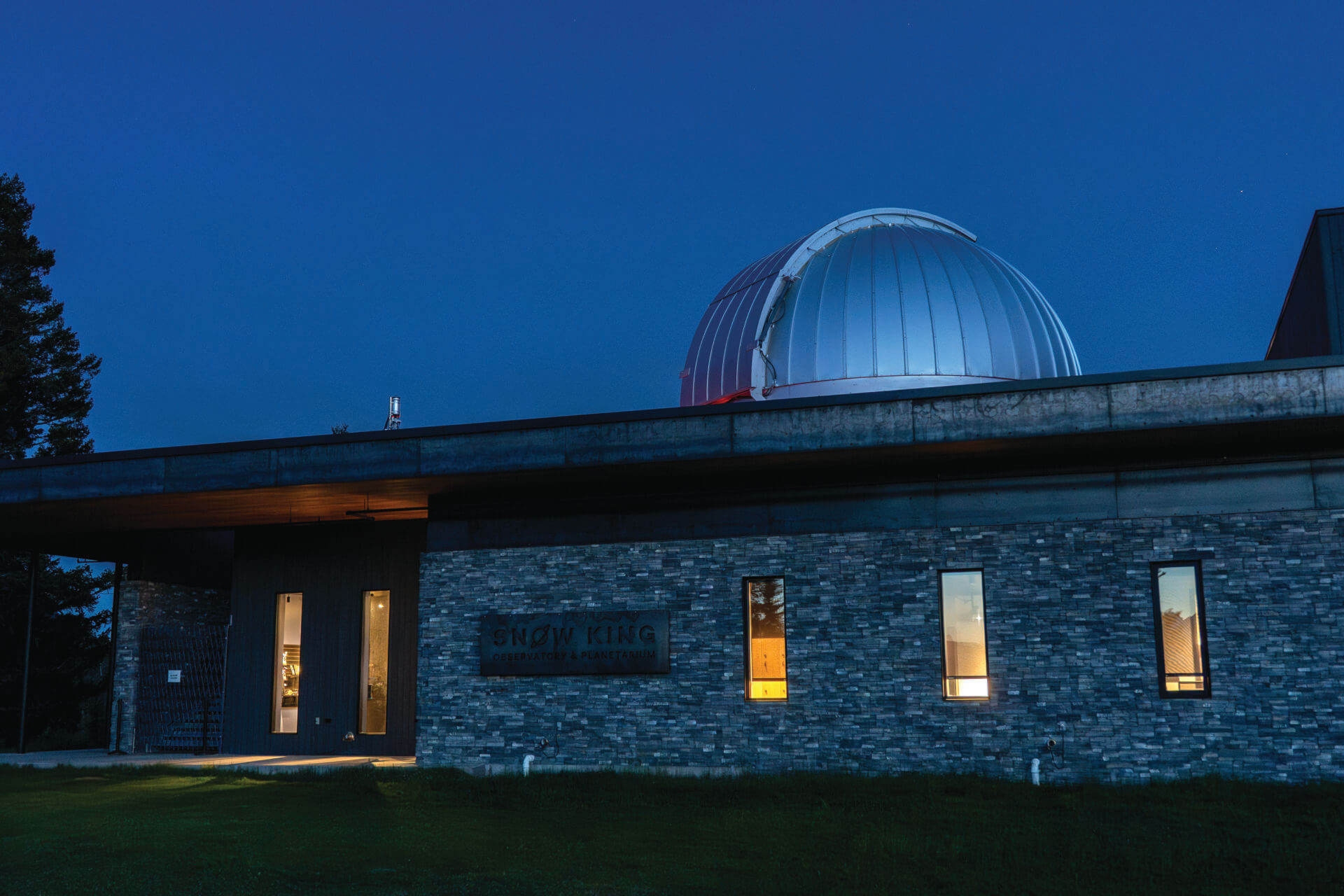
Above downtown Jackson, on the 7,807-foot summit of Snow King Mountain and reached by a five-minute gondola ride, the Snow King Observatory & Planetarium has a state-of-the-art 1.0-meter PlaneWave telescope. This telescope is one of the largest in the world dedicated primarily to public outreach. It’s so state-of-the-art that it’s also used for research by scientists across the country and around the world. “There are nights that are just for research and other nights primarily for the public,” SKOP director Joe Zator says.
While the telescope is SKOP’s star, there are plenty of things to see here during the day, including an 8-meter 4K planetarium, a classroom theater that shows space-exploration videos, and a solar telescope. In the planetarium, about one dozen shows rotate throughout the day, including Forward to the Moon (about Artemis missions) and Cosmic Mashups: Gravity, Galaxies, and Supermassive Blackholes (about far-away galactic collisions). On select early evenings, there is a one-hour planetarium show that starts with one of a dozen short films and then moves into a star- or science-talk by a SKOP astronomer. Think exploding galaxies, comets, or even flying through the solar system. Closed Tuesdays; 12–4 p.m., 5–8, and 9-10:30 p.m ; tickets from $55 for students and $70 for adults; children under 5 are free.
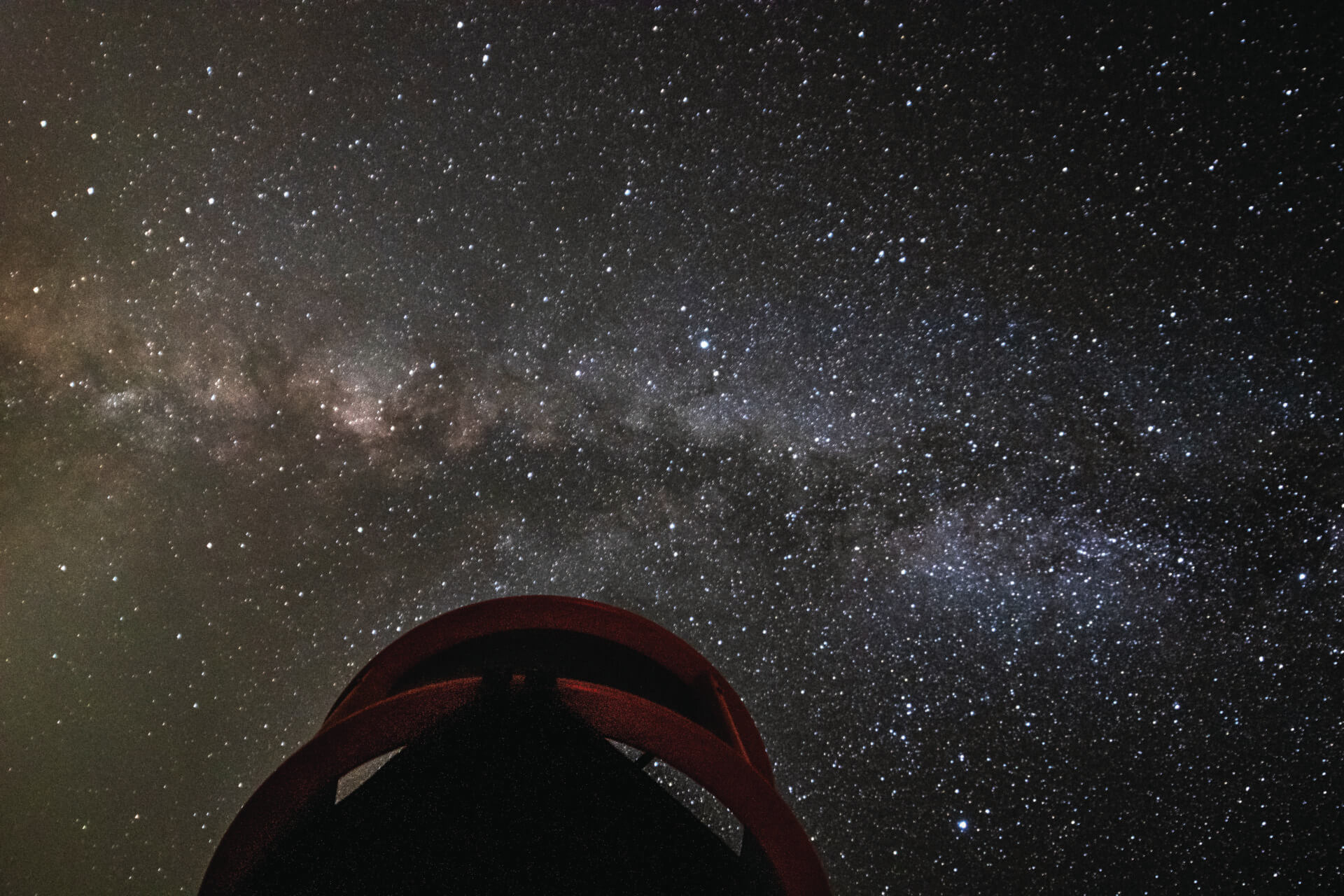
The Snow King Observatory & Planetarium has a state-of-the-art 1.0-meter PlaneWave telescope. This telescope is one of the largest in the world dedicated primarily to public outreach.
Once the sun sets, there are usually two experiences to choose from, both of which include telescope time. The first night experience starts with a show in the planetarium before moving up to the Observation Deck and Telescope Dome. Here SKOP astronomers will point telescopes at different interesting things in the sky—in addition to the 1-meter telescope, there are smaller ones for use, too. The second night experience is dedicated to time on SKOP’s telescopes.
On Your Own
A benefit of Jackson Hole’s low levels of light pollution is that you can pretty much walk outside anywhere in the valley, look up, and see thousands of stars. “On a moonless night, you could count about 5,000 stars in Jackson Hole’s sky,” Singer says. “Just staring up at that many stars is almost overwhelming. It is really hard, even for people who know the night sky, to pick out the constellations. I think the experience is something that is really moving. You don’t have to know anything. You don’t have to say anything. Just standing there looking up at that many stars is profound.” To minimize the limited light pollution we have, get outside the Town of Jackson itself to Teton Village, Kelly, Moran, Hoback, or Wilson. For the least light pollution of all, leave all of the residential areas behind and head into Grand Teton National Park or the Bridger-Teton National Forest.
In either of these places, on a clear night, you’ll be able to see the Milky Way with your naked eye. In GTNP, any of the pullouts on the Inner Park Loop Road between Moose and Jackson Lake Junction are great, as are the pullouts heading north from Jackson Lake Junction toward Yellowstone. Also in GTNP, but in an area of the park accessed without having to pay the park entrance fee, is Mormon Row. This is a particuarly popular spot for astrophotographers—they get images of the night sky with the expanse of the Teton Range in the background and the famous Moulton Barn in the foreground.
In the Bridger-Teton National Forest, which is 10 times bigger than GTNP and includes three wilderness areas, one option is to drive out Gros Ventre Road. This road is just north of the small community of Kelly and heads east for 30-ish miles, getting more and more rugged the farther east it gets. A normal passenger car can easily make it to Lower Slide Lake, about three miles up the road. From here, the road becomes dirt; if you want an adventure, you can continue east, but, wherever you stop, the views of the night skies will be stellar. JH