
Read The
Current Issue
An Origin Story
The covert land-buying operation of John D. Rockefeller, Jr. was controversial in its day. Today, it is considered a remarkable feat of foresight and philanthropy.
// By Mike Koshmrl
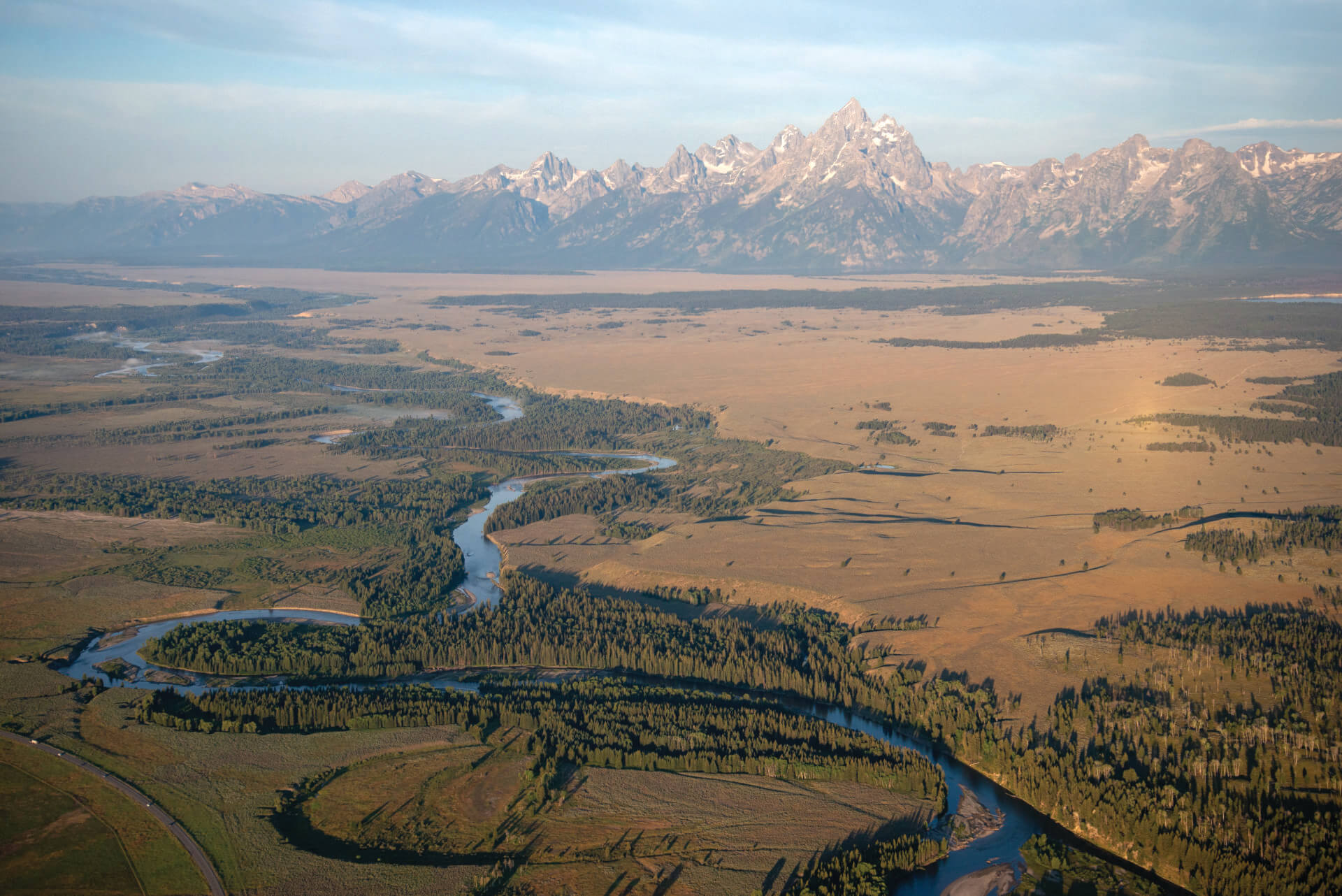
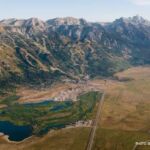
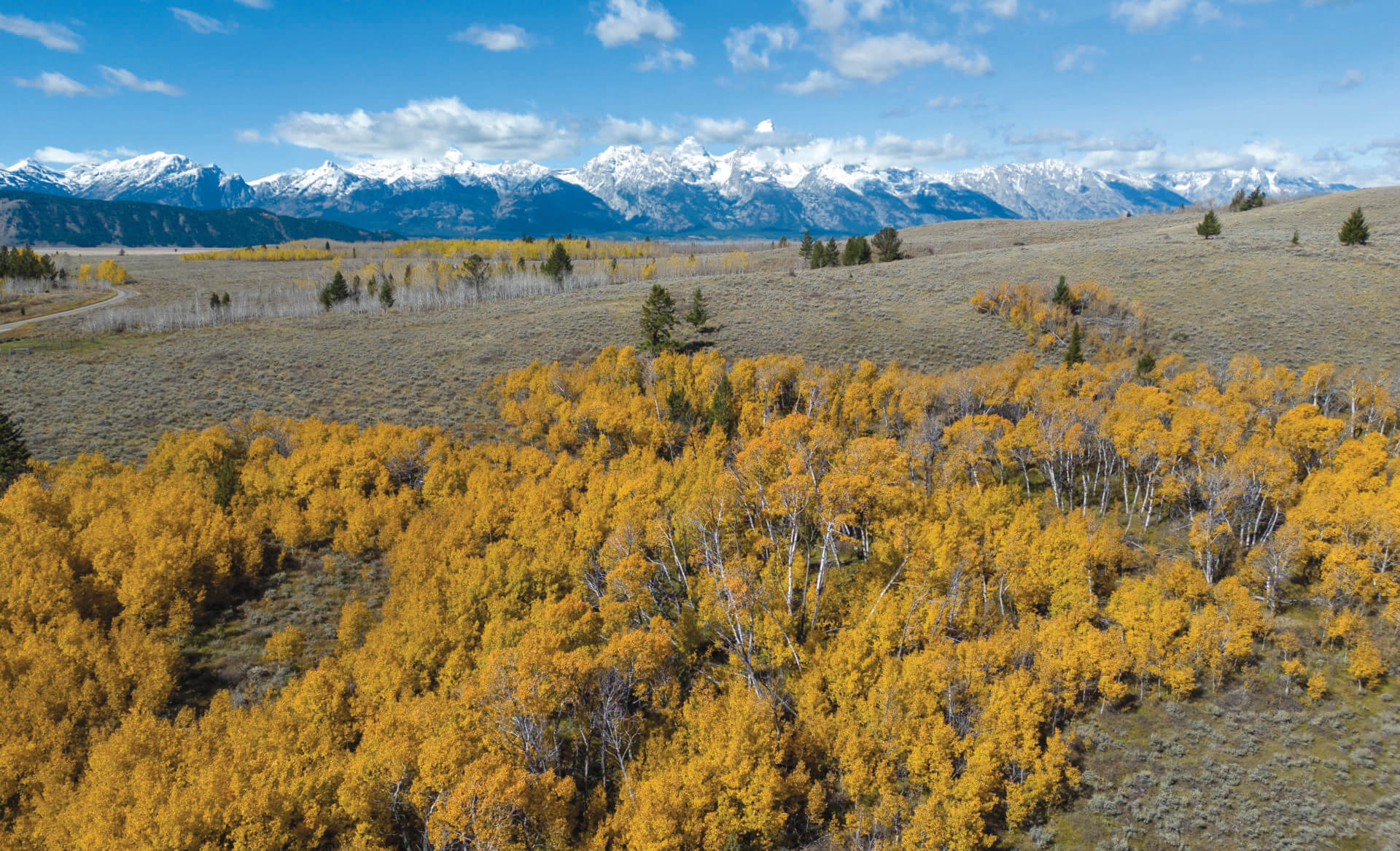
During John D. Rockefeller, Jr.’s July 1926 visit to Jackson Hole, the world’s wealthiest man witnessed unsightly, poorly planned commercialism beginning to bear down on the Tetons. Telephone wires marred mountain views, and there were thrown-together dancehalls and touristy businesses encroaching on what’s now Grand Teton National Park. Without intervention, development seemed destined to overrun the stunning western Wyoming valley.
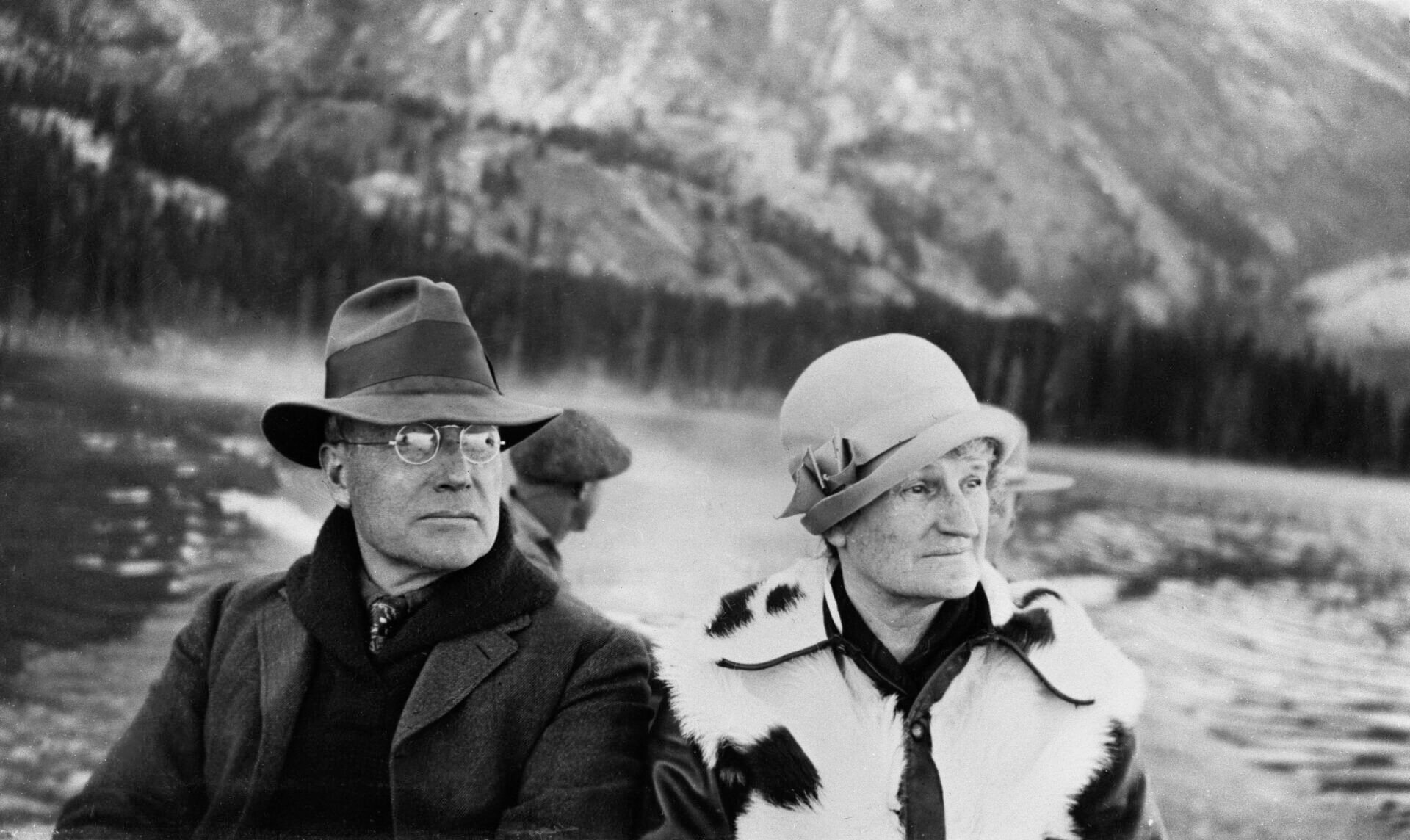
The truly pivotal moment came while traveling north toward Yellowstone National Park. Rockefeller, the son of an oil baron, was accompanied by his wife, Abby, and three young children, Laurance, Winthrop, and David. The family was guided by Horace Albright, then-superintendent of Yellowstone National Park, who stopped the group at a little-known bluff known as Hedrick Point, located about halfway between Moose and Moran on the east side of what’s now U.S. Highway 191.
“It’s a beautiful, beautiful view,” says Bob Righter, a renowned historian and Jackson Hole resident who authored the 1982 book Crucible for Conservation: The Struggle for Grand Teton National Park. “Rockefeller was entranced by it.” Taking in a sweeping vista that included the winding Snake River and 13,775-foot Grand Teton, the top employee at Yellowstone divulged his ambitions to save the valley. Rockefeller didn’t reveal his interest in the moment, but he, too, felt the valley needed to be protected.
That fall, Rockefeller asked for maps and cost estimates to purchase the properties that he had found particularly appalling during his summer vacation. A meeting that winter hatched an elaborate scheme for Rockefeller to attempt to purchase much of the private land in northern Teton County and donate it to the National Park Service.
What resulted from those deliberations 100 years ago is now Jackson Hole lore. The Snake River Land Company was formed and purchased ranches, lots, and even the entire town of Moran, which, at that time, was a sizeable community because of the recent construction of Jackson Lake dam. The source of the Snake River Land Company’s funds, Rockefeller’s fortune, was kept secret and concealed from the landowners selling off their property—a stealthiness that spurred great controversy when it came to light.
The ultimate reason for the acquisitions was also kept under wraps. Rockefeller donated the land purchased by the Snake River Land Company to the National Park Service. In 1943, President Franklin Roosevelt declared this donated land part of the Jackson Hole National Monument. Seven years after that, it was finally folded into Grand Teton National Park, which had been established in 1929, but, for its first 21 years of existence, only encompassed the high peaks themselves.
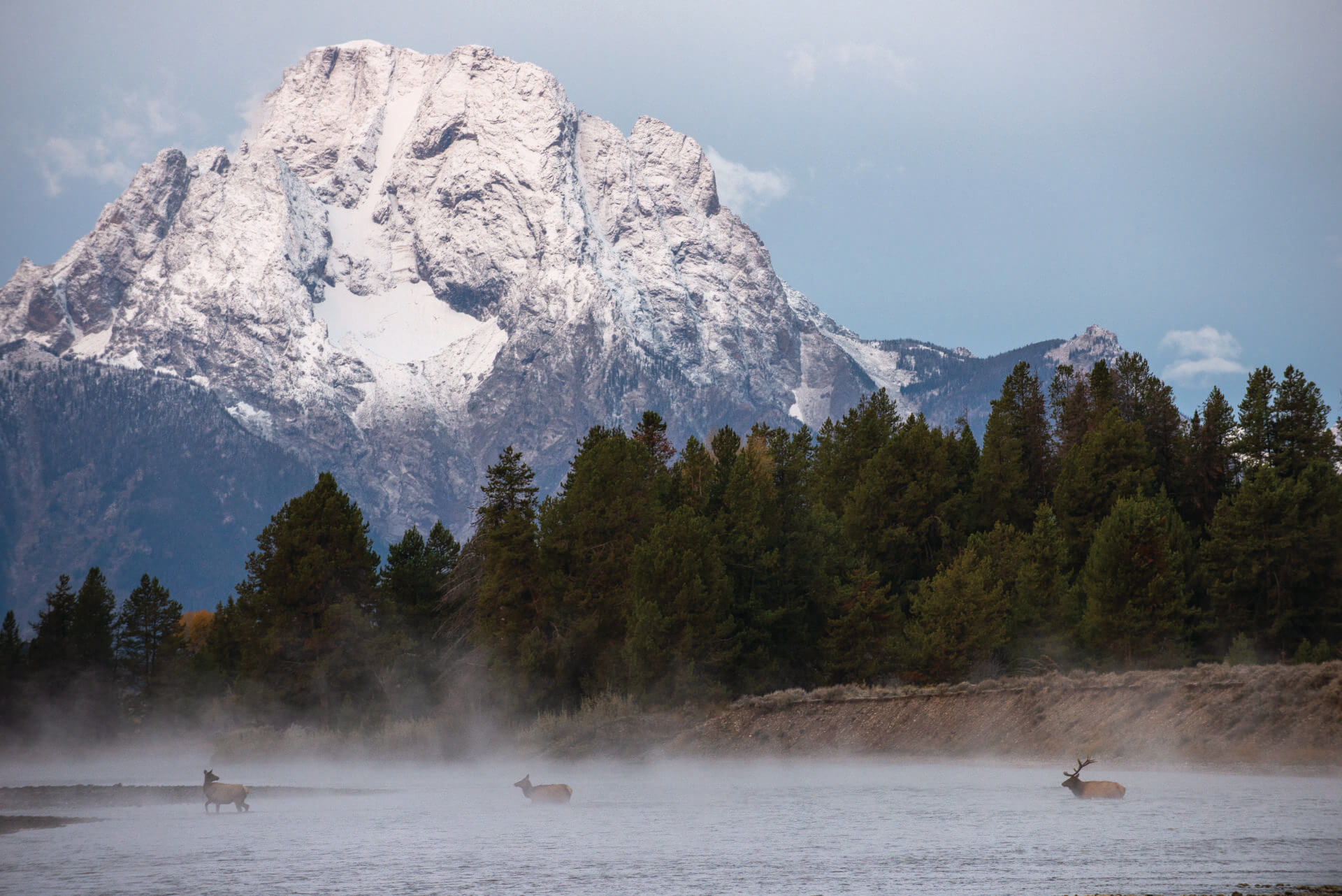
Albright’s persuasion, Rockefeller’s philanthropy, and the successful execution of a fraught plan changed the entire arc of Jackson Hole history. On a morning drive down the highway in Grand Teton National Park the day he spoke with Jackson Hole magazine, GTNP superintendent Chip Jenkins saw about 75 elk and three moose. If not for the Snake River Land Company’s acquisitions, the same drive would have likely yielded much less wildlife and a whole lot more signs of humankind. “What you would see, driving along that road, is probably a combination of gas stations and housing developments,” Jenkins says. “The southern end of the Greater Yellowstone Ecosystem would not be what it is in 2026 if it were not for two groups of people.”
The first group is the obvious one: Albright, Rockefeller, and the Snake River Land Company employees who saw the deal through. “The other group of people who are unsung are the property owners who sold their property to Rockefeller,” Jenkins says. And, “There are property owners out there that continue to work with the National Park Service.” One of those landowners has been the state of Wyoming. Between 2012 and 2024, the State Office of Land and Investments sold 1,366 acres—more than two square miles—of land to the federal government for inclusion in Grand Teton National Park (see sidebar “Still Growing,” page 110). Jenkins also pointed to land trusts that have conserved ranchland near the park through easements and also sellers of smaller acreage, such as the Resor family, which has sold four 35-acre parcels to the Park Service along the southern boundary of Grand Teton National Park.
John D. Rockefeller, Jr., of course, started the trend. After its 1927 formation, the Snake River Land Company amassed more than 32,000 acres. Rockefeller’s philanthropy wasn’t restricted to Wyoming; his conservation legacy includes acquisitions in Yosemite and Great Smoky Mountains National Parks, among others. His remarkable generosity traces to deeply held religious beliefs, says Steve Kemp, a former Teton Park concession cook and Rockefeller biographer who published An Exaltation of Parks: John D. Rockefeller Jr.’s Crusade to Save America’s Wonderlands in 2025. “They really, really believed in a sense of duty,” Kemp says of Rockefeller’s family. “They would say, ‘Well, our money came from God, and we should use it in a way that he would approve of.’” Another motivation was that the fortune would cause the family ruin. John D. Rockefeller, Jr. was on the verge of becoming a billionaire (having what would be nearly $20 billion today) at the time of the 1929 market crash. “Their religious advisors told them that their fortune was getting so big that it would crush their family, eventually,” Kemp says.
Righter, the Teton Park scholar, uses the word “jubilant” to describe Rockefeller’s demeanor when the Jackson Hole National Monument was finally created nearly two decades after he had stood at Hedrick Point and became inspired to conserve a remarkable corner of the Rocky Mountains. But there’s ample evidence that he regretted the Snake River Land Company’s surreptitious tactics. The reason why he kept his name out of the dealings was so that sellers wouldn’t run up land values, knowing that the Rockefellers were buying. “I’ve often thought that it would have been better for Rockefeller to just come out and say, ‘I’m going to buy the land,’” Righter says. “Instead of a million and a half, it probably would have cost him $3 or $4 million, sure, but he could afford that, and he could have saved everybody a lot of stress.”
“Well, our money came from God, and we should use it in a way that he would approve of.”
—The Rockefeller family about using the family’s fortune to buy spectacular pieces of land
Kemp agrees: “He was very unhappy about the way things went,” he says. “It just about did him in.” By the time the deal was completed, Albright had resigned. Stephen Mather, the National Park Service director who supported the park-enlarging operation, had died. Rockefeller was left to absorb the criticism, which was at times intense. There’d been murmurs that big East Coast money was behind all the acquisitions and the Park Service would be the beneficiary, but Rockefeller didn’t announce his involvement until the spring of 1930. Early on, there was some support: Walter Perry, then editor/owner of the Jackson Hole Courier, came out as a park-extension supporter. But opposition really galvanized when a new newspaper, the Grand Teton, started publishing in Jackson. “It was for the specific purpose of railing against the creation of the national park,” Kemp says. “The people really felt they’d been deceived. They fought that thing for 24 years,” up to the enlargement of the national park.
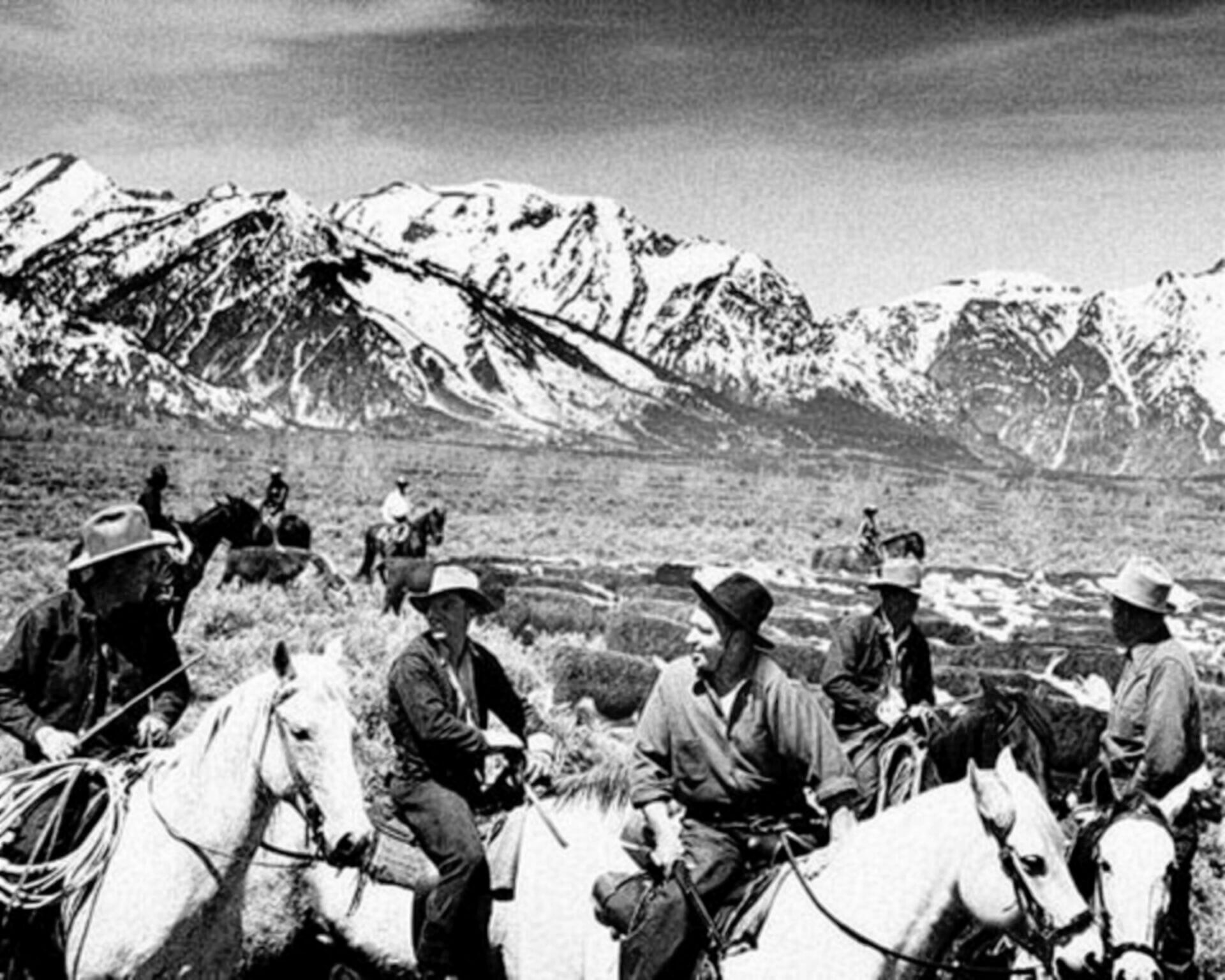
The opposition orchestrated a memorable spectacle in the spring of 1943, when movie star Wallace Beery and a group of armed cowboys trailed 550 yearling cattle across the Jackson Hole National Monument to their summer range without a permit. “Like any effective advertising stunt, the ride accomplished its goal,” Righter wrote about the act of civil disobedience in Crucible for Conservation. “Time magazine picked up the story.” One of the participants in the publicity stunt was Clifford P. Hansen, then a Teton County commissioner who’d go on to become Wyoming’s governor and later a U.S. senator. “The federal government wisely ignored him at the time,” says Brad Mead, a grandson of Hansen who still runs cattle today in the Spring Gulch area.
Later in life, Hansen famously did an about-face on his stance on enlarging the national park. “As things developed, he always repeatedly said it was something he was wrong about,” Mead recalls. “He was glad that it ended up the way it did, and that they didn’t prevail.” Many other locals changed their tune after 1950, when an act of Congress nearly tripled the size of Grand Teton National Park and established its current boundaries. “I think Cliff Hansen’s representative of most people,” Righter says. Residents “got rich,” he says, because of land prices and from the new, larger park facilitating a tourism-based economy.
There’s truth to the idea that the Snake River Land Company was devious. And it’s equally fair to argue that the National Park Service’s role, eliminating much of the private land in northern Jackson Hole, amounted to “federal government overreach,” Righter says. But there was an alternative: Rockefeller’s efforts could have easily fallen flat. Early Jackson Hole residents loved the valley, but the locals-know-best mentality and a desire to make a living off of the region’s beauty would have resulted in tourist shops, lodges, and subdivisions clear from Jackson to Moran. “If we made our own decisions in Grand Teton, we just wouldn’t have a park,” Righter says. “We would not have a park if it weren’t for these easterners. We’d have houses up and down the Snake River, there’s just no question about it.”
Relive History
Today, there are still many relics of the Snake River Land Company and the bygone era when much of Jackson Hole was private land. Here are two.
Grand Teton National Park superintendent Chip Jenkins says it’s worth a stop at Sheffield’s Restaurant in the Flagg Ranch area (located just south of the Yellowstone National Park boundary, on the John D. Rockefeller, Jr. Memorial Parkway). “If you go into the restaurant, on the wall is a map of the private property parcels from the 1920s—they’re the parcels that the Snake River Land Company started buying,” Jenkins says.
The Snake River Land Company headquarters office, built in 1927, is also still standing in the Moran area near that GTNP entrance. The facility was used as the Buffalo Fork Ranger Station from 1978 until 1982. It was then used as National Park Service housing until 1992, when it was no longer deemed suitable for living. In 2006, it and two adjacent outbuildings were designated by the National Register of Historic Places.
Still Growing
In the waning days of 2024, then-Grand Teton National Park employee Jeremy Barnum decamped from Moose on a race across the state. Jason Crowder, then-deputy director of the Office of State Lands and Investments, did the same, motoring off from Cheyenne. They met in the middle, in the town of Shoshoni, where they handed off paperwork and a deed needed to complete the $100-million sale of a 640-acre tract of land known as the Kelly Parcel by the State of Wyoming to the National Park Service.
More than a decade of planning, lobbying, and fundraising preceded the successful land transfer that grew Grand Teton National Park by one square mile. There were threats of putting the land to auction, and even a failed state bill that would have authorized a casino. Ultimately, however, the Rockefeller-inspired tradition of preserving open space in northern Jackson Hole prevailed.
There have been several instances of Teton Park stretching its boundaries or acquiring non-Park Service inholdings in modern times. For inclusion in the park, the state and federal government also transacted an 86-acre school trust parcel near the Snake River in 2012 and a 640-acre parcel in the Antelope Flats area in 2016.
There were also late handovers of Rockefeller-owned property. In 2007, the transfer by Rockefeller’s son Laurance S.—who had accompanied his father on the stop at Hedrick Point—of the last 1,106 acres of the family’s JY Ranch, a private retreat off the Moose-Wilson Road that included portions of the Phelps Lake shoreline, was finalized.
Now part of GTNP, the Laurance S. Rockefeller Preserve’s guiding document states that it “will become a place of physical and spiritual renewal, and to serve as a model for achieving balance between preservation of natural values and public use and to demonstrate that our citizens working in partnership with their government can achieve important goals. The Laurance S. Rockefeller Preserve is intended to inspire appreciation and reverence for the beauty and diversity of the natural world, to demonstrate the importance of protecting the land while providing public access, and to foster individual responsibility for conservation stewardship.”
“It trickled down,” says Steve Kemp, a Rockefeller biographer, about the elder Rockefeller’s philanthropy for conservation causes. “I’ve gotten to know some of the family members, and they’re still supporting the parks to a massive degree.” JH