
Read The
Current Issue
Is There a Future for Jackson’s Past?
Jackson Hole’s historic buildings may lack the high-style architecture of other Western resort towns, but they authentically reflect the valley’s hardscrabble history.
// By Katherine Wonson
Standing beneath an elk-antlered arch on a corner of the Town Square in downtown Jackson looking out at the streetscape, the architecture of the surrounding historic buildings is not attention-grabbing. Jackson lacks the ornate Victorian buildings that define many Western resort towns; much of its past survives quietly in modest buildings, log structures, and practical storefronts. And, taken together, these buildings trace the arc of a valley shaped by homesteaders, dude ranchers, conservationists, and tourism—and raise an increasingly urgent question: what happens to that history as Jackson continues to grow?
Archeological evidence shows Native Americans hunted and lived in this valley for more than 11,000 years before the first multi-family Euro-American settlers arrived in 1889—just a year before the U.S. Census Bureau declared the frontier closed. Jackson Hole was quite literally the final frontier, settled by enterprising homesteaders and Mormon ranchers undeterred by the inhospitable climate and topography. Poor soils, a short growing season, and limited access to markets meant most ranches were barely self-supporting. Early life in Jackson Hole was often hand-to-mouth survival.
Despite the hardships, a close-knit community emerged. Residents built a clubhouse for social gatherings, a church for worship, makeshift post offices to stay connected to the outside world, and schoolhouses. Prospects improved in 1908 when locals realized wrangling dudes was more profitable than wrangling cattle. Dude ranching was the valley’s first tourism cash cow, and that segment of the local economy only grew. In terms of the built environment, this evolution resulted in a legacy of romanticized Old West-inspired architecture designed to fulfill the fantasies of every dude, national park family road tripper, and later skiers searching for their own version of the frontier.
“There was an authenticity that was shaped by necessity and perseverance, and it’s reflected in the original structures that still exist today,” says Latham Jenkins, a board member of the Teton Trust for Historic Places. “Those buildings tell the story of how people lived, built, and related to one another in a demanding environment. Preserving our original structures is about preserving who we are, what we value, and the character that shaped this place.” Nearly every era of Jackson’s history is reflected in a surviving building.
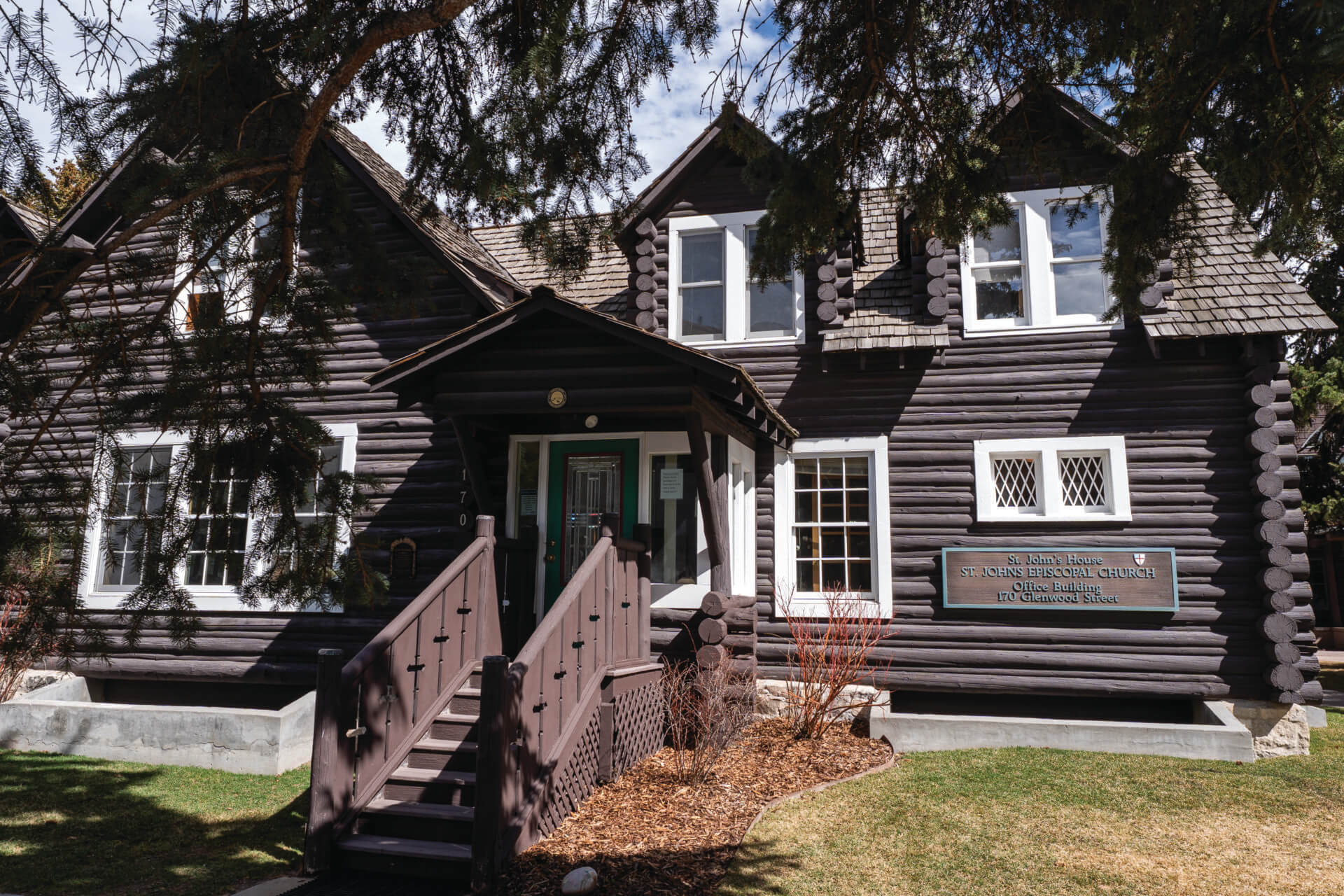
Built in 1911, today’s St. John’s Rectory originally served as both a church and lodging for ranchers who had to travel more than a day’s ride to attend services. One block north of the Square, it reflects settlers’ efforts to build community in stark contrast to the remote and lonely lives often found on their homesteads.
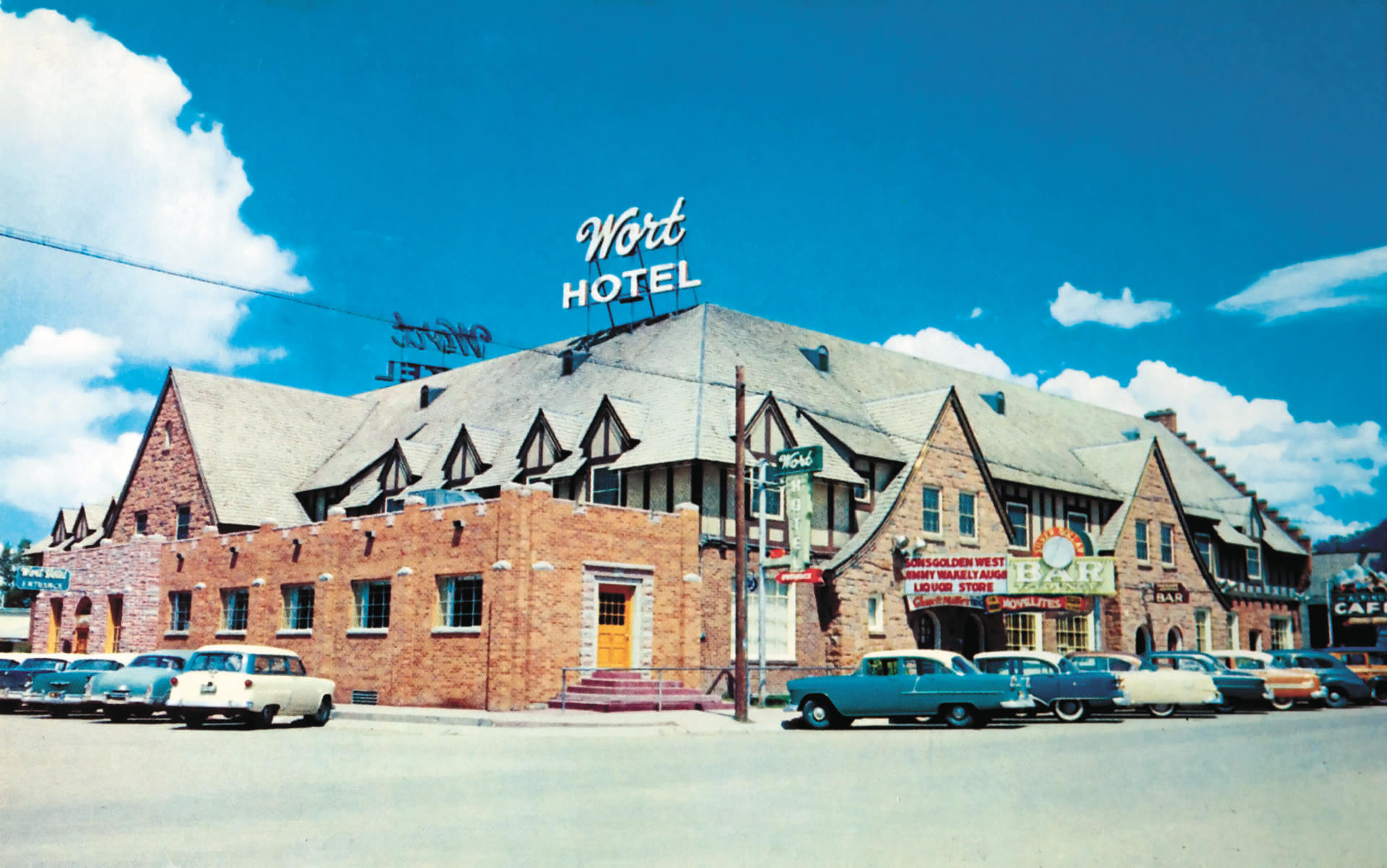
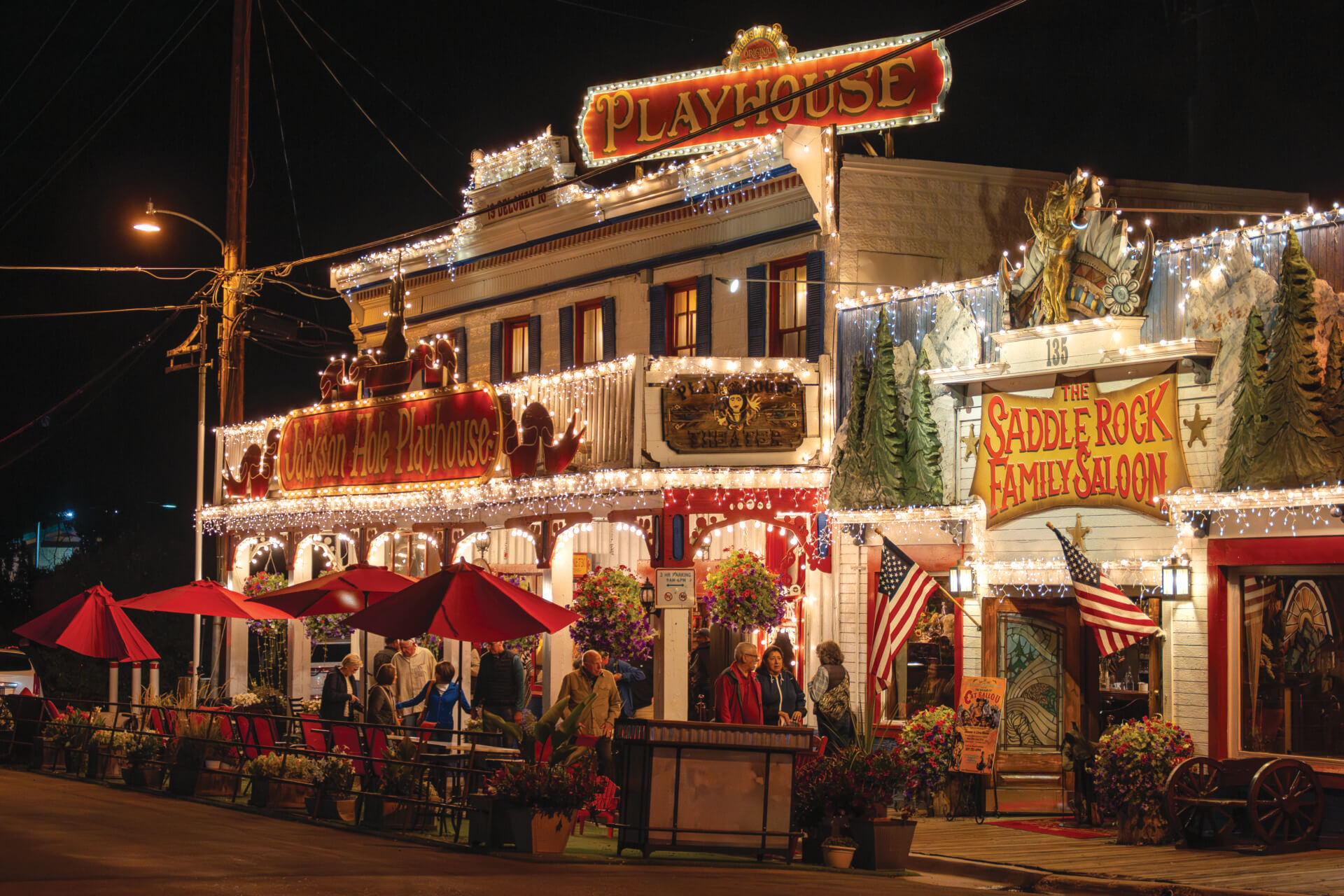
Evidence of Jackson’s early economic growth can be found in what is now the Jackson Hole Playhouse, built in 1923 as a Ford dealership. When the Wort Hotel opened just off the Square in 1941, it demonstrated the entrepreneurial gamble of John and Jess Wort, who sold their Grand Teton National Park tourism businesses to build an in-town hotel—and casino—during the tail end of the Great Depression and Prohibition. A few blocks west, the Rawhide Motel, opened in 1964, captures the simple midcentury architecture of the postwar road-trip era, cementing Jackson’s identity as a gateway to the national parks.
Rather than long for the easily accessible and pretty architecture of its mountain-town peers, Jackson Hole can look at its utilitarian—and sometimes Disney-ified—versions of Old West design and see them for what they are: honest reflections of its past.
National Significance
National Historic Landmarks are historic properties that represent an outstanding aspect of American history and culture. They range from historic buildings to sites, structures, objects, and districts. There are about 2,600 across the country; two of these are in Jackson Hole.
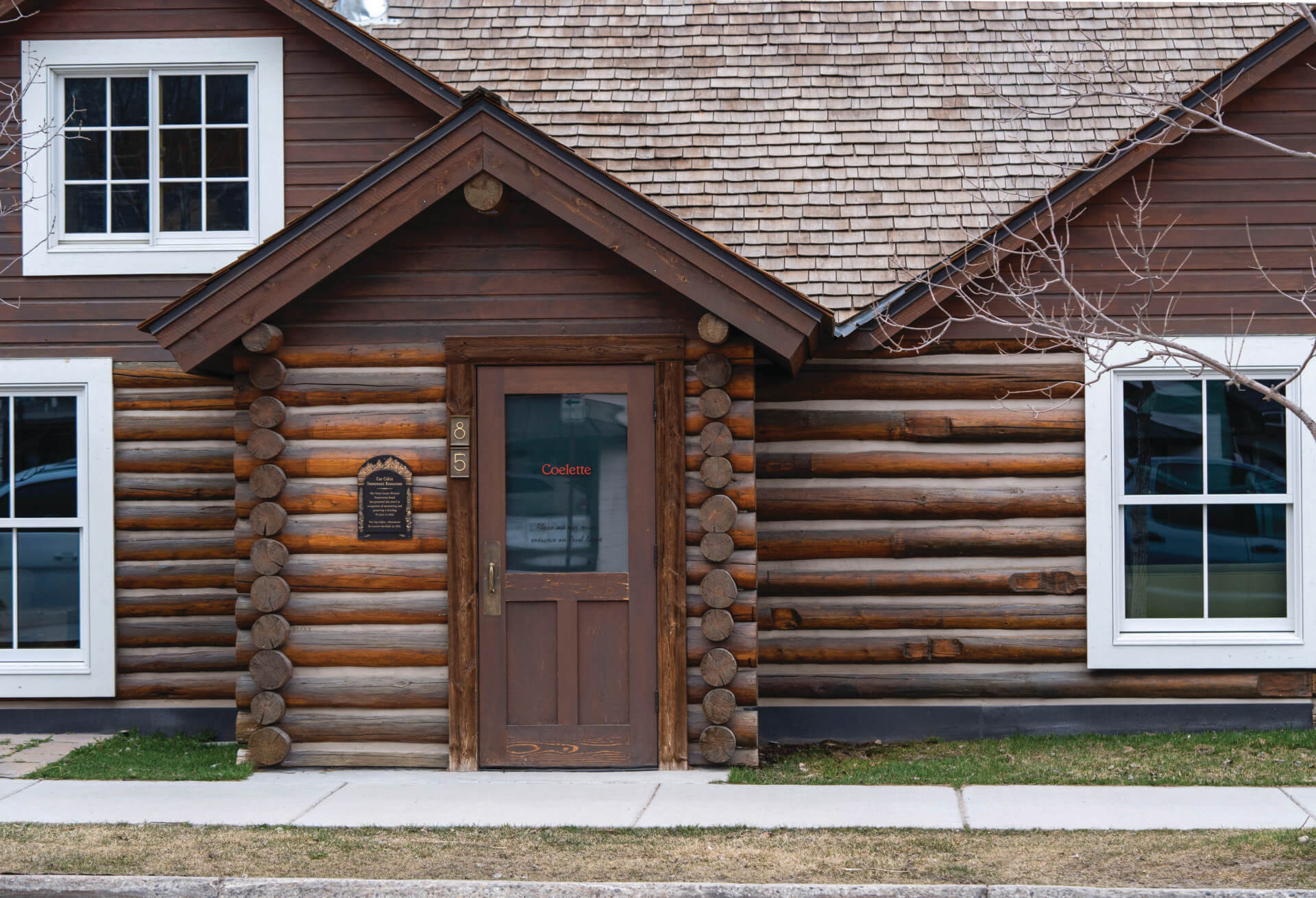
That history carries weight beyond the valley. Jackson Hole’s buildings reflect national themes: the closing of the frontier, the rise of conservation, and the uniquely American phenomenon of dude ranching. “If you think of the National Register as a proxy for what buildings and designs have made America America, the fact that [buildings in Jackson Hole] are worthy of the National Register means they’re all a key ingredient to the Western settlement of the United States,” says John Holland, owner of the Coe Cabin. Built around 1915 for Jackson’s first barber, Clarence Dow, and his wife, Martha, the cabin was painstakingly restored by Holland and listed in the National Register of Historic Places in 2024. “When you put all the buildings in a kaleidoscope together, it feels like it’s more important than just any one individual building. It’s a piece of American history, not just Jackson’s.”
More than 700 buildings in Teton County are listed in the National Register of Historic Places, and two have achieved the highest designation as National Historic Landmarks: Jackson Lake Lodge and Murie Ranch.
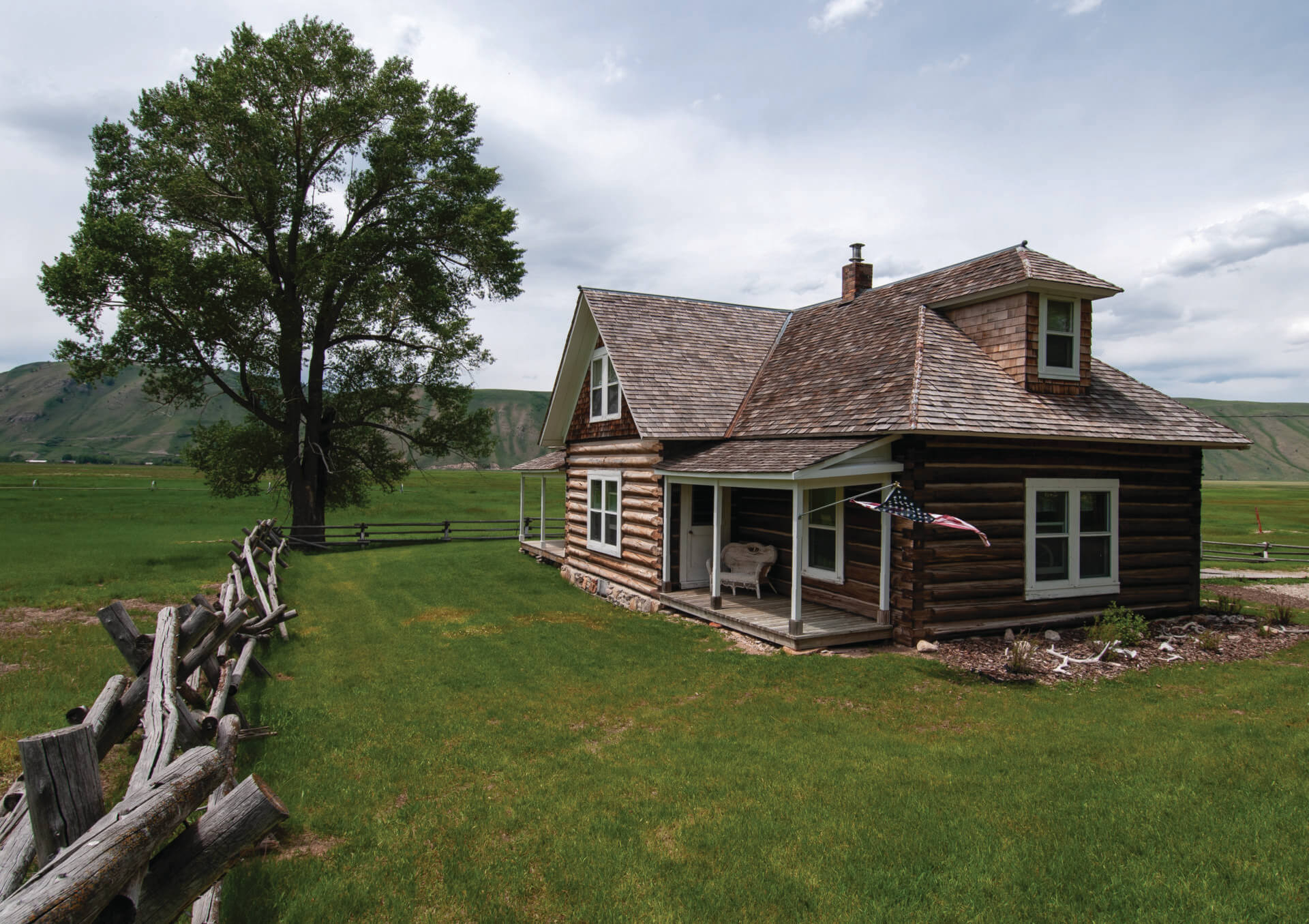
Among the 700 are the vernacular ramshackle cabins of the Bar BC Dude Ranch in Grand Teton National Park, which were added to the National Register of Historic Places in 1990. Built in 1912 by unskilled laborers for authors-turned-dude-ranchers Katharine Newlin and Struthers Burt, the ranch became the valley’s second dude ranch and a model for the industry that followed. During its peak years, as many as 50 guests spent summers there, including Ernest Hemingway, William Faulkner, and John D. Rockefeller, Jr. The Bar BC is known locally as the “mother of all dude ranches” because former Bar BC guests went on to establish their own ranches across the valley. The Bar BC effectively created the template for the region’s dude ranches.
Its influence extended beyond tourism. When the Snake River Land Company began buying land at the base of the Tetons to expand Grand Teton National Park (read more about this on page 104), the Burts helped persuade neighboring ranch owners to support the idea and sell. (If you’re interested in learning more about the Bar BC, pick up Struthers Burt’s 1924 memoir, The Diary of a Dude Wrangler.)
Similarly unassuming are the dozen low-slung log cabins at Murie Ranch in Moose. Built in the 1920s as the STS Ranch—one of the dude ranches founded by former Bar BC guests—the property was purchased in 1945 by two couples: Olaus and Mardy Murie and Adolph and Louise Murie. (Olaus and Adolph were half-brothers, and Mardy and Louise were half-sisters.) The Muries weren’t ranchers, but biologists and conservationists.
These cabins were the birthplace of the modern conservation movement and the site of meetings and debates that led to the creation of the Arctic National Wildlife Refuge and the passage of the landmark 1964 Wilderness Act. The Murie Residence was added to the National Register in 1990, the Murie Ranch in 1998, and the property was designated a National Historic Landmark in 2006.
Nationally significant buildings also stand within and close to the Town of Jackson. Early settlers Robert E. and Grace Miller built a cabin on their ranch in the late 1890s. Robert was the first supervisor of the Teton National Forest (now the Bridger-Teton National Forest). In 1914, the Millers sold their ranch to the U.S. government, and it was transferred to what would become the U.S. Fish & Wildlife Service as a component of the National Elk Refuge. Today, the house, which is listed on the National Register of Historic Places, is used as housing for refuge employees.
“Whether it’s an old log cabin or A-frame off an alley or a cabin repurposed for commercial use downtown, the program is making a difference by helping to retain the community’s heritage. And with the fast pace of redevelopment and demolition of older buildings throughout Town, every building that can be preserved is a small gift to the future.”
—Paul Anthony, about the Town of Jackson’s Voluntary Historic Preservation Program
After selling their ranch, the couple moved into town and built what may have been the valley’s first trophy home on the corner of Broadway Avenue and Willow Street (although Willow Street didn’t exist at the time). Constructed around 1914 in the Colonial Revival style, the house stood apart from the valley’s vernacular architecture. With clapboard siding, corniced gables, and double-hung multipane windows, it reflected both the emergence of the Town of Jackson—incorporated the same year—and a broader shift from isolated homesteads to town life. It was also where Grace Miller lived when she was elected mayor in 1920 as part of the famous “Petticoat Rulers,” an all-female town government.
Preserving the Story
A common misconception is that historic preservation means placing buildings under glass and freezing them in time. In reality, preservation is about managing change. In Jackson Hole, preservationists argue that development and preservation are not mutually exclusive. Instead, new buildings can respond to the cues and character of the historic environment while meeting modern needs.
National recognition of Jackson’s frontier-era architecture dates back to 1942, when John D. Rockefeller, Jr. asked historic architect A.E. Kendrew—who worked on Colonial Williamsburg—to develop preservation plans for Menor’s ferry complex along the Snake River near Moose. Built in 1894, the ferry was run by brothers Bill and Holiday Menor, and then, starting in 1918, by Maud Noble. It was the only river crossing for 40 miles until 1927, when the State of Wyoming built a steel truss bridge less than one mile downstream. Noble sold her property in 1929, and the buildings fell into disrepair. By the early 1940s, they were viewed by most as a detraction from the so-called “natural” park.
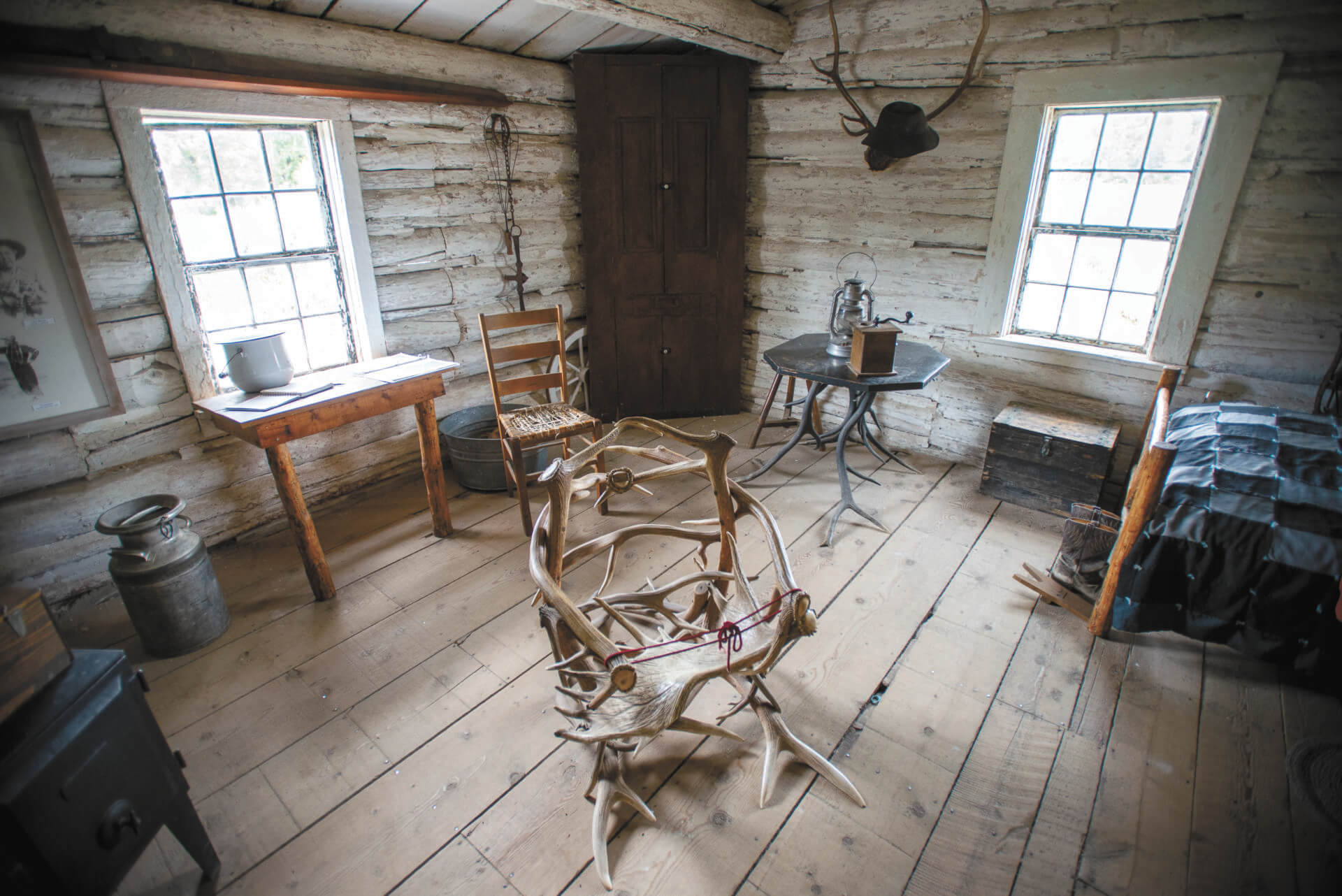
Rockefeller disagreed. He believed the site told an essential part of the American story: the gritty reality of frontier life in Jackson Hole. After restoration was completed in 1949, Rockefeller hosted a public celebration there. Today, Menor’s store is open for visitation, with period furnishings and a general store to help bring the experience to life, and there is a replica ferry, a simple platform set on two pontoons.
More than eight decades after Rockefeller personally preserved that piece of Jackson Hole history, preservation of the valley’s built environment remains largely voluntary and dependent on the goodwill of property owners. That makes Jackson something of an anomaly among mountain towns—despite a 2022 Teton County visitor survey showing “unique character and feel” and “authentic history and culture” ranked fifth and seventh, respectively, among 20-plus reasons visitors come.
But locals and local groups are doing what they can. The Teton County Historic Preservation Board, founded in the late 1990s, established the historic-preservation program and demolition-delay ordinances intended to encourage alternatives to tearing down historic buildings. The historic-preservation program offers incentives to owners who voluntarily protect historic properties; since its creation, 15 properties have joined. The demolition-delay ordinance was approved to help owners find preservation-friendly alternatives to demolition, but, to date, it has not saved a single building in place. Since 2018, the Town of Jackson has authorized 157 demolition permits for such structures.
Still, there are bright spots. In 2017, John and Shelley Holland purchased three historic cabins one block east of the Town Square. The couple says that rehabilitating one of these used as a restaurant for the prior 40 years, the Coe Cabin, was neither easy nor cost-effective. Despite the goal of keeping the cabin’s use the same—a restaurant—the rehabilitation required bringing the structure up to modern health, fire, and life-safety codes. Over 18 months, the entire cabin was dismantled and each log labeled so it could be reassembled in the correct place, and the foundation, floor, roof, and windows were replaced. And, proving the point that preservation can be a dialogue between historic architecture and current needs, Dubbe Moulder Architects also designed a 600-square-foot unapologetically modern addition, allowing the historic cabin to remain largely intact while meeting contemporary needs.
Still, the Hollands say that if faced with the choice again, they would make the same decision. “It’s not just a building,” Holland says. “It’s the context of what this town used to be. A historic building doesn’t have to be a museum. It can be as vibrant, dynamic, and contemporary as something brand new—and sometimes even more so.”
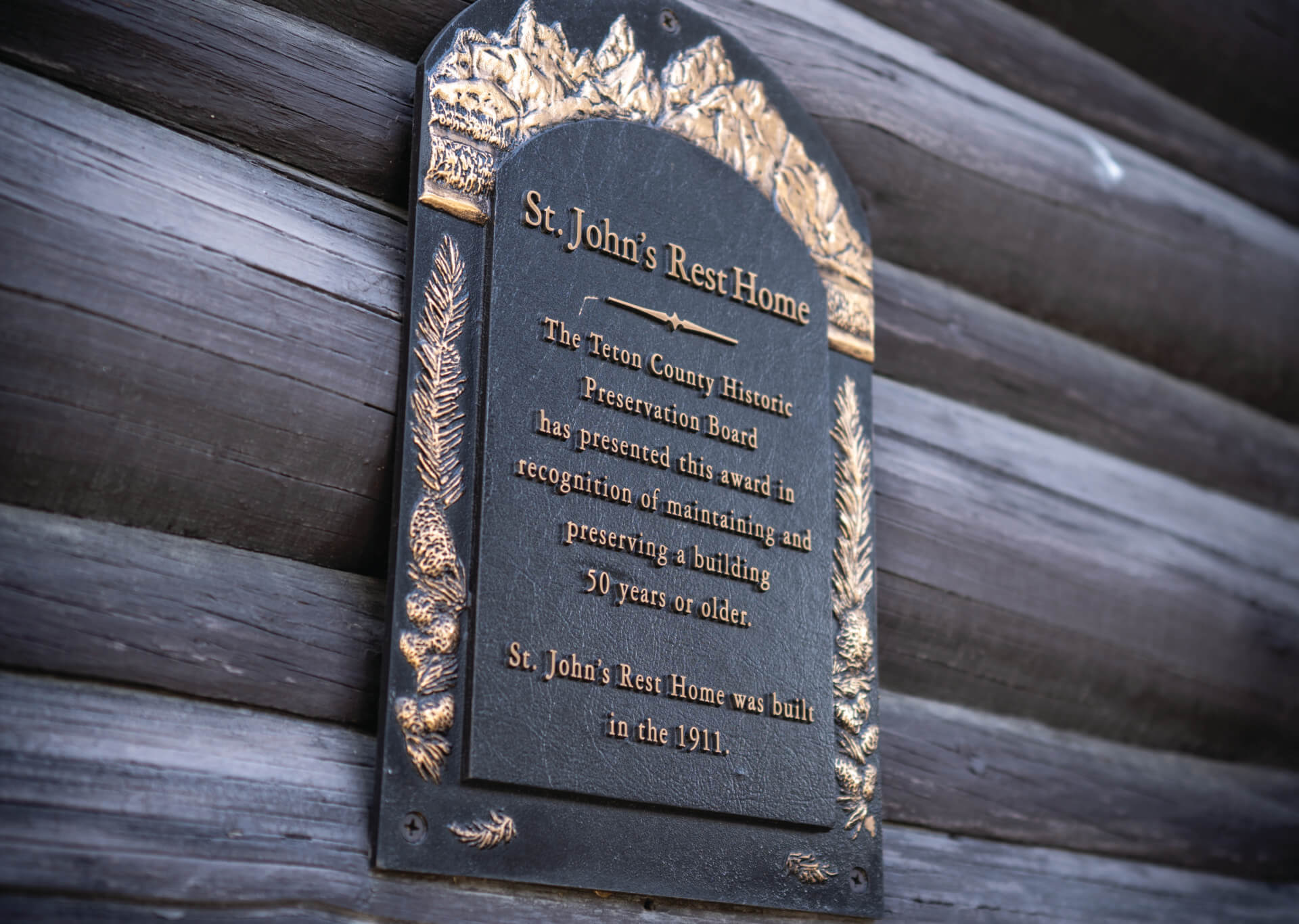
Historic Plaques
There are currently over 100 “plaqued” buildings in Teton County, most of which are publicly visible. The Teton County Historic Preservation Board launched the plaque program in 2000 to raise awareness of Jackson Hole’s heritage assets. “People love seeing the plaques on buildings, and often come into the History Museum sharing their discoveries and are curious to learn more,” says Morgan Jaouen, executive director of History Jackson Hole, the nonprofit organization that oversees the Jackson Hole History Museum. “Many of these buildings are highlighted on our historic downtown walking tours.”
While in some U.S. cities with historic district designations, a plaque can signal legal protection of a historic property, in Jackson Hole, plaques are simply honorary. Any plaqued building could be demolished in the future (unless it is one of the buildings that has had a preservation easement voluntarily placed on it).