Read The
Current Issue
Neon Nostalgia
A handful of Jackson businesses are still illuminated by historic neon-y signs.
// By katherine wonson
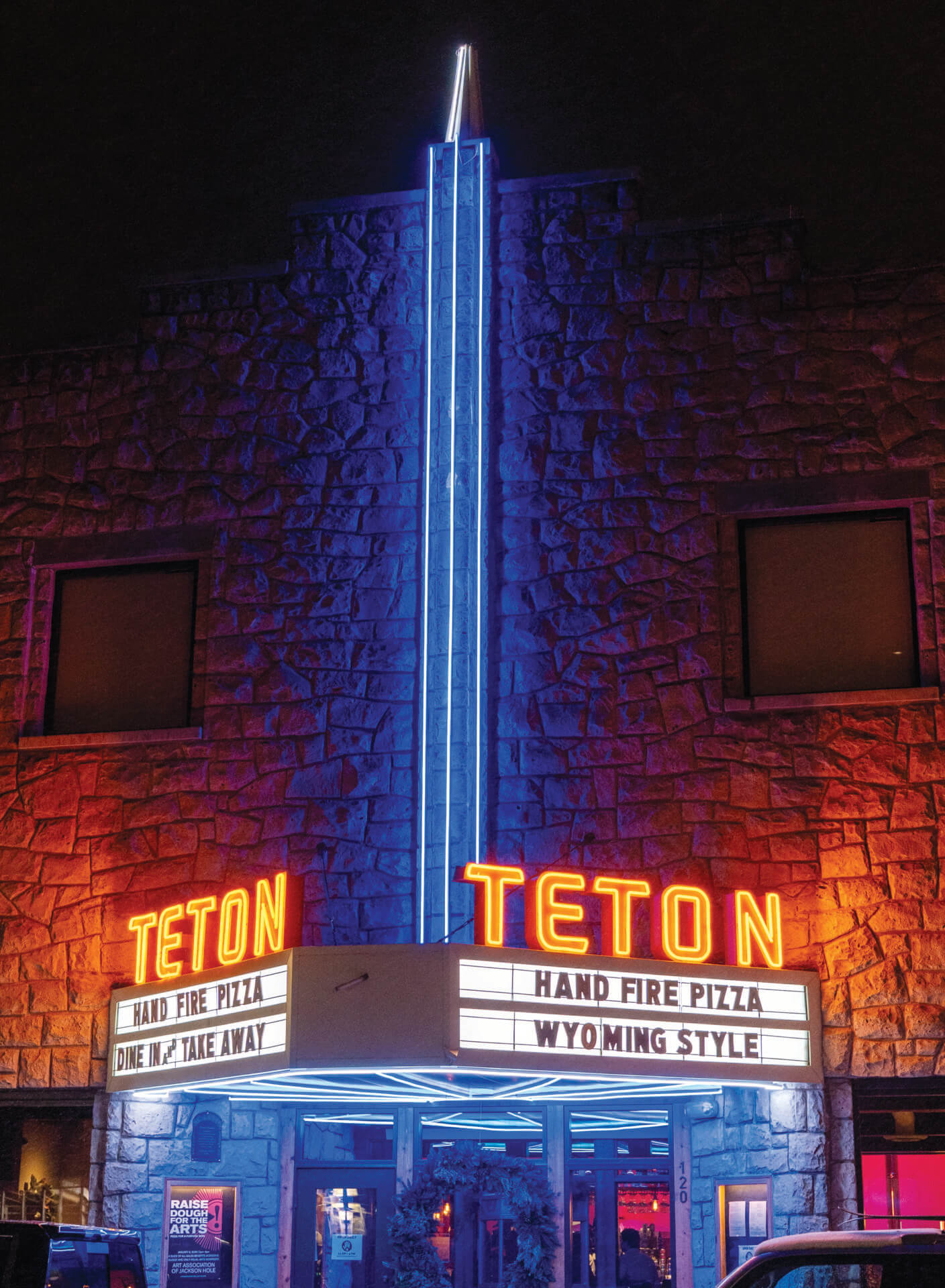
Neon is the fifth most abundant element in the universe, but it does not exist on Earth. “It comes from the heavens into the atmosphere,” says Todd Matuszewicz, who’s been a neon “tube bender” since 1987 and is co-president of Save the Signs Colorado. “When we look at the pictures from the Hubble Space Telescope, we see those cloud nebulae. What you’re seeing is neon lights. So, when we hold a neon tube in our hands, or you see a neon sign, we are seeing our cosmic selves illuminated. Nothing in the world does that. And that’s why people love it.”
But Jackson has had a love-hate relationship with neon. For Matuszewicz, this is to be expected. According to him, “Neon is cyclical.” As Jackson Hole transitioned from a seasonal dude-ranch destination to a bustling ski and national park gateway community in the decades following World War II, tourism-related business owners gravitated toward any visual marketing that outcompeted neighboring businesses. This competition for visitors’ eyeballs (and, consequently, dollars) coincided with the rise in popularity of neon sign technology; the first neon signs in the U.S. had gone up in 1923 at a car dealership in Los Angeles.
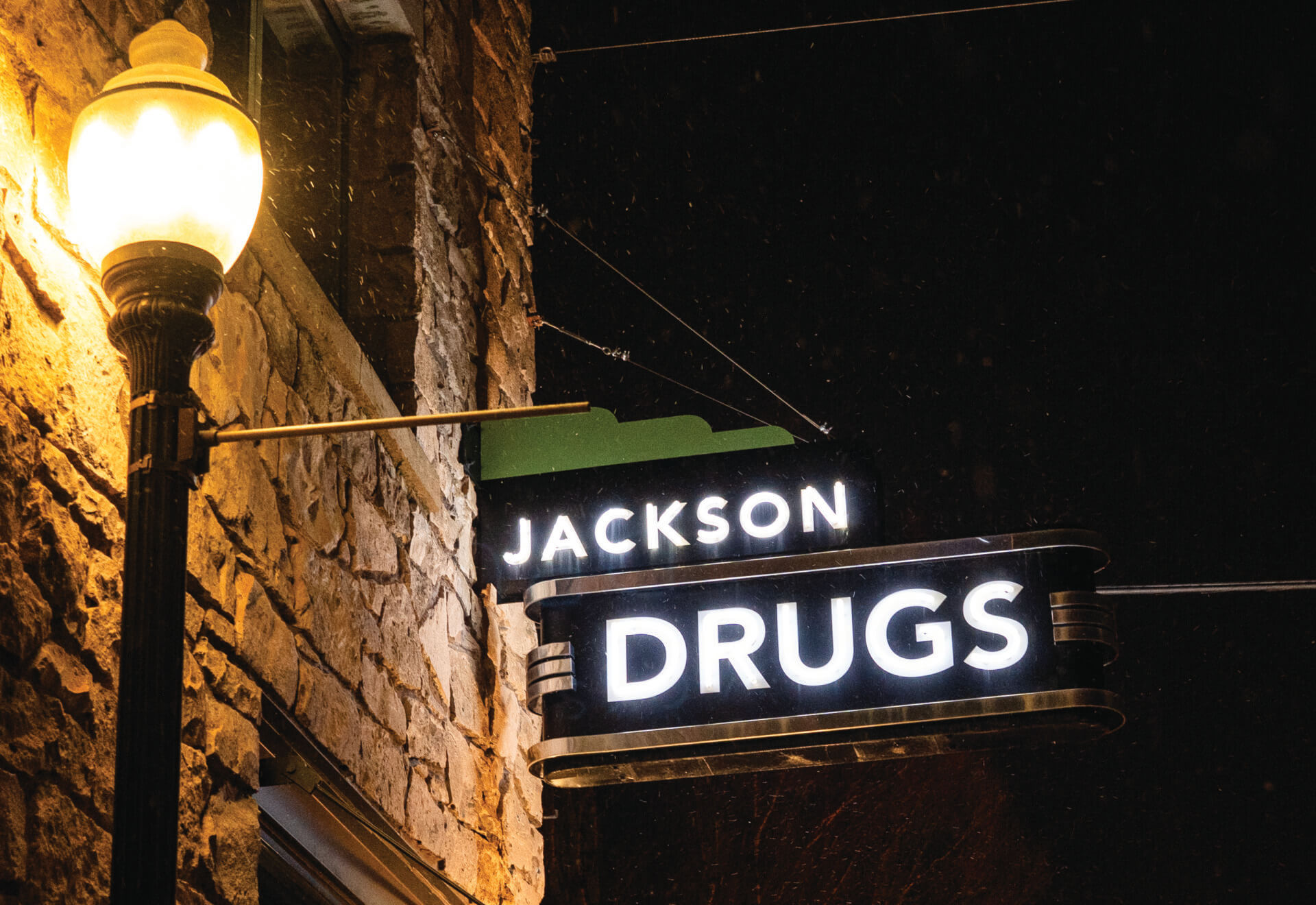
Neon arrived in Jackson in 1932, when Bruce Porter installed a neon sign on the first floor of the Gun Club, one of Jackson’s oldest commercial buildings, advertising his business inside, the Jackson Drug Company. Not everyone liked it. A letter to the editor in the July 14, 1938 Jackson’s Hole Courier asked, “Where is the end? How far is this sign business going to go?”
But, despite detractors, neon signs proliferated in Jackson Hole into the 1960s, with greater and greater creativity, scale, and eye-catching colors. In the 1980s, however, either due to a change in taste or the sheer volume of “loud” signage, neon hit a tipping point. The Jackson Town Council passed an ordinance banning new neon signs.
As mid-century buildings and their signs were demolished or businesses closed, the Vegas Strip look of downtown Jackson quieted … but it hasn’t disappeared. Jackson still has a handful of neon signs, some of which are still actual neon, while others have been retrofitted with LED lights, something that is happening with increasing frequency across the country. Matuszewicz, who admittedly has a strong bias for neon, likens this to working with a cabinet maker (neon) or getting cabinets at Ikea (LED). “To make neon takes a level of skill. It still takes some skill to assemble an Ikea cabinet, but it’s not the same,” he says.
But, if the choice is between a former neon sign disappearing from Jackson’s streets or being retrofitted with LED lights, most people will pick the retrofit, which might lack the glow of actual neon, but still conjures the same feelings of nostalgia. This is reflected in planning regulations that provide certain exemptions for historic signs.
“We’ve been pretty flexible, especially with the old neon, iconic signs,” says Paul Anthony, director of the Town of Jackson’s planning and building department. “I think because of the loss of a lot of the signs over time, it’s at a point where people think they’re cute and they’re visually catching, but there are not so many of them that it’s gaudy.” Here’s a look at the history of some of Jackson’s neon and retrofitted signs.
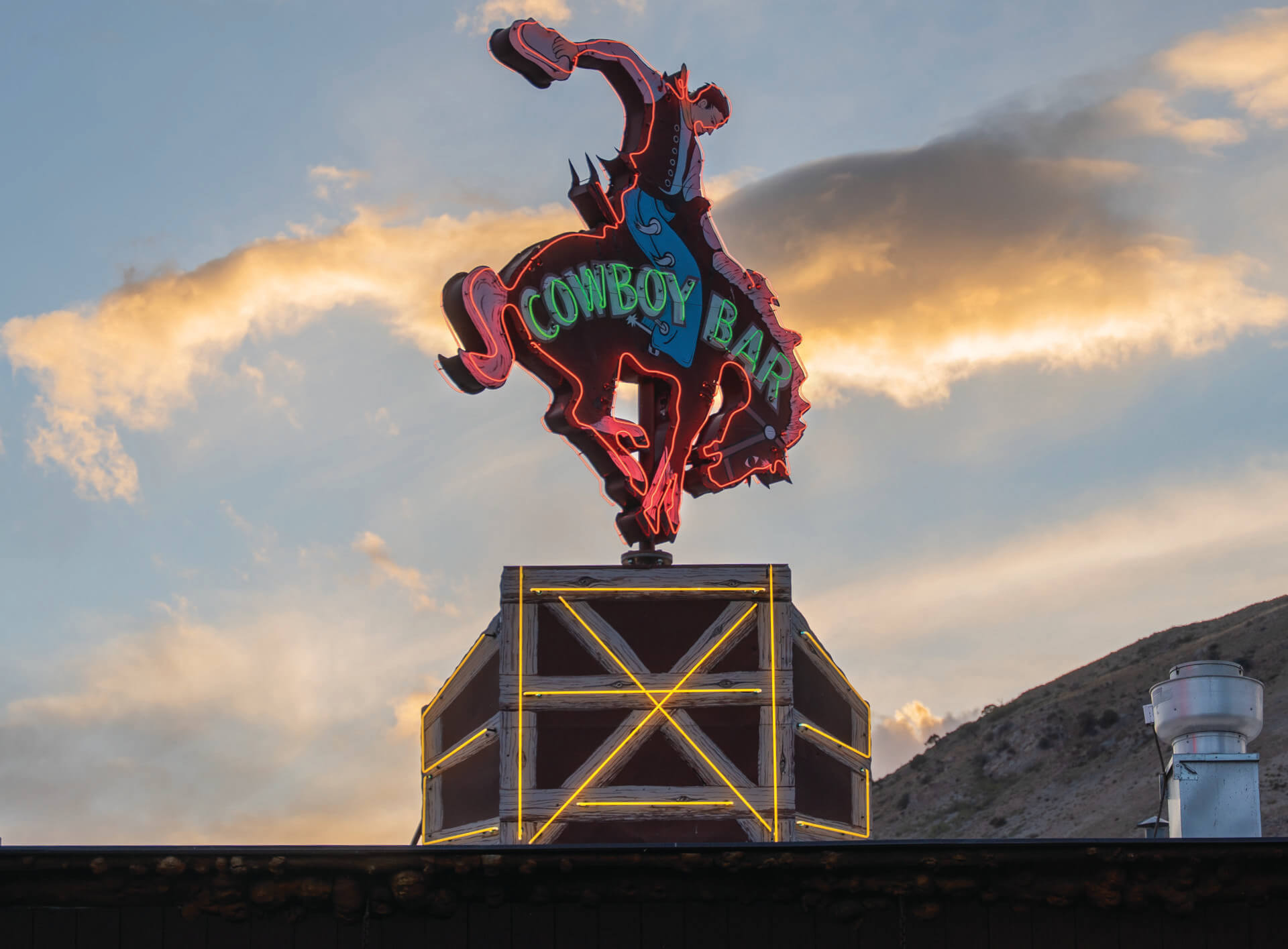
Cowboy Bar
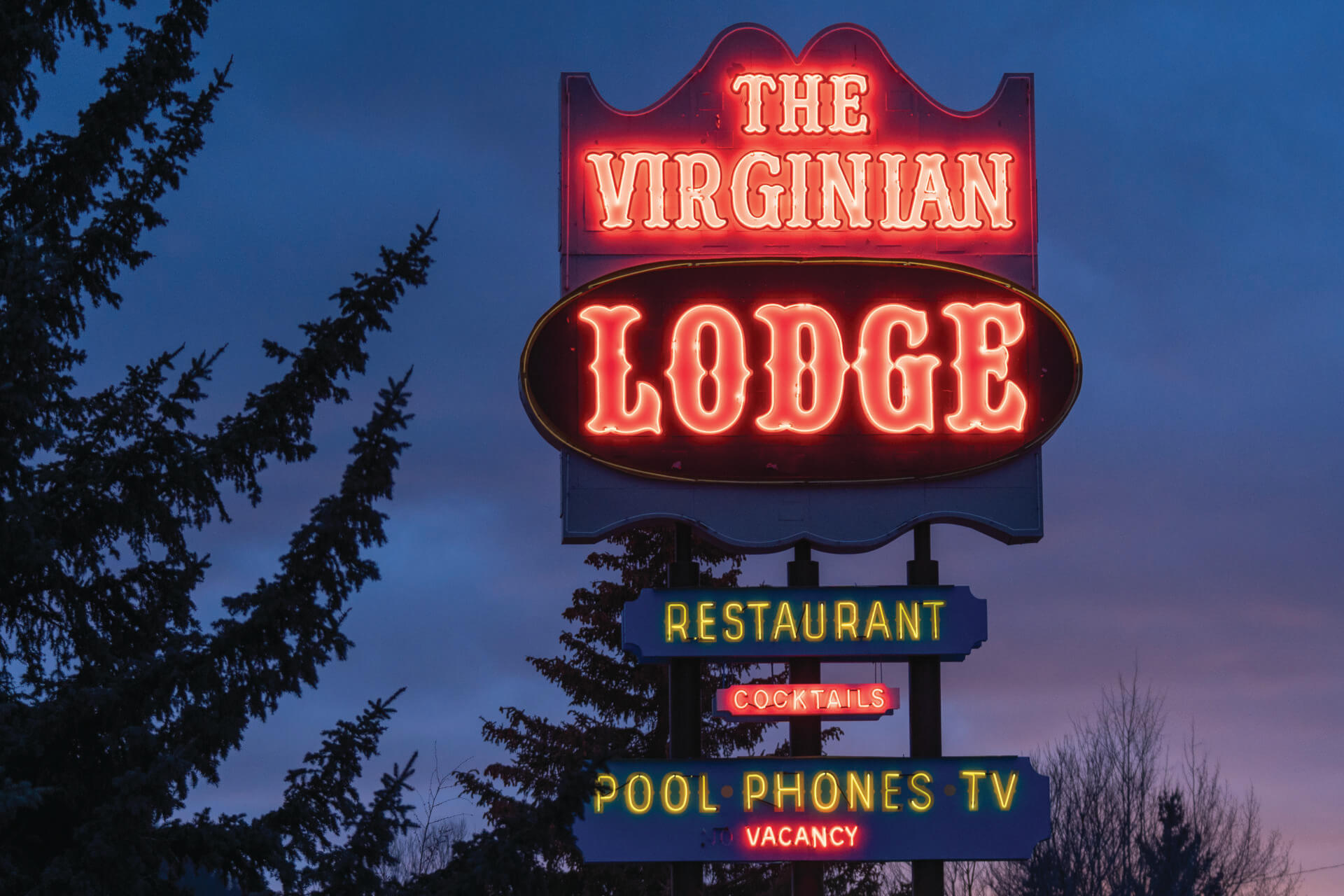
The Virginian motel
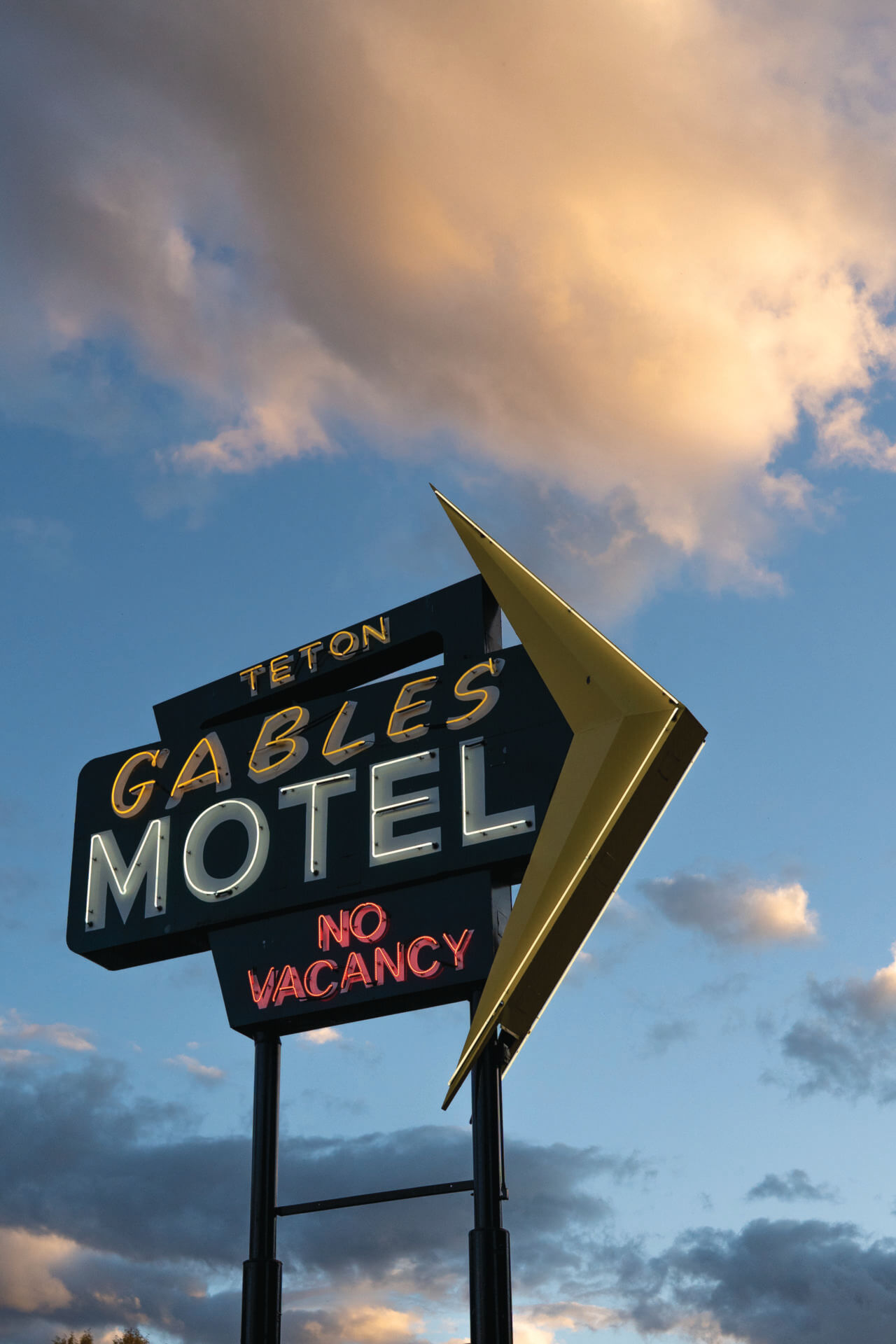
Teton Gables Motel
Jackson Drugs
Kudar Motel
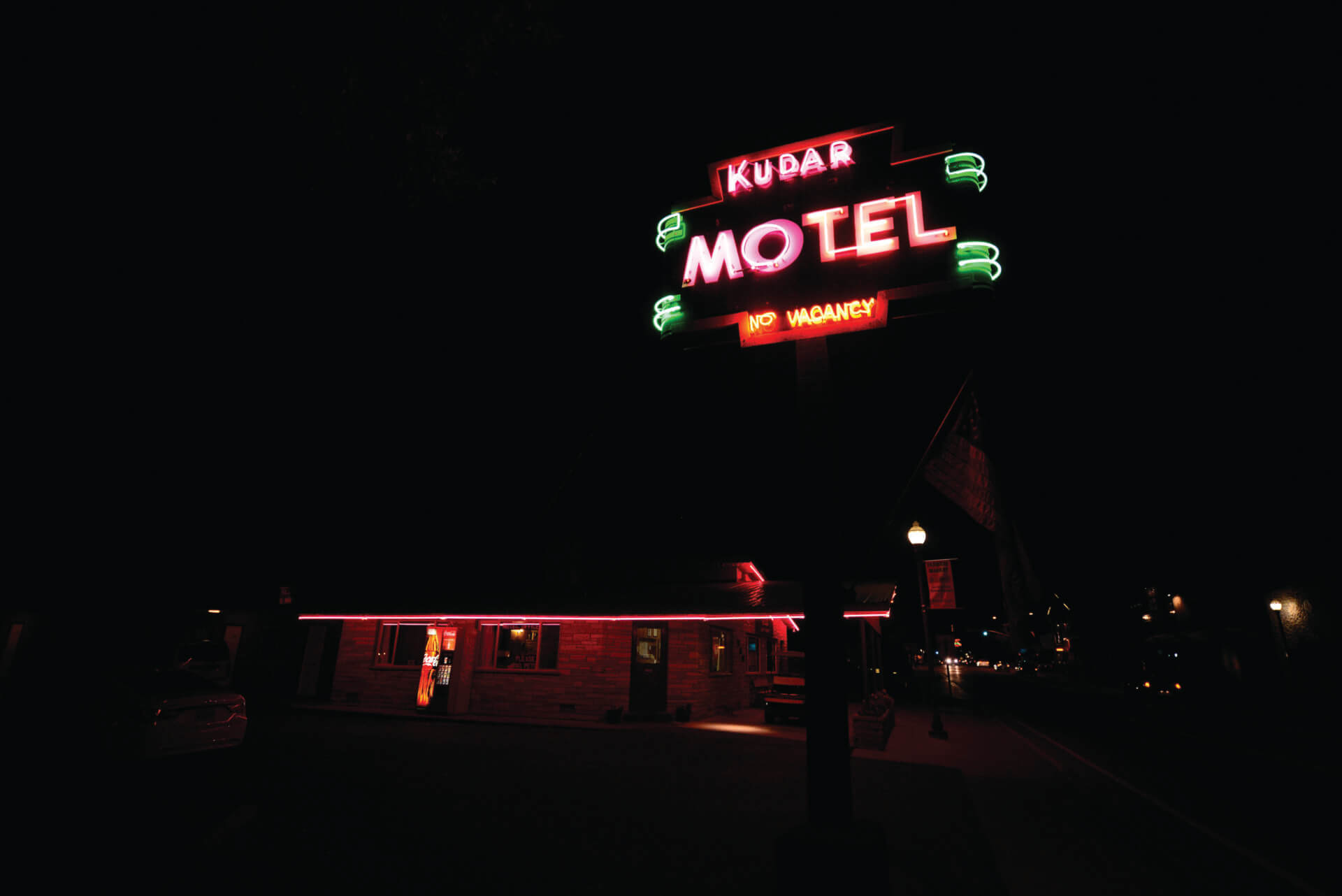
Sitting on Cache Street as you enter downtown Jackson from the north, the Kudar Motel features neon on both its sign and building. Because they could be seen from far and signaled welcome lodging, neon-highlighted buildings were common along tourist-traveled routes. The Kudar Auto Tourist Camp was constructed in 1934 and featured a simple, non-neon sign in its early years. It rebranded as the Kudar Log Cabin Lodge in 1940 and likely commissioned the sign still at the motel today before 1955, when its name was changed again, to Kudar Motel. We know the neon sign was commissioned before 1955 because today’s “Kudar Motel” sign has ghost housings—open holes that reveal editing. Once upon a time, these holes had neon tubes entering and/or exiting. Before this sign said “Kudar Motel” it said “Modern Motel.” The sign also features “bullnoses,” rounded pieces on either side of the sign that were a popular design feature in the 1950s and 60s. Bullnoses require a high level of skill because the glass must be bent in three dimensions. Photo by Brian Herbel JH