
Read The
Current Issue
PROFILE | Savannah Rose
// By Emily Cohen
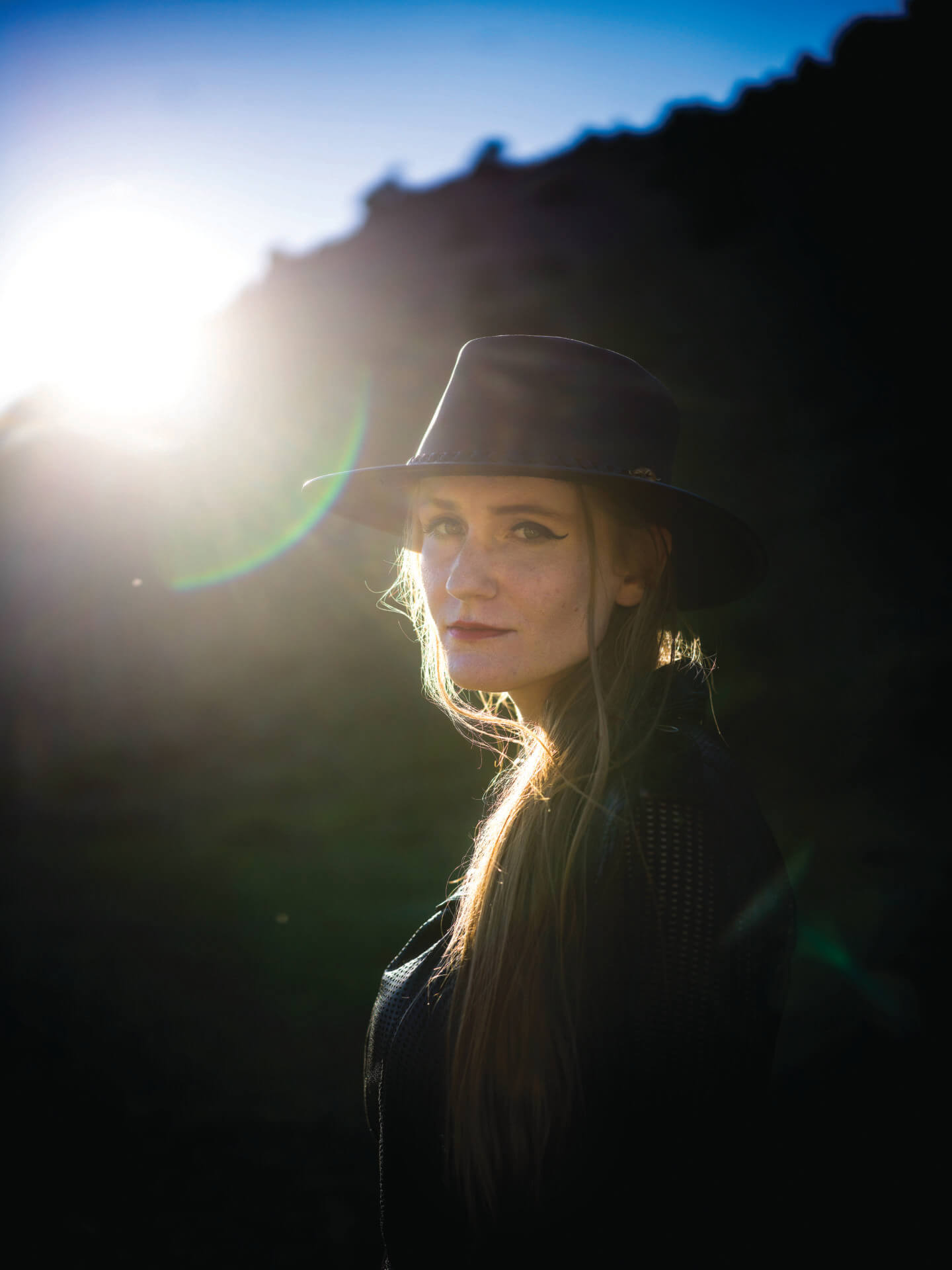
In the blue light of dawn, Savannah Rose hops into her stickered Subaru to search for wildlife. A group text with other wildlife photographers tips her off to where to try her luck. After a short drive, she’s trekking through the forest with her Nikon camera and a couple of lenses that span the length of her arm. She moves quietly. Listening. Watching the ground for tracks and the tops of trees for pygmy owls, she inhales deeply, her sense of smell so refined that she can detect when elk are near. She jokes that her parents called her “jungle baby.” These days, “mountain lady” may now be a more appropriate moniker.
Growing up in Singapore until she was 10—a parent was an executive with Coca-Cola—she saw Asian water monitors slide into rivers like small dinosaurs and flying lizards skim between trees. But it was after her family moved back to the States and visited Sheridan on summer vacations that she got interested in Western wildlife.
Rose filled sketchbooks with animals, teaching herself to translate fur and feathers into lines on a page. In 2017, seeking a fresh start, she moved to Jackson Hole to heal—and try making art professionally. Photography was her tool to gather reference material. “Some part of me realized I couldn’t do nature justice,” she says. “It’s already perfect. I’d rather try to capture it in its perfection.” So, she stopped trying to interpret wild animals and started photographing them instead.
In 2019, she set herself a quiet challenge: take a photo every single day. Or at least sit down and edit one. No skipping. “I was going up to Yellowstone a lot. I was going all over the place,” Rose says. “And I mean, most of the photos I took were bad. But that’s sort of the point of the process, isn’t it?”
Slowly, her eyes sharpened. She taught herself how to edit, watched a lot of YouTube tutorials. “I had to learn what I liked mostly by watching,” she says. Shallow depth of field. Eye-contact portraits. Moments of behavior. Scroll back far enough on her Instagram and you can see her apprenticeship in real time. Now, nearly 300,000 people follow her work. What began as a visual diary has become a full-time career.
Images that look effortless are anything but. Wildlife photography, Rose says, is about luck and preparation. You study animal behavior. You learn migration routes, feeding habits, rut seasons. You memorize your camera’s settings until your hands move without thinking. Because when something finally happens, it happens fast.
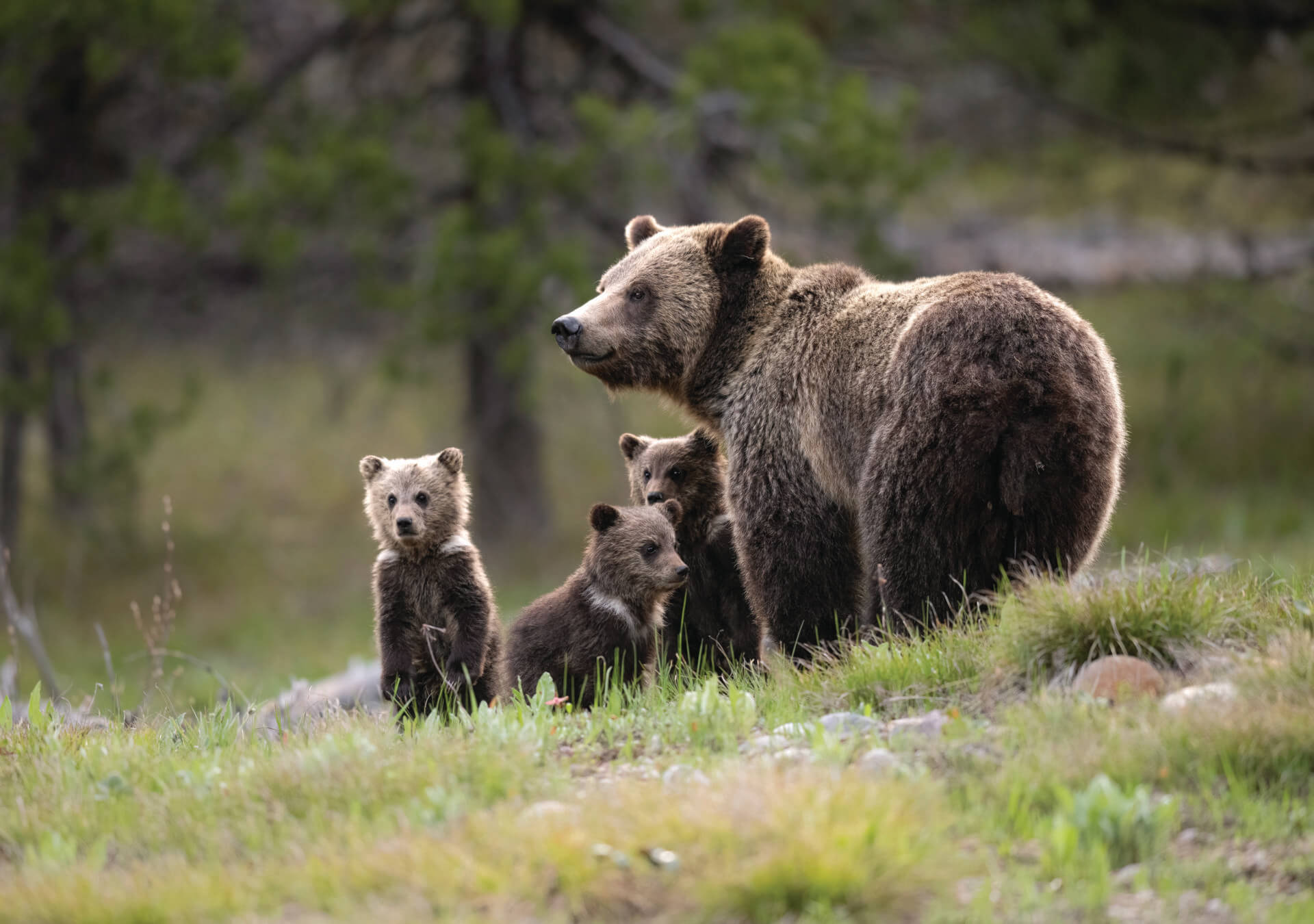
“For example, let’s say a grizzly bear is coming right at you,” she says. “You’ll have mental and physical reactions to that. You’ll be excited. But you only have, like, let’s say, 10 seconds before it comes past you. And you have to be thinking about, you know, what’s your ISO at? What is your shutter speed? What creatively do you want to do with the image? Are you cutting its ear off? Is it in a good composition? Is it in focus?”
Some shots take years to get. Her schedule follows the animals. Fall means moose rut. February is canine breeding season—following wolves and foxes looking for a mate. Spring is baby season. Rose says life for nature goes pretty fast. “The moose only have antlers for so long. The moose are only rutting for so long. When they shed, it’s off to the next thing, then the bighorn sheep are going to rut, and that’s only going to go on for so long.” If you miss these moments, it’s another whole year before the opportunity will come around again.
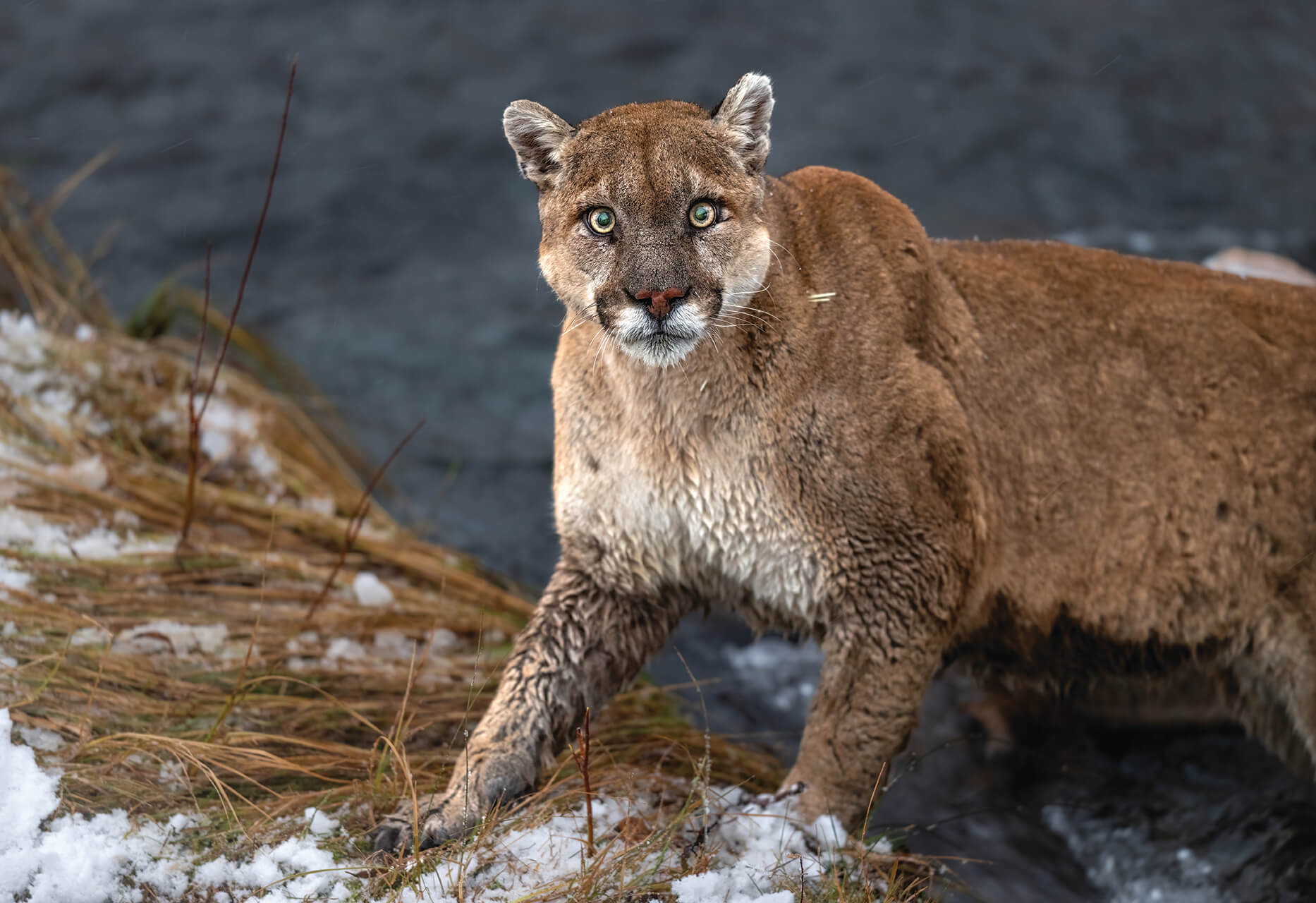
Unlike many wildlife photographers who specialize in one species, Rose chases variety. But her favorite animal to capture is the mountain lion. “They live their entire life in total secrecy,” she says. “They’re just like the ultimate prize. If you can get into the secret world that they have, you really made it.”
She has bushwhacked up hillsides until her legs shook. Been charged by a moose. Swarmed by yellow jackets. Once, a bear popped its jaws at her in warning, the sound sharp as breaking wood. Still, she keeps going back. Partly because photographing wild animals has remade her life. She talks about it plainly: time outside helped her quit drinking and smoking. Waking before dawn gave her a rhythm. Hiking miles every day strengthened her body and steadied her mind.
“The animals have given me everything,” she says. “They get me up early. They keep me active. They’ve given me clarity. Peace. Joy.” She remembers a three-legged fox she once followed through the snow. “He doesn’t have the option to lie around and feel bad for himself,” she says. “He just hunts. He lives. Animals don’t dwell. They move forward.” Rose says she finds inspiration in that focus. “It’s something that grounds me, and it helps me when I am going through challenges as well.”
That ethic shaped her work and her business. These days, her income comes from a patchwork of prints, merchandise, magazine sales, sponsorships, and Etsy orders. (Her Etsy page, SavanahRoseWildlife, has a near-perfect five-star rating.) She licenses images to publications and conservation groups like the National Wildlife Federation and Audubon. Recently, she published her first children’s book, The True Tale of Buddy the Beaver, which she also illustrated along with her friend Cat Wood. She even sells images to Ranger Rick—the very magazine she once begged her mother to buy for her birthday. “It feels very full circle,” she says.
But she’s careful about what success means. To her, wildlife photography isn’t just art or business. It’s responsibility. “There’s a stewardship that comes along with wildlife photography,” Rose says. “We have to participate in conservation causes, whether that be fundraising or just spreading information, educating people.” She stops mid-sentence, lifts the camera. For a moment, everything else falls away. There is only breath and light, and an owl swooping into view. Click.
Stewardship Tips
Keep your distance.
Stay at least 25 yards from most wildlife and 100 yards from predators like bears and wolves (per National Park Service guidelines).
Never bait or lure animals.
Using food to attract wildlife alters behavior and can ultimately get animals killed.
Carry bear spray—and know how to use it.
f you’re in bear country, it’s not optional. Practice removing the safety clip and understand wind direction before you ever need it.
Stay on established trails.
Repeated off-trail travel tramples vegetation and can cause erosion.
Respect private landand closures.
Seasonal area closures exist to protect wildlife—and your safety. JH